


Contact lenses are more than just a vision correction tool; they are a vital component of driving safety. With an estimated 720,000 motorists on Britain’s roads struggling with defective eyesight, it’s alarming how easily this oversight could lead to accidents. But here’s the kicker: many believe they see perfectly well, yet their vision could still be impaired. The real shock is that simple changes to your lens choices and care can dramatically enhance your clarity on the road, making every journey not just easier but safer.
Table of Contents
Quick Summary
| Takeaway | Explanation |
|---|---|
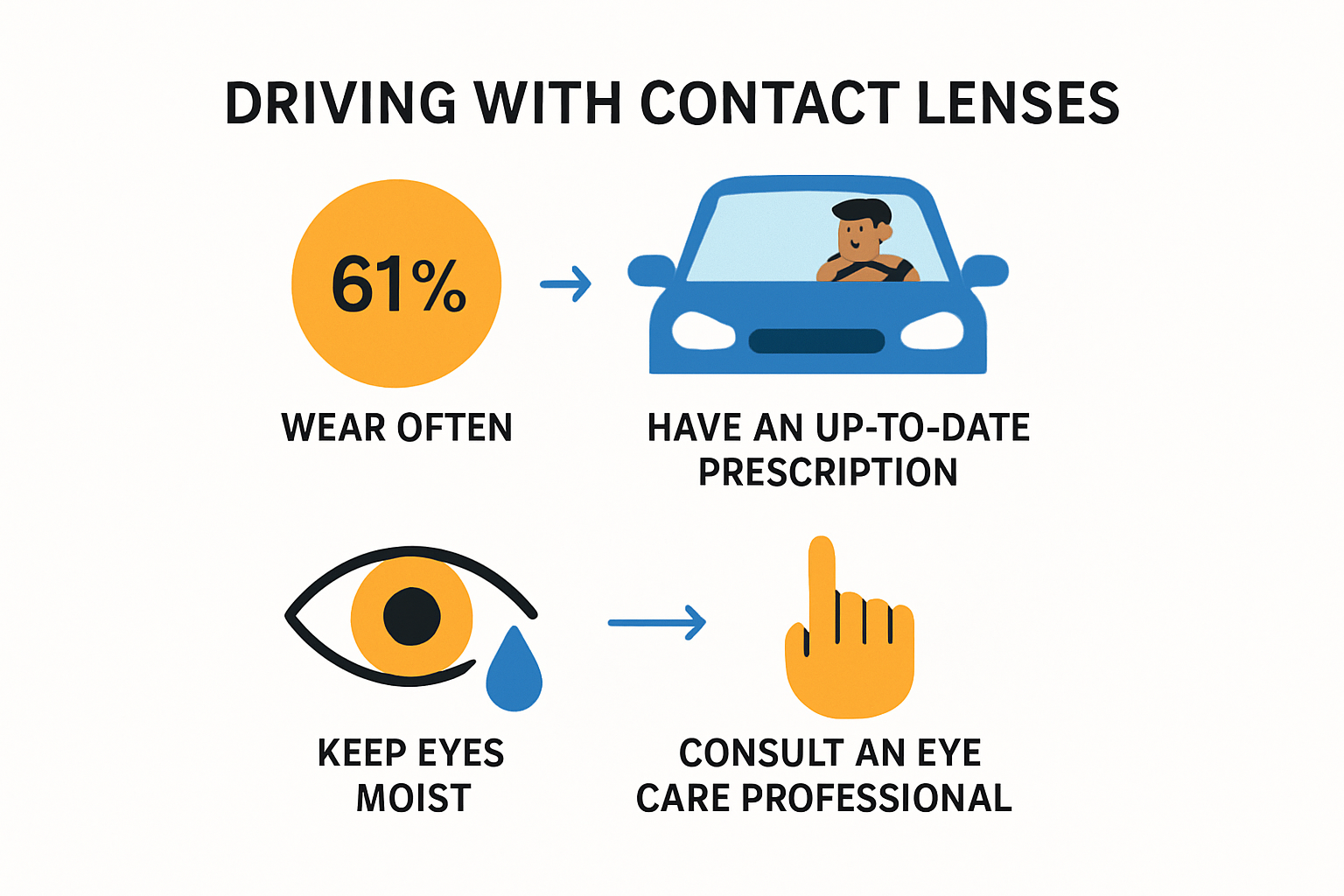
| Regular Eye Examinations are Essential | Changes in eyesight can be gradual; regular checks help ensure safe driving by detecting vision deterioration early. |
| Choose the Right Lenses for Your Driving Needs | Options like daily disposables, toric lenses, or multifocal lenses can enhance vision clarity and comfort based on individual requirements. |
| Implement Proper Lens Care and Maintenance | Clean hands, fresh solutions, and timely replacements are crucial for maintaining clear vision and preventing infections while driving. |
| Prepare for Driving Challenges | Use appropriate eye drops, manage air vents, and have backup corrective options to boost visual performance in varying conditions. |
| Stay Informed about Vision Standards | Understand legal vision requirements and keep your lenses current to avoid hazards associated with poor eyesight on the road. |
 |
Choosing the Right Lenses
Selecting the proper contact lenses for driving isn’t just about seeing clearly—it’s about safety on the road. With research indicating that an estimated 720,000 motorists are driving on Britain’s roads with defective eyesight, choosing the right lenses becomes even more critical. Let’s explore the key considerations to ensure you’re making the best choice for your driving needs.
Understanding Vision Requirements for Driving
Before selecting contact lenses specifically for driving, it’s important to understand what the law requires. Alarmingly, 65% of optometrists believe the DVLA guidance in the 1937 Road Traffic Act is “dangerously out of date” regarding vision standards for driving. Despite this outdated guidance, the current standard requires drivers to be able to read a number plate from 20 metres away.
What many people don’t realise is that changes in eyesight can be gradual. You might lose up to 40% of your vision before even noticing something is wrong. This silent deterioration can significantly impact your driving safety without you being aware of it. Regular eye examinations are essential, especially considering that one-third of drivers need corrective lenses for driving.
Types of Contact Lenses for Drivers
When it comes to driving, not all contact lenses perform equally. Here are the main options to consider:
Daily Disposables: These are excellent for drivers who don’t wear contacts regularly but want them specifically for driving. They offer fresh, clean lenses every time, reducing the risk of deposits that might scatter light and cause glare while driving at night. They’re also convenient for occasional drivers who might keep a pair in their glove compartment as a backup.
Monthly or Bi-weekly Lenses: For regular drivers who wear contacts daily, these can be cost-effective. However, proper cleaning and maintenance are essential to prevent protein buildup that might affect vision clarity during critical driving moments.
Toric Lenses: If you have astigmatism (which many drivers do), toric lenses are designed specifically to correct this condition. They provide sharper vision for reading road signs and judging distances—crucial skills for safe driving. The stability of modern toric designs means they’re less likely to rotate during quick head movements, maintaining clear vision when checking blind spots.
Multifocal Contact Lenses: For drivers over 40 experiencing presbyopia, multifocal lenses allow clear vision at multiple distances without switching between glasses. This is particularly useful for quickly shifting focus between the road, dashboard instruments, and GPS systems.
Special Features to Consider
Beyond the basic lens types, several special features can enhance your driving experience:
UV Protection: Many quality contact lenses now offer UV protection. While they don’t replace sunglasses (as they don’t cover your entire eye), this added protection helps shield your eyes from harmful rays during daytime driving.
Anti-glare Properties: Some contact lenses are designed with materials that reduce the effects of glare from oncoming headlights or wet roads. This can be particularly beneficial for night driving or driving in adverse weather conditions.
Moisture Retention: Long driving sessions can dry out your eyes, especially with air conditioning or heating running. Lenses with advanced moisture-retaining properties help maintain comfort during extended periods behind the wheel.
Oxygen Permeability: High oxygen transmission lenses reduce redness and fatigue during long drives, keeping your eyes fresh and alert for better reaction times.
When choosing contact lenses for driving, always consult with your optometrist about your specific driving habits. Do you primarily drive during the day or night? Are your journeys typically short commutes or long motorway stretches? These factors will influence which lens features will benefit you most.
Remember that half of those who failed roadside vision tests weren’t wearing their prescribed vision correction. Don’t become part of this statistic—make wearing your contact lenses a non-negotiable part of your pre-driving routine.
Enhancing Road Vision and Safety
With clear vision being fundamental to road safety, contact lenses can significantly improve your driving experience when properly used. The stakes are high—poor vision contributes to an estimated 2,900 road casualties costing £33 million yearly in the UK. Beyond simply correcting vision, specific strategies can enhance your visual performance on the road when wearing contact lenses.
Optimising Visual Clarity While Driving
The legal requirement for drivers in the UK is straightforward: you must be able to read a vehicle number plate from 20 metres away in good daylight. Yet alarmingly, more than half of UK optometrists have seen patients who continue driving despite being told their vision falls below this legal standard. This highlights the critical importance of not just having the right contact lenses, but wearing them consistently when behind the wheel.
To maximise visual clarity with contact lenses while driving:
Maintain optimal hydration. Drink plenty of water before and during long journeys. Dehydration affects tear quality, which can make contact lenses less comfortable and reduce visual acuity when you need it most. This is especially important during summer drives or in vehicles with heating systems running.
Position air vents correctly. Direct air conditioning or heating vents away from your eyes to prevent rapid tear evaporation. This seemingly small adjustment can make a significant difference in maintaining clear, comfortable vision during longer drives.
Use appropriate eye drops. For long journeys, keep preservative-free lubricating drops designed for contact lens wearers in your glove compartment. A single drop in each eye during breaks can refresh your lenses and improve visual clarity, particularly during extended motorway driving.
Consider polarised sunglasses over your contacts. While your contact lenses correct your vision, adding high-quality polarised sunglasses in bright conditions can reduce glare from wet roads, windscreens, and other reflective surfaces. This combination provides superior visual comfort without compromising on correction.
Adapting to Challenging Driving Conditions
Different driving environments present unique challenges that require specific adaptations when wearing contact lenses:
Night driving presents particular difficulties due to lower light levels and increased glare from oncoming headlights. Some contact lens wearers benefit from lenses with aspheric designs that reduce spherical aberrations, which can improve contrast sensitivity in low-light conditions. Anti-reflective coated glasses worn over contacts can sometimes provide additional help with severe night glare.
Seasonal challenges require different approaches. In winter, the combination of low sun position and wet roads can create intense glare. Having sunglasses readily available even in winter months can make a dramatic difference. During pollen-heavy seasons, daily disposable lenses can prevent pollen accumulation, reducing irritation and watery eyes that might otherwise impair vision.
Long-distance driving demands sustained visual performance. If you’re planning an extended journey, consider inserting fresh contact lenses before setting off, even if your current pair hasn’t reached its replacement date. This ensures you start with optimally clear lenses free from deposits that might scatter light or reduce contrast.
Emergency Preparedness and Backup Solutions
Being prepared for contact lens issues while driving can prevent dangerous situations. According to research from The University of Warwick, half of those who failed roadside vision tests could have avoided driving bans simply by wearing their prescribed vision correction. This statistic underscores the importance of having backup options readily available.
Keep a spare pair of glasses in your vehicle at all times. If a contact lens becomes uncomfortable or dislodges while driving, having immediate access to alternative correction could prevent a dangerous situation. For those wearing monthly or two-weekly lenses, storing a spare pair of daily disposables in your glove compartment provides additional security.
Create an emergency contact lens kit for your car containing a small mirror, contact lens solution, a clean storage case, and a few daily disposable lenses in your prescription. Place this in a sealed container to maintain cleanliness. This preparation ensures you never find yourself unable to drive safely due to contact lens issues.
Remember to check your spare glasses prescription regularly. Many people update their contact lens prescription but forget to update their backup glasses, potentially leaving them with inadequate correction in an emergency.
By implementing these strategies, contact lens wearers can significantly enhance both their visual performance and safety on the road, ensuring they remain among the safest and most visually aware drivers on UK roads.
Lens Care and Maintenance Tips
Proper care and maintenance of your contact lenses are essential, especially when you rely on them for driving. Clean, well-maintained lenses ensure optimal vision clarity and comfort behind the wheel, while poor lens hygiene can lead to infections, discomfort, and potentially dangerous visual impairment while driving.
Essential Hygiene Practices
The foundation of contact lens care begins with proper handwashing. According to Zack’s Eyes, you should wash your hands with an antibacterial soap that is free from perfumes and moisturisers for at least 20 seconds before handling your lenses. This simple yet crucial step eliminates bacteria and debris that could transfer to your lenses and subsequently to your eyes.
When drying your hands, use lint-free towels to prevent fibers from adhering to your lenses or fingertips. Many drivers make the mistake of handling their lenses after using hand sanitizer, which can cause severe stinging if transferred to the eye. Always rinse sanitizer thoroughly from your hands before touching your lenses.
For those who wear rigid gas permeable (RGP) contact lenses, proper cleaning requires extra attention. These lenses should be cleaned with a specialized cleaner (such as I-clean or Boston cleaner) by gently rubbing for 20 seconds, then stored in fresh conditioning solution for proper disinfection. This cleaning regimen is particularly important for drivers, as protein deposits on RGP lenses can significantly affect night vision by creating halos around lights.
Soft lens wearers should adopt a “rub and rinse” method even with “no-rub” solutions. This mechanical cleaning helps remove daily accumulations of environmental pollutants that can be particularly prevalent when driving with windows open or in high-traffic areas.
Storage and Solution Management
Your lens storage case deserves as much attention as the lenses themselves. Replace your case every three months to prevent biofilm buildup, which can harbor bacteria resistant to disinfecting solutions. This is a commonly overlooked aspect of lens care that can significantly impact eye health and, consequently, visual clarity when driving.
Always use fresh solution when storing lenses—never “top up” existing solution. This dangerous practice dilutes the disinfecting properties of the solution, creating an environment where microorganisms can thrive. For drivers who may be tempted to take shortcuts during busy mornings, remember that these small time savings aren’t worth the risk of an eye infection that could prevent driving altogether.
Store your contact lens solutions properly, especially if you keep backup supplies in your vehicle. Extreme temperatures in cars can degrade solutions, making them less effective or even harmful. During winter, don’t leave solutions in your car overnight, and in summer, consider using a small cooler bag if you need to transport solutions during hot weather.
For drivers who travel frequently, travel-sized solution bottles can be a convenient option but check expiration dates regularly. Solutions typically expire 90 days after opening, regardless of how much remains. Using expired solutions is a common mistake that can compromise lens disinfection.
Wearing Schedule and Replacement Rhythm
Respecting your prescribed wearing schedule is crucial for maintaining eye health and clear vision on the road. Contact Lens Spectrum emphasizes that adhering to recommended lens replacement schedules is a fundamental aspect of regular contact lens care. Overwearing lenses beyond their intended replacement date can lead to reduced oxygen permeability, increased deposits, and compromised vision—all particularly dangerous when driving.
If you regularly drive at night, be especially vigilant about replacing your lenses on schedule. Deposits that build up on older lenses can cause light scatter and glare, significantly affecting your ability to see clearly in low-light conditions or when faced with oncoming headlights.
Never sleep in your contact lenses unless specifically prescribed extended-wear lenses by your optometrist. Sleeping in lenses not designed for overnight wear dramatically increases infection risk and can cause morning dryness and blurry vision—not ideal when you need to drive early in the day.
Consider adopting a calendar system or setting phone reminders for lens replacement dates. Many drivers find it helpful to synchronize their lens replacement with regular events, such as changing lenses on the first of each month or every other Sunday.
For those who drive frequently but don’t wear contacts daily, daily disposable lenses eliminate many maintenance concerns and can be a convenient option. Having a supply of these in your vehicle (stored away from extreme temperatures) ensures you’re never caught without clear vision.
Remember that your contact lens prescription typically expires after 1-2 years, depending on your optometrist’s recommendation. Regular eye examinations not only ensure your prescription remains accurate for driving but also allow your eye care professional to check for any signs of contact lens-related complications before they affect your vision or driving ability.
By implementing these care and maintenance practices, you’ll extend the life of your lenses, maintain optimal visual clarity for driving, and protect your long-term eye health—all essential factors for safe driving with contact lenses.
Frequently Asked Questions
What types of contact lenses are best for driving?
Daily disposables, monthly lenses, toric lenses for astigmatism, and multifocal lenses for presbyopia are all excellent options. Daily disposables are particularly good for occasional drivers as they offer fresh lenses each time.
How often should I replace my contact lenses for safe driving?
It’s crucial to adhere to your prescribed replacement schedule. Overwearing lenses can lead to reduced oxygen flow and visual impairments, which are dangerous while driving.
What special features should I look for in driving contact lenses?
Consider lenses with UV protection, anti-glare properties, moisture retention, and high oxygen permeability to enhance comfort and clarity while driving.
How can I maintain my contact lenses for optimal driving safety?
Practice proper hygiene by washing hands before handling lenses, using fresh storage solution, and replacing the lens case regularly. Always ensure lenses are clean and free from deposits to maintain visual clarity.
Drive Safely and Clearly with Northern Optical!
Did you know that an estimated 720,000 motorists are driving with impaired vision? This alarming statistic highlights the importance of choosing the right contact lenses to optimise your visual clarity, especially when navigating the roads. At Northern Optical Company, we understand that every driver needs the best possible vision to stay safe on the road, and we’re here to help you find it!
With our expertise in driving lenses and specialist advice, we provide high-performance contact lenses tailored to your unique needs, ensuring you can confidently drive day or night, in any weather. Whether you choose daily disposables, toric lenses for astigmatism, or multifocal options for those over 40, we offer personalised advice to enhance your driving experience. Don’t compromise on safety—book your eye test today at northernopticalcompany.com and ensure your vision is a priority before you hit the road!