

Wearing glasses can make life sharper and brighter, but keeping those lenses perfectly clear is another story. Here is something many people miss. Using paper towels or your shirt sleeve can actually leave microscopic scratches on your lenses—even after just a few wipes. Most cleaning habits do more harm than good. The safest and most effective way to clean glasses is much simpler than you might think, and a surprising number of people get it wrong every single day.
Table of Contents
- Choosing The Right Method For Your Lenses
- Step-By-Step Guide To Cleaning Glasses At Home
- Special Care Tips For Busy Lifestyles And Conditions
- Common Mistakes And How To Avoid Them
Quick Summary
| Takeaway | Explanation |
|---|---|
| Opt for Appropriate Cleaning Materials | Always use a dedicated microfibre cloth for cleaning your lenses, as paper towels and clothing can introduce scratches. |
| Use Mild Cleaning Solutions | Stick to a small amount of lotion-free dish soap diluted in lukewarm water to safely clean lenses without damaging protective coatings. |
| Establish a Regular Cleaning Routine | Clean your glasses regularly, ideally at least once a day, to maintain clarity and prolong their lifespan. |
| Avoid Harmful Substances | Do not use household cleaners or beauty products for cleaning glasses, as these can strip lens coatings and cause lasting damage. |
| Proper Storage is Key | Always store glasses in a hard-shell case with lenses facing upwards to prevent scratches and damage. |
Choosing the Right Method for Your Lenses
Cleaning your glasses requires a nuanced approach that considers lens type, coating, and material. Not all cleaning methods work equally well for every pair of spectacles. Understanding the specific needs of your lenses will help you maintain their clarity and protect them from potential damage.
Understanding Lens Coating Sensitivity
Modern prescription glasses often come with specialised lens coatings that require gentle care. Explore our guide on protecting your eyewear to understand the intricacies of lens maintenance. According to Vision Express, different lens coatings demand specific cleaning approaches. Anti-reflective coatings, for instance, are particularly vulnerable to harsh cleaning methods.
Anti-reflective coatings can easily scratch or degrade when exposed to inappropriate cleaning techniques. Avoid using paper towels, tissues, or clothing, which can introduce microscopic scratches. Instead, opt for microfibre cloths specifically designed for optical lenses. These cloths are engineered to remove smudges and dust without causing surface damage.
Water Temperature and Cleaning Solutions
Research from Which? recommends using lukewarm water when cleaning glasses, emphasising the importance of temperature control. Hot water can potentially damage lens coatings and frames, particularly those made from delicate materials.
When selecting a cleaning solution, stick to mild, lotion-free soap specifically formulated for eyewear. Domestic cleaning products, window cleaners, and household chemicals can strip protective coatings and cause permanent damage. A small amount of washing-up liquid diluted in lukewarm water provides an effective and safe cleaning method for most lens types.
Lens Material Considerations
Different lens materials require tailored cleaning approaches. Polycarbonate lenses, commonly used in sports and children’s glasses, have different maintenance needs compared to glass or high-index plastic lenses. Always check your optician’s specific recommendations for your particular lens type.
For daily maintenance, create a routine that involves gentle rinsing, careful cleaning with a microfibre cloth, and proper storage. Avoid wiping lenses when they are dry, as this can cause unnecessary friction and potential scratching. Always rinse your glasses under lukewarm water to remove dust and grit before applying any cleaning solution.
Remember, proper lens care extends beyond cleaning. Store your glasses in a protective case when not in use, and handle them by the frame to minimise fingerprints and potential lens damage. By adopting these careful cleaning methods, you’ll help ensure your glasses remain clear, comfortable, and in excellent condition for years to come.
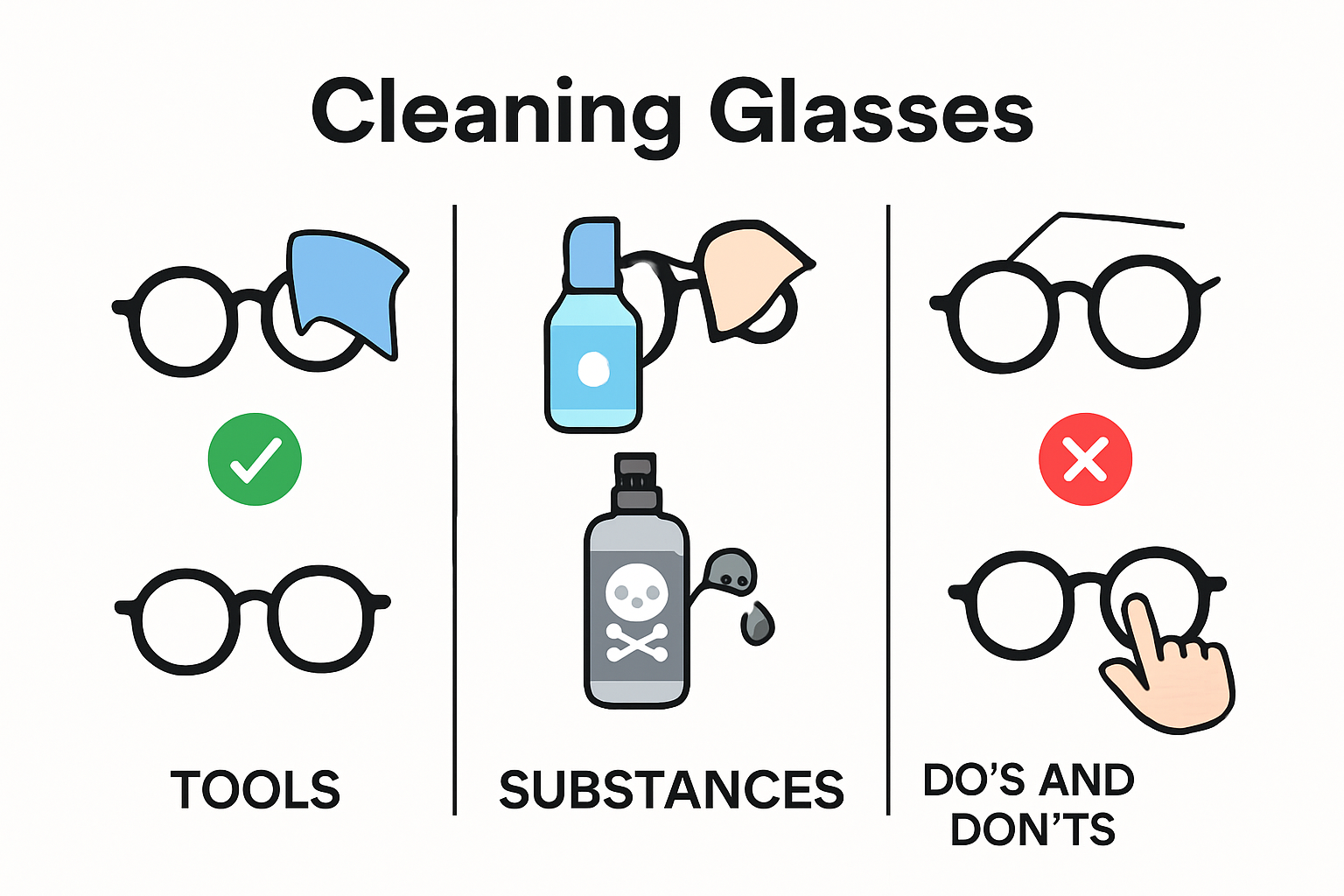
Here’s a comparison table outlining how different cleaning materials and solutions affect eyewear, as discussed above. This helps clarify which methods are safest for maintaining your glasses.
| Cleaning Material/Solution | Safe for Lenses? | Effect on Coatings | Notes |
|---|---|---|---|
| Microfibre Cloth | Yes | No damage | Specifically designed for lenses, removes smudges safely |
| Paper Towel/Clothing/Tissues | No | Can scratch/damage | Causes microscopic scratches, especially on coated lenses |
| Lotion-Free Dish Soap (Lukewarm) | Yes | Safe if diluted properly | Effective with water, does not strip coatings |
| Window/Household Cleaners | No | Can strip/damage coatings | Contains harsh chemicals damaging to protective layers |
| Specialist Lens Cleaning Spray | Yes | No damage if optical-specific | Convenient for on-the-go but ensure it’s designed for eyewear |
| Hot Water | No | Can damage coatings and frames | Avoid – use lukewarm water only |
Step-by-Step Guide to Cleaning Glasses at Home
Maintaining clean glasses is essential for clear vision and prolonging the life of your eyewear. A systematic approach to cleaning ensures you remove dirt, oils, and debris without risking damage to your lenses or frames. Learn more about contact lens care to complement your eyewear maintenance routine.
Preparation and Essential Tools
Before beginning the cleaning process, gather the right tools. According to Which? magazine, you’ll need a few key items: lukewarm water, mild lotion-free dish soap, a clean microfibre cloth, and optionally, a soft-bristled toothbrush for frame cleaning. Avoid using paper towels, tissues, or clothing, as these can introduce microscopic scratches to your lenses.
Start by washing your hands thoroughly to prevent transferring additional dirt or oils to your glasses. Remove any loose debris by gently blowing on the lenses or rinsing them under lukewarm water. This initial step helps prevent scratching during the cleaning process by removing larger particles that could potentially damage the lens surface.
Cleaning Technique for Optimal Results
Foster Grant’s optical experts recommend a careful cleaning technique. Apply a small drop of lotion-free dish soap to your fingertips, then gently rub both sides of the lenses using circular motions. Pay special attention to the areas around the nose pads and frame edges, where dirt and oils tend to accumulate. For hard-to-reach areas, use a soft-bristled toothbrush to gently clean the frame and nose pads.
Rinse the glasses thoroughly under lukewarm water, ensuring all soap is removed. Shake off excess water gently, then use a clean microfibre cloth to dry and polish the lenses. Avoid using any cloth that might leave lint or cause scratches. Vision Express emphasises the importance of using a dedicated microfibre cloth specifically designed for optical lenses.
Maintenance and Storage Tips

Cleaning your glasses is just one part of proper eyewear care. After cleaning, store your glasses in a protective case when not in use. Handle them by the frame to minimize fingerprints and potential lens damage. If you’re frequently on the go, carry a microfibre cloth and a small bottle of lens cleaning solution for quick touch-ups.
For those who wear glasses daily, establish a regular cleaning routine. Clean your glasses in the morning or evening, or whenever they become noticeably dirty. Avoid cleaning them when the lenses are dry, as this can cause unnecessary friction and potential scratching. By following these steps, you’ll keep your glasses clean, clear, and in excellent condition, ensuring optimal vision and prolonging the life of your eyewear.
The following process table summarises the recommended step-by-step method for cleaning your glasses safely and effectively.
| Step | Action | Purpose/Reason |
|---|---|---|
| 1 | Wash hands thoroughly | Prevents dirt/oil transfer to lenses |
| 2 | Rinse glasses under lukewarm water | Removes dust/grit, prevents scratching |
| 3 | Apply lotion-free dish soap with fingertips | Gently lifts oils and debris from lens surface |
| 4 | Gently rub lenses in circular motion | Ensures even cleaning, avoids excessive pressure |
| 5 | Clean nose pads/frame edges (optional: soft toothbrush) | Removes build-up from hard-to-reach areas |
| 6 | Rinse thoroughly under lukewarm water | Washes away all soap residues |
| 7 | Shake off excess water and dry with microfibre cloth | Polishes lenses and prevents water spots |
Special Care Tips for Busy Lifestyles and Conditions
Modern life demands quick solutions that don’t compromise on quality, especially when it comes to caring for your glasses. Professionals, parents, athletes, and individuals with packed schedules need efficient yet effective methods to maintain their eyewear. Explore our comprehensive eye care guide to understand how to integrate smart eyewear maintenance into your daily routine.
Quick Cleaning Solutions for On-the-Go Maintenance
According to Specsavers, busy individuals should invest in specialist lens cleaner sprays and high-quality microfibre cloths. These portable solutions enable rapid cleaning without risking lens damage. When time is limited, avoid using paper towels, clothing, or improvised cleaning materials that can introduce micro-scratches or degrade protective lens coatings.
Keep a small cleaning kit in your bag or car – a compact microfibre cloth and a travel-sized lens cleaning spray can be lifesavers during long workdays or when travelling. Always wash your hands before cleaning to prevent transferring additional oils or dirt onto your lenses. This simple step ensures both hygiene and optimal lens clarity.
Managing Glasses in Challenging Environments
ZEISS Vision Care highlights the importance of protecting glasses in diverse environments. For professionals working in dusty, humid, or high-activity settings, regular maintenance becomes crucial. Construction workers, healthcare professionals, athletes, and outdoor enthusiasts face unique challenges that require specialized care strategies.
Consider using protective cases that shield your glasses from extreme temperatures, dust, and potential impacts. For those in medical, industrial, or sporting environments, consider glasses with additional protective coatings that resist scratches and repel dust. Keep a spare microfibre cloth and cleaning solution readily available to address unexpected smudges or dirt accumulation quickly.
Specific Considerations for Different Lifestyle Needs
Each lifestyle presents unique eyewear maintenance challenges. Parents chasing toddlers, professionals switching between indoor and outdoor environments, and athletes engaging in high-intensity activities all require tailored approaches to glasses care.
For parents, keep glasses out of children’s reach and invest in robust frames that can withstand occasional rough handling. Professionals might benefit from anti-reflective and scratch-resistant coatings that maintain clarity during long screen time. Athletes should opt for frames and lens materials designed to withstand sweat, rapid temperature changes, and potential impact.
Regardless of your lifestyle, consistency is key. Develop a quick, effective cleaning routine that fits seamlessly into your daily schedule. A 30-second cleaning process using the right tools can prevent long-term damage and ensure your glasses remain in pristine condition. By adapting these strategies to your specific needs, you’ll protect your investment and maintain crystal-clear vision throughout your busy day.
Common Mistakes and How to Avoid Them
Cleaning glasses might seem straightforward, but numerous everyday habits can potentially damage your eyewear. Understanding and avoiding these common mistakes can significantly extend the life of your glasses and maintain optimal lens clarity. Learn more about protecting your vision investment to ensure long-term eye health and eyewear durability.
Improper Cleaning Techniques
Arthur Hayes Optical warns that one of the most prevalent mistakes is using inappropriate cleaning materials. Wiping glasses with clothing, paper towels, tissues, or shirt sleeves introduces microscopic scratches that accumulate over time, gradually degrading lens quality and visibility. These seemingly harmless actions can cause permanent damage to your expensive prescription lenses.
Instead, always use a dedicated microfibre cloth specifically designed for optical lenses. These cloths are engineered to remove smudges and dust without causing surface abrasions. When the cloth becomes dirty, wash it gently with mild soap and water, then air dry to maintain its cleaning effectiveness. Avoid using fabric softeners or dryer sheets, as these can leave residues that transfer to your lenses.
Harmful Cleaning Solutions
Glasses Store UK emphasises the critical importance of using only appropriate cleaning solutions. Household chemicals like window cleaners, bleach, or ammonia-based products can irreparably damage lens coatings. These harsh substances strip away protective layers, reducing the effectiveness of anti-reflective, scratch-resistant, and other specialized coatings.
Glasses2You highlights another common error: using beauty products or hand sanitisers to clean glasses. These products can leave sticky residues or chemically interact with lens coatings, causing long-term damage. Avoid micellar water, hand sanitisers, and other non-optical cleaning solutions. Stick to lukewarm water and a small amount of lotion-free dish soap for the most effective and safe cleaning method.
Storage and Handling Errors
Improper storage and handling can be just as damaging as incorrect cleaning techniques. Many people carelessly place glasses lens-down on surfaces, increasing the risk of scratches. Always place glasses in a hard-shell protective case when not in use, with the lenses facing upward. Avoid leaving glasses in extreme temperatures, such as on car dashboards or near heating sources, which can warp frames and damage lens coatings.
Handle your glasses by the frame, not the lenses. Touching lenses directly transfers oils and dirt, creating more frequent cleaning needs and potentially causing smudges that are difficult to remove. When removing or putting on glasses, use both hands to prevent unnecessary frame bending or lens stress.
By understanding and avoiding these common mistakes, you can significantly prolong the life of your glasses. Treat your eyewear as a precision instrument requiring careful maintenance. A few moments of mindful care can save you from costly replacements and ensure your glasses remain clear, comfortable, and in excellent condition for years to come.
Frequently Asked Questions
How should I clean my glasses to avoid scratches?
Always use a dedicated microfibre cloth specifically designed for optical lenses. Avoid using paper towels, clothing, or tissues as these can introduce microscopic scratches.
What is the best cleaning solution for glasses?
Use a small amount of mild, lotion-free dish soap diluted in lukewarm water. This is effective and safe for most lens types without damaging protective coatings.
How often should I clean my glasses?
It’s recommended to clean your glasses at least once a day to maintain clarity and prolong their lifespan. Clean them whenever they become noticeably dirty for optimal vision.
Can I use household cleaners to clean my glasses?
No, avoid using household cleaners, window cleaners, or beauty products, as these can damage lens coatings and lead to permanent damage. Stick to appropriate lens cleaning solutions or mild soap.
Keep Your Glasses Crystal Clear with Personal Support from Northern Optical Company
Are you tired of foggy, scratched lenses despite your best cleaning effort? The article above highlights the struggle of keeping glasses in top condition, especially when daily routines lead to messy smudges and unintentional damage from the wrong cloth or cleaner. It is frustrating when even gentle methods cause scratches or when coatings begin to wear away. You deserve better than unclear vision or repeated lens replacements.
Let our expert team at Northern Optical Company help you maintain lasting clarity. Visit us for professional advice on the most suitable cleaning methods, specialist lens coatings that resist daily life’s wear and tear, and eyewear tailored for every age and activity. Discover friendly, trustworthy guidance in Newcastle’s favourite family optician. Do not let another day of blurred vision hold you back. Book your visit or learn more today and enjoy glasses that truly go the distance.
Recommended Articles
- How to Clean Contact Lenses Safely (2025 Guide)
- Top Tips for Safe Contact Lens Use in 2025: A Guide for Every Lifestyle
- Contact Lens Storage Tips: Keep Your Lenses Clean in 2025
- Are Contacts Better Than Glasses? 2025 Guide For Every Lifestyle
- Contact Lenses Basics Guide 2025 – Simple Explanation
- Top Tips for Comfortable Contact Lenses in 2025