

Contact lens discomfort is a frustrating reality for many users, affecting their daily lives and vision clarity. Roughly 40 percent of contact lens wearers report experiencing discomfort during use. But here’s the kicker: discomfort often arises not just from poor lens fit or dryness but from a range of environmental and biological factors. The good news is that understanding these underlying causes can lead to effective relief strategies that transform your contact lens experience.
Table of Contents
- Common Culprits Of Contact Lens Discomfort
- Types Of Contact Lens Intolerance
- Simple Tips To Relieve Discomfort
- When To See An Eye Doctor
Quick Summary
| Takeaway | Explanation |
|---|---|
| Identify Discomfort Triggers | Understand common culprits of contact lens discomfort including environmental factors, lens material interactions, and biological adaptation to improve comfort. |
| Apply Immediate Relief Techniques | In case of discomfort, temporarily remove lenses, use preservative-free lubricating drops, and consider blinking exercises or cool compresses to soothe irritation. |
| Seek Professional Help | If experiencing severe pain, vision changes, or chronic discomfort, consult an eye care professional for tailored solutions and comprehensive eye assessments. |
| Implement Long-Term Care Strategies | Maintain proper lens hygiene, adhere to recommended wearing schedules, and consider periodic breaks from lens use to enhance long-term comfort. |
| Schedule Regular Eye Examinations | Routine check-ups are essential for monitoring eye health and ensuring proper lens fit and compatibility, ideally at least annually. |
Common culprits of contact lens discomfort
Contact lens discomfort is a complex issue that affects millions of wearers worldwide, transforming what should be a convenient vision correction method into a daily challenge. Understanding the root causes of this discomfort is crucial for finding effective solutions and maintaining eye health.
Environmental and Physiological Triggers
The human eye is remarkably sensitive, and contact lens wearers experience multiple factors that can compromise comfort. Research from the National Eye Institute reveals that environmental and physiological elements play significant roles in contact lens uncomfortable experiences.
Ocular surface stimuli contribute extensively to lens discomfort. Scientific studies have identified several key culprits, including:
- Hyperosmolarity: Changes in tear film composition
- Desiccation: Excessive eye dryness
- Thermal effects: Temperature variations affecting lens performance
- Inflammation: Biological responses to lens presence
- Mechanical friction: Physical interaction between lens and eye surface
Biological Adaptation and Lens Interaction
Contact lens wear fundamentally alters corneal sensitivity and tear dynamics. Advanced optometric research demonstrates that prolonged lens wear can reduce corneal sensitivity, disrupting natural blinking mechanisms and tear secretion processes.
A comprehensive study investigating contact lens discomfort uncovered fascinating distributions of underlying causes:
- 30% attributed to aqueous tear deficiency
- 25% related to lens-induced tear instability
- 14% connected to meibomian gland dysfunction
These percentages highlight the multifaceted nature of lens discomfort, emphasising that no single factor exclusively determines wearer experience.
Technological and Material Considerations
Modern contact lens materials and design significantly impact comfort levels. Different lens compositions interact uniquely with the eye’s biological environment. Silicone hydrogel lenses, for instance, offer improved oxygen transmission compared to traditional hydrogel variants, potentially reducing discomfort.
Factors like lens diameter, thickness, edge design, and moisture retention capabilities directly influence how comfortable a contact lens feels. Wearers experiencing persistent discomfort should consult eye care professionals to explore alternative lens technologies tailored to their specific physiological needs.
Understanding these complex interactions empowers contact lens wearers to make informed decisions about their eye health and comfort, transforming potential frustration into proactive management.
Types of contact lens intolerance
Contact lens intolerance represents a complex spectrum of eye reactions that can transform comfortable vision correction into a challenging experience. Understanding the distinct types of intolerance helps wearers and eye care professionals develop targeted management strategies.
Inflammatory and Allergic Responses
Inflammatory contact lens intolerance manifests through various physiological reactions. Clinical research from the International Contact Lens Society highlights multiple distinct presentations of lens rejection and sensitivity.
Giant Papillary Conjunctivitis (GPC) emerges as a significant intolerance type, characterised by:
- Large papillae (>3.0 mm) in the upper tarsal conjunctiva
- Chronic irritation mediated by immune and mechanical mechanisms
- Significant lens discomfort and potential wear discontinuation
Allergic conjunctivitis represents another critical intolerance variant. Specific triggers include sensitivity to lens care solution preservatives like thiomersal, presenting with:
- Intense redness around lens insertion
- Burning and itching sensations
- Visible perilimbal injection surrounding the cornea
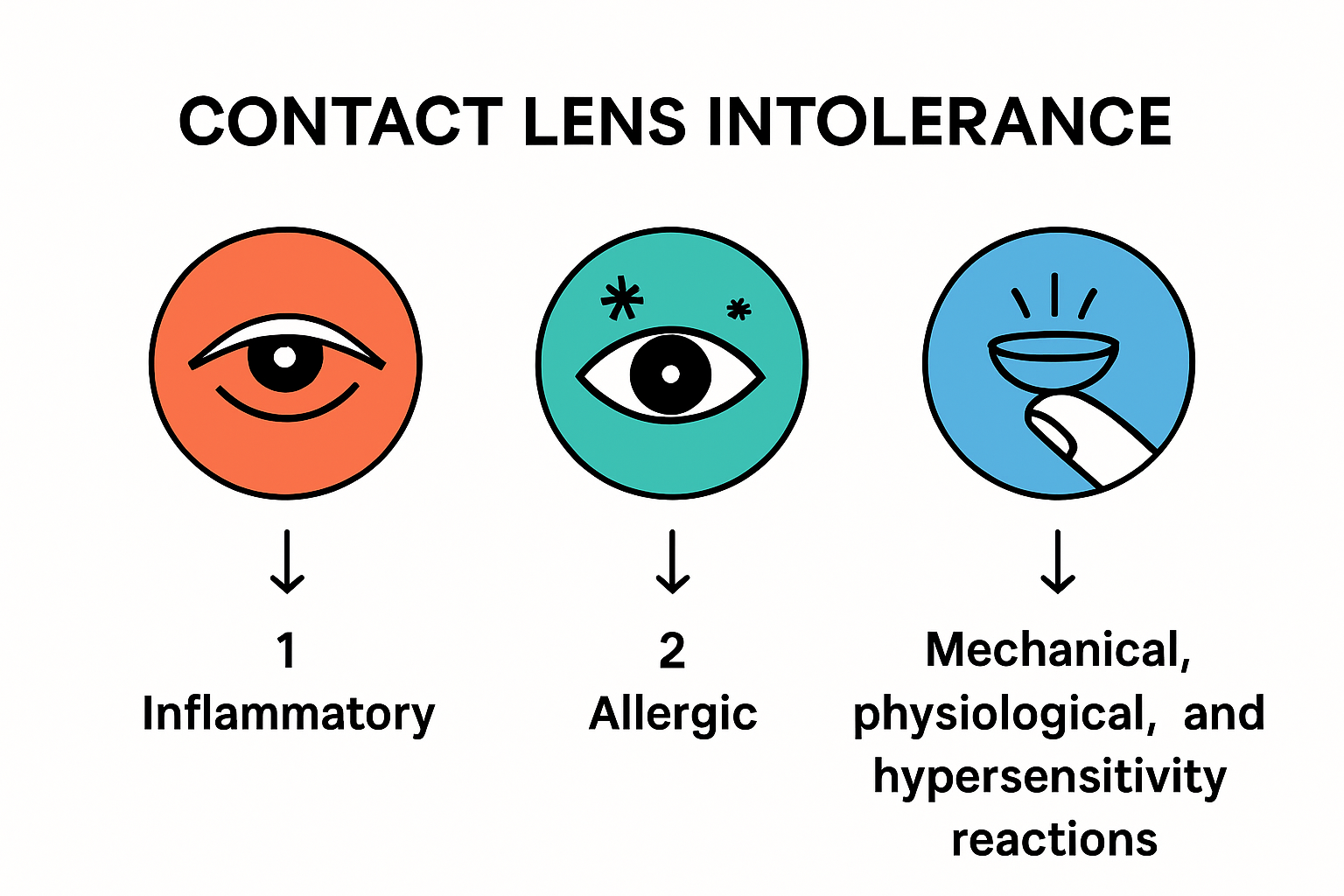
Mechanical and Physiological Intolerance
Mechanical contact lens intolerance stems from physical interactions between lens materials and ocular surfaces. Optometric research identifies several key manifestations:
- Persistent dry eye symptoms
- Continuous foreign body sensation
- Unexplained eye pain or stinging
- Potential corneal abrasions or ulcer development
These mechanical responses often result from incompatible lens materials, improper fit, or prolonged wear that disrupts natural tear film dynamics.
Hypersensitivity and Complex Reactions
Some contact lens wearers experience complex hypersensitivity reactions that transcend traditional inflammatory responses. These intricate physiological interactions can include:
- Neurogenic inflammation triggered by lens contact
- Immune system overreactions to lens materials
- Microscopic corneal surface changes
- Increased nerve sensitivity in ocular regions
Advanced immunological studies suggest that individual genetic predispositions significantly influence these hypersensitivity manifestations, explaining why some individuals develop intolerance while others remain asymptomatic.
Comprehensive understanding of these intolerance types empowers patients and practitioners to develop personalised approaches, potentially salvaging contact lens wear experiences that might otherwise be abandoned due to persistent discomfort.
Simple tips to relieve discomfort
Contact lens discomfort can significantly impact daily life, but numerous practical strategies exist to alleviate these challenges and improve overall wearing experience. Understanding and implementing targeted interventions can transform uncomfortable lens wear into a more pleasant vision correction method.
Immediate Relief Techniques
Clinical research suggests that simple interventions can provide substantial relief for contact lens wearers. The most immediate and effective strategy often involves temporarily removing contact lenses, allowing the eyes to rest and naturally recalibrate.
Quick relief methods include:
- Gently removing lenses and allowing eyes to breathe
- Using preservative-free lubricating eye drops
- Blinking repeatedly to redistribute tear film
- Applying a clean, cool compress to soothe irritated eyes
Randomized controlled trials indicate that lubricating drops may improve contact lens comfort, though the evidence remains of very low certainty. Wearers should opt for drops specifically designed for contact lens use, ensuring compatibility with their specific lens type.
Long-Term Comfort Management
Prolonged contact lens wear can gradually diminish comfort levels. Research demonstrates that comfort typically declines over extended wearing periods, particularly during 12-hour continuous use.
Strategic approaches to maintain long-term comfort include:
- Implementing strict lens hygiene practices
- Adhering to recommended wearing schedules
- Using fresh lens solution daily
- Replacing lenses according to manufacturer guidelines
- Considering periodic breaks from lens wear
Eye care professionals recommend rotating between glasses and contact lenses to prevent continuous ocular stress and allow natural tear film restoration.
Professional Intervention and Personalized Solutions
Persistent discomfort requires professional assessment. An comprehensive eye examination can reveal underlying issues that might be contributing to lens intolerance. Optometrists can:
- Assess current lens fit and material compatibility
- Recommend alternative lens technologies
- Check for potential eye health concerns
- Provide customized wearing strategies
Some individuals might benefit from specialty lens designs, such as:
- Silicone hydrogel lenses with enhanced breathability
- Lenses with moisture-retaining technologies
- Custom-fitted lenses addressing specific corneal topography
Individuals experiencing consistent discomfort should not hesitate to consult eye care professionals. Each person’s ocular environment is unique, and personalized solutions offer the most effective path to comfortable contact lens wear.
By combining self-management techniques, professional guidance, and a proactive approach to eye health, contact lens wearers can significantly improve their comfort and overall vision correction experience.
When to see an eye doctor
Navigating contact lens discomfort can be challenging, and recognising when professional medical intervention is necessary is crucial for maintaining optimal eye health and preventing potential long-term complications.
Urgent Warning Signs
The Royal College of Ophthalmologists emphasises several critical symptoms that demand immediate professional attention. Wearers should schedule an urgent eye examination if experiencing:
- Severe eye pain or persistent discomfort
- Sudden vision changes or blurriness
- Unusual redness lasting more than 24 hours
- Discharge or excessive tearing
- Sensitivity to light
- Visible swelling around the eye
These symptoms could indicate serious underlying conditions such as corneal infections, potential ulcers, or inflammatory responses that require professional assessment and potential treatment.
Chronic Discomfort Indicators
National Health Service (NHS) guidelines recommend seeking professional advice when experiencing consistent or recurring contact lens discomfort. Chronic issues warranting medical consultation include:
- Consistent dryness not relieved by lubricating drops
- Persistent foreign body sensation
- Unexplained eye fatigue
- Reduced wearing tolerance
- Recurring eye infections
- Changes in lens comfort over time
Eye care professionals can conduct comprehensive assessments to identify potential underlying causes, such as dry eye syndrome, allergic reactions, or lens material incompatibility.
Preventative and Routine Examinations
British Contact Lens Association recommends regular professional eye examinations, even without apparent issues. Routine check-ups serve multiple critical purposes:
-
Assessing overall eye health
-
Evaluating current lens fit and performance
-
Screening for potential developing conditions
-
Updating prescription
-
Exploring technological advancements in lens design
Experts suggest comprehensive eye examinations at least annually, or more frequently for individuals with pre-existing eye conditions or those experiencing consistent discomfort.
Contact lens wearers should view these professional consultations as proactive health management rather than reactive interventions. Early detection and professional guidance can prevent minor issues from developing into significant eye health challenges, ensuring continued comfortable and safe contact lens wear.
Remember, your eyes are complex and delicate organs. When in doubt about any unusual symptoms or persistent discomfort, consulting an eye care professional is always the wisest course of action.
Frequently Asked Questions
Why do my contact lenses feel uncomfortable?
Contact lens discomfort can arise from various factors including dry eyes, poor lens fit, environmental triggers, and the material of the lenses. Identifying the underlying cause is essential for finding relief.
What are common causes of contact lens discomfort?
Common causes include hyperosmolarity, excessive dryness, mechanical friction between the lens and eye surface, and inflammation due to lens wear. Environmental conditions can also exacerbate these issues.
How can I relieve discomfort from my contact lenses?
To relieve discomfort, try removing your lenses to allow your eyes to rest, use preservative-free lubricating eye drops, perform blinking exercises, or apply a cool compress. If issues persist, consult an eye care professional.
When should I see an eye doctor about my contact lens discomfort?
You should consult an eye doctor if you experience severe pain, sudden vision changes, unusual redness lasting more than 24 hours, or persistent discomfort that interferes with daily activities. Regular check-ups are also recommended to monitor eye health.
Discover the Comfort You Deserve with Northern Optical Company
Are you frustrated with contact lens discomfort affecting your daily life? You’re not alone. As highlighted in our recent article, 40% of contact lens wearers report discomfort linked to environmental triggers, lens interactions, and biological adaptability. But here’s the good news: finding the right solution can significantly improve your experience!
At Northern Optical Company, we understand the unique challenges that come with wearing contact lenses. Our comprehensive eye care services range from standard eye exams to enhanced examinations using advanced technology, ensuring we address any underlying issues contributing to your discomfort. Whether it’s recommending silicone hydrogel lenses for optimal oxygen flow or providing bespoke solutions tailored to your eye health, our team is committed to helping you see clearly and feel comfortable.
Don’t let discomfort hold you back any longer! Visit us today at northernopticalcompany.com or call us to book your appointment. Take the first step towards a pain-free vision experience!