
Eye test procedures are more than just a formality; they are your gateway to understanding and maintaining your vision health. Regular eye tests are recommended every two years for adults to catch potential issues before they escalate. But here’s the twist: many people dread these tests, viewing them as a cumbersome chore. In reality, knowing what to expect can transform your anxiety into confidence. By familiarising yourself with the testing processes, you can empower yourself to engage actively in your eye care journey and take control of your vision.
Table of Contents
Quick Summary
| Takeaway | Explanation |
| Regular Eye Tests Every 2 Years | Routine eye examinations are essential for maintaining your vision and detecting potential eye issues, and are recommended every two years for adults according to health guidelines. |
| Understanding Test Procedures Reduces Anxiety | Familiarising yourself with the pre-test assessment, comprehensive vision assessment, and eye health examination processes can alleviate anxiety and help you feel prepared for your appointment. |
| Know Your Prescription Components | If glasses or contact lenses are prescribed, understanding the terms like Sphere, Cylinder, and Axis will help you make informed decisions about your vision correction options. |
| Implement Good Eye Care Habits | Protect your eye health by wearing sunglasses outdoors, following the 20-20-20 rule during screen time, and maintaining a diet rich in nutrients beneficial for vision. |
| Stay Vigilant for Changes in Vision | Keep track of any changes in your sight and seek immediate attention if you experience discomfort or new symptoms, ensuring prompt care for potential issues. |
Understanding Eye Test Procedures
Eye test procedures are comprehensive examinations designed to assess your visual health and detect potential issues before they become serious problems. Understanding what happens during an eye test can help reduce anxiety and ensure you’re prepared for your appointment. Regular eye tests are recommended every two years for adults, as supported by the UK Department for Transport and the National Health Service.
Pre-Test Assessment
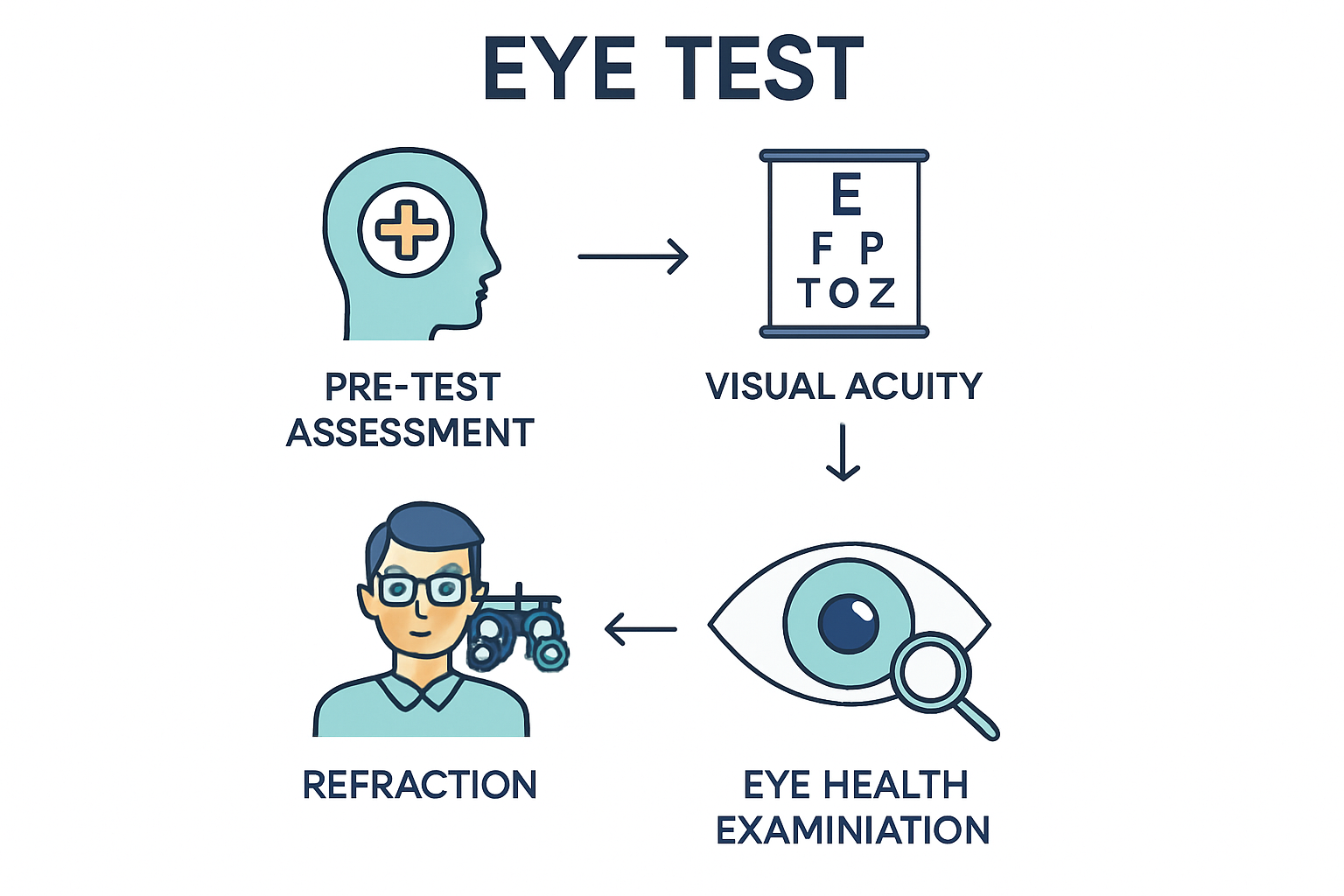
When you arrive for your eye test, the process typically begins with a pre-test assessment. The optometrist or assistant will ask about your medical history, current medications, and any vision problems you’ve been experiencing. This information is crucial as it helps guide the examination. They’ll also inquire about your lifestyle, including how much time you spend looking at screens, driving habits, and whether you participate in sports or activities that might affect your vision needs.
You might also be asked to complete a simple vision screening where you’ll read letters from a chart positioned across the room. This initial check provides a baseline understanding of your visual acuity. Some practices also use autorefractors—machines that give a preliminary measurement of your prescription—before the main examination begins.
Comprehensive Vision Assessment
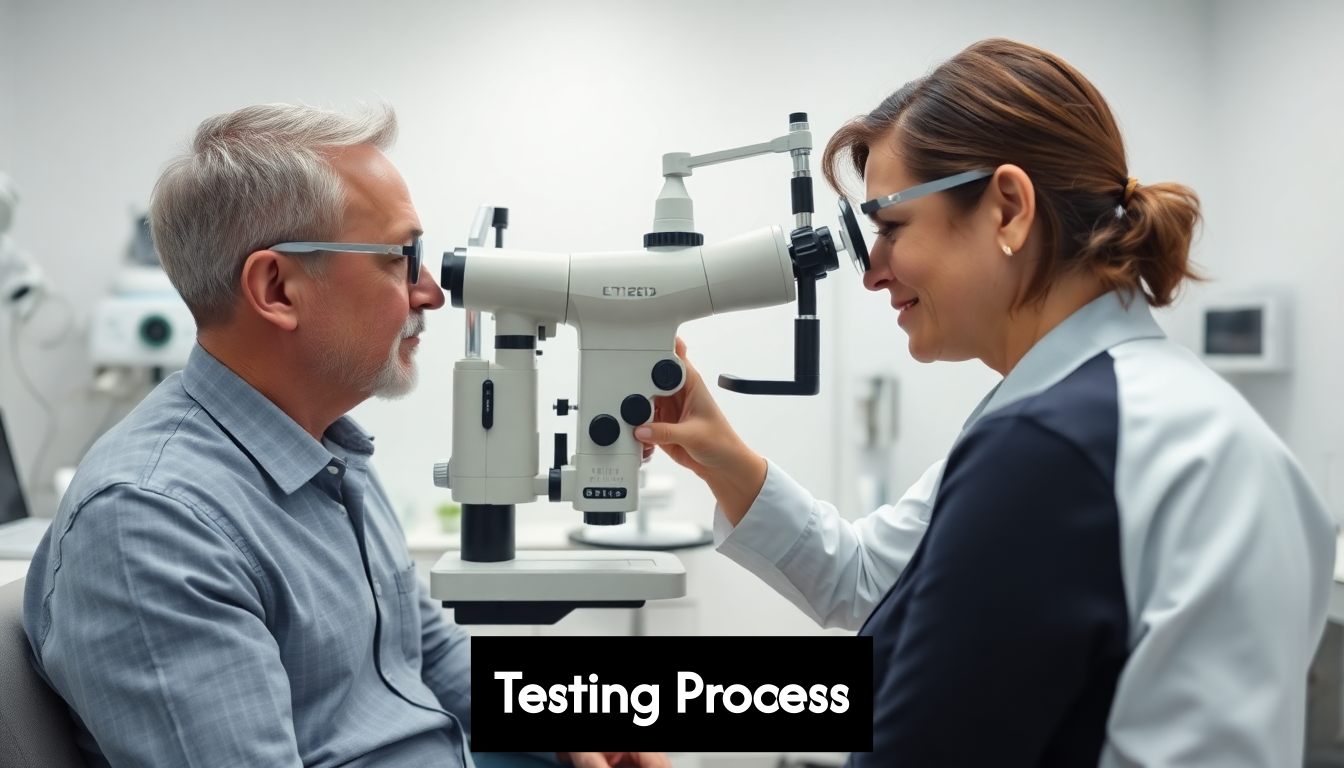
The core part of an eye test involves several procedures to thoroughly evaluate your vision. The optometrist will conduct a refraction test to determine if you need glasses or contact lenses and what prescription strength you require. This typically involves looking through a phoropter—a device with multiple lenses that helps determine which combination gives you the clearest vision.
During this assessment, you’ll be asked to identify letters or symbols on a chart while the optometrist adjusts different lenses. You might hear questions like “Which is clearer: one or two?” as they fine-tune your prescription. Don’t worry about giving “wrong” answers—the goal is to find what works best for your eyes.
The optometrist will also check how well your eyes work together (binocular vision), assess your peripheral vision, and evaluate your color vision. These tests help identify issues like eye muscle imbalances or color blindness that might affect your daily life.
Eye Health Examination
Beyond vision testing, a thorough eye examination includes checking the health of your eyes. The optometrist will use specialized equipment to examine both the external and internal structures of your eyes.
A slit lamp—a microscope with a bright light—allows detailed examination of your eye’s front structures, including the cornea, iris, and lens. The optometrist may also check your eye pressure using a tonometer, which helps detect conditions like glaucoma.
One of the most important parts of an eye health exam is the retinal examination. The optometrist dilates your pupils with eye drops to get a clearer view of your retina, optic nerve, and blood vessels at the back of your eye. Alternatively, many practices now offer OCT (Optical Coherence Tomography) scans, which provide detailed images of your retina without requiring dilation.
From April 2025, NHS eye health assessments in the UK will include evaluations specifically tailored to the patient’s presenting signs, symptoms, and needs, along with refraction and assessment of vision needs, making tests even more comprehensive and personalized to individual requirements, according to NHS Scotland publications.
After completing all these procedures, your optometrist will discuss their findings with you. They’ll explain any vision problems detected, recommend appropriate solutions, and provide advice on maintaining good eye health. If glasses are needed, they can guide you through lens options and frame selection, or if you prefer contact lenses, they can discuss suitable types for your lifestyle and eye condition.
Understanding these eye test procedures helps you appreciate the thoroughness of these examinations. Regular eye tests not only ensure optimal vision but also play a crucial role in detecting early signs of eye diseases and even general health conditions like diabetes or high blood pressure.
The Testing Process Explained
While we’ve discussed the general overview of eye test procedures, let’s delve deeper into the specific testing processes you’ll experience during a comprehensive eye examination. Understanding each component will help you feel more comfortable and engaged during your appointment.
Visual Acuity and Refraction
Every eye test begins with measuring your visual acuity—how clearly you can see at various distances. The familiar Snellen chart with rows of letters decreasing in size is commonly used for this purpose. You’ll cover one eye at a time and read the smallest line of letters you can see clearly. This provides a baseline measurement, often expressed as a fraction like 6/6 (known as 20/20 in the United States).
Following visual acuity testing, the optometrist performs refraction to determine your precise prescription. According to the College of Optometrists, this process must include measuring the visual acuity of each eye individually. The refraction may be done manually using a phoropter or trial frame with various lenses, or with computerised equipment for preliminary measurements followed by fine-tuning.
During refraction, your optometrist will ask you to compare different lens options, typically saying, “Which is clearer, lens one or lens two?” This subjective feedback helps them pinpoint the ideal prescription for your unique vision needs. They’ll also check your ability to focus at different distances (accommodation) and how your eyes work together (binocular vision).
External and Internal Eye Examination
A thorough assessment of your eye’s health involves examining both external and internal structures. The optometrist will first check your external eye, including your eyelids, lashes, cornea, and iris, looking for any signs of infection, irritation, or abnormalities.
For a detailed examination of your eye’s anterior segment (the front portion), the College of Optometrists recommends slit-lamp biomicroscopy. This specialised microscope with an intense light source allows the optometrist to see your eye structures magnified and in three dimensions. They’ll check your cornea, iris, lens, and the fluid-filled chambers of your eye for signs of conditions like cataracts or corneal damage.
The internal eye examination is crucial for detecting serious eye conditions before they threaten your vision. UK standards require that every routine eye examination must include direct ophthalmoscopy on an undilated eye at minimum. Your optometrist will use an ophthalmoscope (a handheld device with a light and magnifying lenses) to examine your retina, optic nerve, blood vessels, and macula. If they cannot get a clear view of your fundus (the back of your eye), professional guidelines indicate they should either dilate your pupils with drops or use indirect examination methods.
Specialised Tests and Documentation
Depending on your age, risk factors, and symptoms, your optometrist may perform additional specialised tests. These might include:
-
Tonometry to measure intraocular pressure (important for glaucoma screening)
-
Visual field testing to check your peripheral vision
-
Colour vision assessment
-
Tear film evaluation for dry eye diagnosis
For patients with specific concerns or risk factors, OCT (Optical Coherence Tomography) scanning may be recommended. This advanced imaging technique provides detailed cross-sectional views of your retina, helping to detect conditions like macular degeneration or glaucoma at their earliest stages.
The NHS requires practitioners to document all methods used during each stage of your assessment. This thorough documentation ensures your care meets professional standards and provides valuable information for tracking changes in your eye health over time. As noted by the College of Optometrists, proper documentation also helps ensure any signs of injury, disease, or abnormality are detected during the procedure.
After completing all necessary tests, your optometrist will discuss their findings with you, explain any concerns, and recommend appropriate next steps. These might include updating your prescription, referring you to a specialist, or scheduling follow-up testing. They should also advise you on when to return for your next routine examination based on your risk factors and vision needs.
By understanding each component of the testing process, you can better appreciate the comprehensive nature of eye examinations and their importance in maintaining not just your vision, but your overall health.
Interpreting Your Test Results
After completing your eye examination, you’ll receive results that might seem like a jumble of numbers and abbreviations. Understanding these results helps you grasp your eye health status and the reasoning behind any recommendations for glasses, contact lenses, or further medical attention.
Understanding Visual Acuity Measurements
One of the most familiar test results is your visual acuity score. In the UK, this is typically expressed using the 6/6 standard (equivalent to 20/20 in the US). According to Specsavers, this measurement means you can see at 6 metres what a person with standard vision can see at the same distance. If your result shows 6/12, it indicates you can see at 6 metres what someone with normal eyesight would see at 12 metres, suggesting reduced visual acuity.
These measurements provide a clear benchmark of your vision quality, but they’re just one aspect of your overall eye health. Many people with 6/6 vision may still require correction for other issues like astigmatism or presbyopia. Likewise, someone with a measurement like 6/9 might function perfectly well without glasses for most activities, depending on their lifestyle needs.
It’s worth noting that visual acuity measurements alone don’t tell the complete story about your vision. They primarily assess distance vision clarity and don’t account for near vision, peripheral awareness, depth perception, or color vision – all essential aspects of complete visual function.
Decoding Your Prescription
If your optometrist determines you need vision correction, you’ll receive a prescription with several components. As detailed by Banton Frameworks, a typical prescription contains values for:
-
Sphere (SPH): This number indicates the lens power needed to correct long-sightedness (positive numbers) or short-sightedness (negative numbers). For example, -2.50 means you’re short-sighted, while +1.75 indicates long-sightedness.
-
Cylinder (CYL): This represents the additional lens power needed to correct astigmatism, an irregularity in the eye’s curvature. If this field is blank or shows 0.00, you don’t have significant astigmatism.
-
Axis: Measured in degrees from 1 to 180, this number shows the orientation of astigmatism correction. It’s only relevant if you have a cylinder value.
-
ADD: This appears on prescriptions for bifocal or progressive lenses, indicating the additional magnifying power needed for near vision tasks like reading.
Your prescription will list separate measurements for your right eye (often marked as “RE” or “R”) and left eye (“LE” or “L”), with the right eye details typically recorded first. The numbers might differ between eyes, as most people have some degree of difference in their visual abilities.
Some prescriptions also include a measurement for pupillary distance (PD), which is the distance between the centers of your pupils. This measurement is crucial for properly positioning the lenses in your glasses frames.
Beyond the Numbers: Interpreting Eye Health Findings
Beyond vision correction, your eye test results may include findings about your overall eye health. These might reference the condition of your retina, optic nerve, cornea, or other structures examined during your test.
If your optometrist detects signs of eye conditions like glaucoma, cataracts, or macular degeneration, they’ll explain these findings and their significance. They might use terms like “cup-to-disc ratio” (relating to glaucoma assessment) or “drusen” (small deposits associated with macular degeneration).
Your results might also include intraocular pressure readings from tonometry tests. Normal pressure typically ranges between 10-21 mmHg (millimeters of mercury). Consistent readings above this range might indicate increased risk for glaucoma, though other factors are also considered in diagnosis.
It’s important to understand that while your eye test provides valuable information, only a qualified optician can accurately interpret these results. Various clinical factors must be considered together, not just individual measurements. This is why your optometrist takes time to explain the results and their implications for your vision and eye health.
If you notice changes in your vision between appointments—such as increased difficulty reading, seeing at night, or experiencing visual disturbances—don’t wait for your next scheduled examination. Contact your optometrist for guidance, as these changes could indicate a need for prescription adjustments or further evaluation of your eye health.
Understanding your test results empowers you to take an active role in maintaining your vision and eye health, making informed decisions about correction options and follow-up care.
Aftercare and Vision Enhancement
Once your eye examination is complete and you’ve received your prescription, the journey to optimal vision and eye health continues. Proper aftercare and vision enhancement strategies play a crucial role in maintaining the health of your eyes and maximizing your visual experience in daily life.
Implementing Your Vision Correction Plan
If your optometrist has prescribed glasses or contact lenses, the next step is selecting the right option for your lifestyle. When choosing glasses, consider factors beyond just style—lens materials, coatings, and frame durability all affect your visual comfort and the longevity of your eyewear.
For glasses wearers, anti-reflective coatings reduce glare and eye strain, especially when using digital devices or driving at night. Blue light filtering lenses may benefit those who spend long hours in front of screens. Photochromic lenses that darken in sunlight offer convenience for those frequently moving between indoor and outdoor environments.
If you’ve opted for contact lenses, your optometrist will arrange a fitting session to determine the most suitable type for your eyes and lifestyle. Whether you choose daily disposables, monthlies, or extended wear lenses, proper hygiene and handling are essential to prevent eye infections and complications. Follow your practitioner’s instructions carefully regarding cleaning solutions, replacement schedules, and wearing times.
It’s worth noting that contact lens aftercare is typically not covered under General Ophthalmic Services (GOS) in the UK. However, as stated by NHS Scotland, if you experience an eye emergency not covered by your existing aftercare arrangements, a GOS claim may be made—with the recommendation that your regular contact lens practitioner be informed about the situation.
Protecting Your Eye Health Between Examinations
The care you provide for your eyes between professional examinations significantly impacts your long-term vision health. Simple daily habits can protect your eyes from strain and damage.
When spending time outdoors, always wear quality sunglasses with proper UV protection. The College of Optometrists emphasizes that sunglasses should display the UKCA or CE mark to ensure they meet safety standards. Many people underestimate the need for sun protection during winter months, but UV exposure can be harmful year-round, particularly when sunlight reflects off snow or water.
For those who work with digital screens, follow the 20-20-20 rule: every 20 minutes, look at something 20 feet away for at least 20 seconds. This simple practice helps reduce digital eye strain. Position your screen at arm’s length and slightly below eye level to minimize neck strain and dry eyes.
Maintain proper hydration and consider using preservative-free artificial tears if you experience dry eyes, especially in air-conditioned environments or during long screen sessions. A diet rich in omega-3 fatty acids, vitamins A, C, and E, and zinc supports eye health—include leafy greens, fish, nuts, and colorful fruits and vegetables in your meals.
Follow-up Care and Record Keeping
After receiving your prescription and vision correction, you may need follow-up appointments to ensure everything is working correctly. For new glasses wearers, adjustments to frames might be necessary for comfort. Contact lens users typically require a review after the initial fitting to confirm the lenses are performing well.
Keep track of any changes in your vision between regular examinations. Sudden changes, persistent discomfort, flashes of light, or new floaters warrant immediate attention—contact your optometrist rather than waiting for your next scheduled appointment.
Optometrists are required to maintain comprehensive records of all eye examinations, as mandated by UK professional standards. According to NHS Scotland publications, these clinical records ensure continuity of care and allow for monitoring changes in eye health over time. You can request copies of your records if you change practitioners or need to share information with other healthcare providers.
Many optometry practices now offer digital tools to enhance your aftercare experience. These might include apps for tracking your contact lens replacement schedule, reminders for appointments, or educational resources about eye health. Taking advantage of these tools can help you maintain consistent care between professional visits.
By actively participating in your vision aftercare plan and implementing eye health protection strategies in your daily routine, you’re not just maintaining clear vision today—you’re investing in a lifetime of healthy sight. Remember that vision care is an ongoing process, not just a one-time examination, and your diligence between professional appointments plays a significant role in preserving your eye health.
Frequently Asked Questions
What can I expect during an eye test?
During an eye test, you can expect a pre-test assessment of your medical history, followed by various procedures to evaluate your vision and eye health. This includes tests for visual acuity, refraction, and examinations of the internal and external eye structures.
How often should adults have an eye test?
Adults are recommended to have an eye test every two years. This helps detect any potential issues before they escalate and ensures ongoing monitoring of eye health.
What do the numbers on my eye test prescription mean?
The numbers on your eye test prescription indicate the strength of lenses required to correct your vision. This includes the Sphere (SPH), Cylinder (CYL), and Axis measurements, which help identify your level of short-sightedness, long-sightedness, and astigmatism.
Why is it important to understand my eye test results?
Understanding your eye test results empowers you to take an active role in your vision care. It helps you comprehend the health of your eyes, the need for any corrective measures, and the implications for your overall eye health.
Elevate Your Eye Care Experience with Northern Optical Company
At Northern Optical Company, we understand that eye tests can be daunting, yet they are essential for safeguarding your vision. As discussed in Mastering Eye Test Procedures in 2025, familiarity with the testing process can significantly reduce anxiety and empower you in your eye care journey. But you don’t have to navigate it alone! Our dedicated team is here to ensure that each step—from the comprehensive vision assessment to interpreting your test results—is handled with care and professionalism.
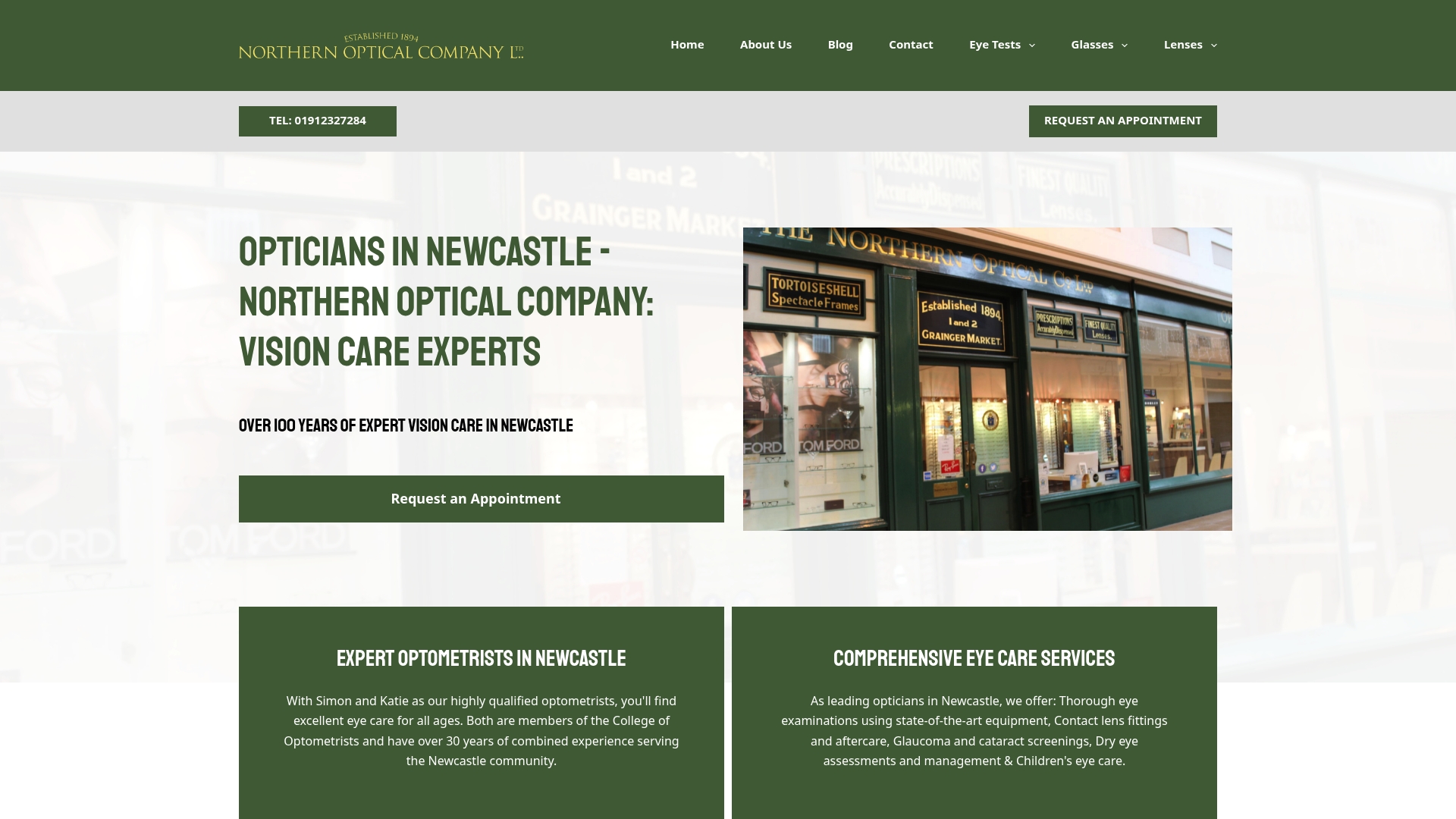
We offer an array of bespoke eye care solutions tailored for you:
-
Standard and Enhanced Eye Tests: Experience thorough examinations, including state-of-the-art OCT scans.
-
Home Visits: If mobility is a concern, we’ll bring expert care directly to you.
-
Stylish Eyewear for Every Lifestyle: Our collection suits everyone—from outdoorsy kids to discerning adults.
Book your next eye test today with Northern Optical Company and enjoy peace of mind knowing you are prioritising your eye health with trusted local experts. Visit us now at https://northernopticalcompany.com and transform your vision care experience!