

Contact lenses are a common choice for vision correction, yet they pose hidden dangers. Studies show that reusable contact lens users are nearly four times more likely to develop serious eye infections. But here’s the kicker: the most alarming aspect is not the lenses themselves but the lack of proper hygiene. Neglecting basic eye care can lead to severe complications that could threaten your sight. Discover the essential steps to safeguard your eye health and keep those infections at bay.
Table of Contents
- Why Contact Lenses Cause Infections
- Symptoms Of Contact Lens Infections
- Preventing Contact Lens Related Infections
- When To See Your Doctor
Quick Summary
| Takeaway | Explanation |
|---|---|
| Proper Hygiene Is Essential | Always wash and dry hands before handling contact lenses, use fresh solution daily, and replace lens storage cases every three months to minimise infection risk. |
| Recognise Symptoms Early | Be vigilant for early warning signs of infection such as persistent eye pain, unusual discharge, and sudden vision changes, which require immediate medical attention. |
| Preventive Measures Are Key | Consider daily disposable lenses, adhere to manufacturer replacement schedules, and schedule regular eye examinations to maintain eye health and prevent serious infections. |
Why Contact Lenses Cause Infections
Contact lenses provide convenience and clear vision, but they also create an environment that can harbour dangerous bacteria and microorganisms. Understanding how and why these infections develop is crucial for protecting your eye health and preventing potentially serious complications.
Bacterial Breeding Grounds: The Hidden Risks of Contact Lens Wear
Contact lenses create a perfect ecosystem for bacterial growth by trapping moisture and reducing oxygen flow to the eye. When contact lenses are not properly cleaned, stored, or replaced, they become breeding grounds for harmful microorganisms. Research from University College London reveals that reusable contact lens users are nearly four times more likely to develop Acanthamoeba keratitis (AK), a rare but sight-threatening eye infection.
The primary culprits behind contact lens infections include:
- Improper Hygiene: Not washing hands before handling lenses
- Poor Lens Maintenance: Inadequate cleaning and disinfection
- Extended Wear: Sleeping or showering with contact lenses
- Contaminated Storage Cases: Bacteria accumulation in lens containers
Moisture and Microbial Invasion
Moisture is a critical factor in contact lens infections. When lenses remain damp and are not frequently replaced, they become ideal environments for microbial colonization. Research from Fight for Sight indicates that microbial keratitis is the primary sight-threatening complication associated with contact lens use, affecting an estimated population of 300 million contact lens wearers globally.
The infection process typically follows these stages:
- Bacteria accumulate on lens surface
- Reduced oxygen flow creates vulnerable eye environment
- Microorganisms multiply and penetrate corneal tissue
- Inflammation and potential vision damage occur
Technological Advances In Infection Detection
Encouraging developments are emerging in contact lens infection management. Researchers at Bradford University have developed a groundbreaking “smart contact lens” capable of detecting various bacterial and fungal infections. This innovation could revolutionize how quickly and accurately eye infections are identified, potentially replacing invasive testing methods that currently require tissue samples and lengthy culture processes.
To minimise infection risks, contact lens wearers must adopt rigorous hygiene practices, including:
- Washing hands thoroughly before lens handling
- Using fresh solution for lens cleaning daily
- Replacing lens storage cases every three months
- Following manufacturer’s recommended wear and replacement schedule
- Avoiding lens wear during eye infections or illness
By understanding the mechanisms behind contact lens infections and implementing strict hygiene protocols, wearers can significantly reduce their risk of developing potentially serious eye health complications.
Symptoms of Contact Lens Infections
Recognising the early signs of a contact lens infection is crucial for preventing serious eye complications. While some symptoms might seem minor, they can quickly escalate into significant health risks that require immediate medical attention.
Early Warning Signs of Eye Infection
Contact lens-related infections often present with distinctive symptoms that differentiate them from routine eye irritation. Patient Information Resources highlight several key indicators that contact lens wearers should never ignore:
- Persistent Eye Pain: Continuous discomfort beyond normal lens wear
- Unusual Discharge: Thick, coloured, or excessive eye secretions
- Sudden Vision Changes: Blurriness or reduced visual clarity
- Increased Light Sensitivity: Difficulty tolerating normal light levels
- Redness and Swelling: Pronounced inflammation around the eye
These symptoms can develop rapidly and signal potential serious infections like microbial keratitis, which requires emergency medical evaluation. Northern Optical Company emphasises that any persistent or worsening symptoms demand immediate professional assessment.
Specific Infection Types And Their Manifestations
Different types of contact lens infections present unique symptom profiles. Specialist ophthalmological research identifies several critical variations:
- Bacterial Keratitis: Characterised by intense eye pain, significant redness, and potential pus formation
- Viral Infections: Often involve watery discharge, increased sensitivity, and potential corneal ulceration
- Acanthamoeba Keratitis: A rare but severe infection presenting with extreme pain, light sensitivity, and potential vision-threatening complications
Acanthamoeba keratitis, in particular, represents a unique challenge. Specialist medical guidance notes that this infection can initially mimic herpes simplex and must be carefully differentiated through professional diagnostic techniques.
When To Seek Immediate Medical Attention
Certain symptoms demand urgent medical intervention. Contact lens wearers should seek immediate professional help if experiencing:
- Severe or worsening eye pain
- Significant vision changes
- Complete inability to open the eye
- Greenish or yellowish discharge
- Extreme light sensitivity
- Visible ulceration or significant eye surface changes
Professional diagnosis typically involves a comprehensive eye examination, potential culture testing of the contact lenses and solution, and targeted treatment based on the specific infection type.
Prevention remains the most effective strategy. Regular eye check-ups, strict hygiene practices, and immediate action when symptoms arise can significantly reduce the risk of serious contact lens-related eye infections.
Preventing Contact Lens Related Infections
Preventing contact lens infections requires a proactive and disciplined approach to eye health. By understanding and implementing strategic hygiene practices, contact lens wearers can significantly reduce their risk of developing potentially serious eye infections.

Fundamental Hygiene Practices
Research from University College London highlights that contact lens wearers using reusable lenses are nearly four times more likely to develop sight-threatening infections compared to those using daily disposables. This underscores the critical importance of rigorous hygiene protocols.
Key preventative strategies include:
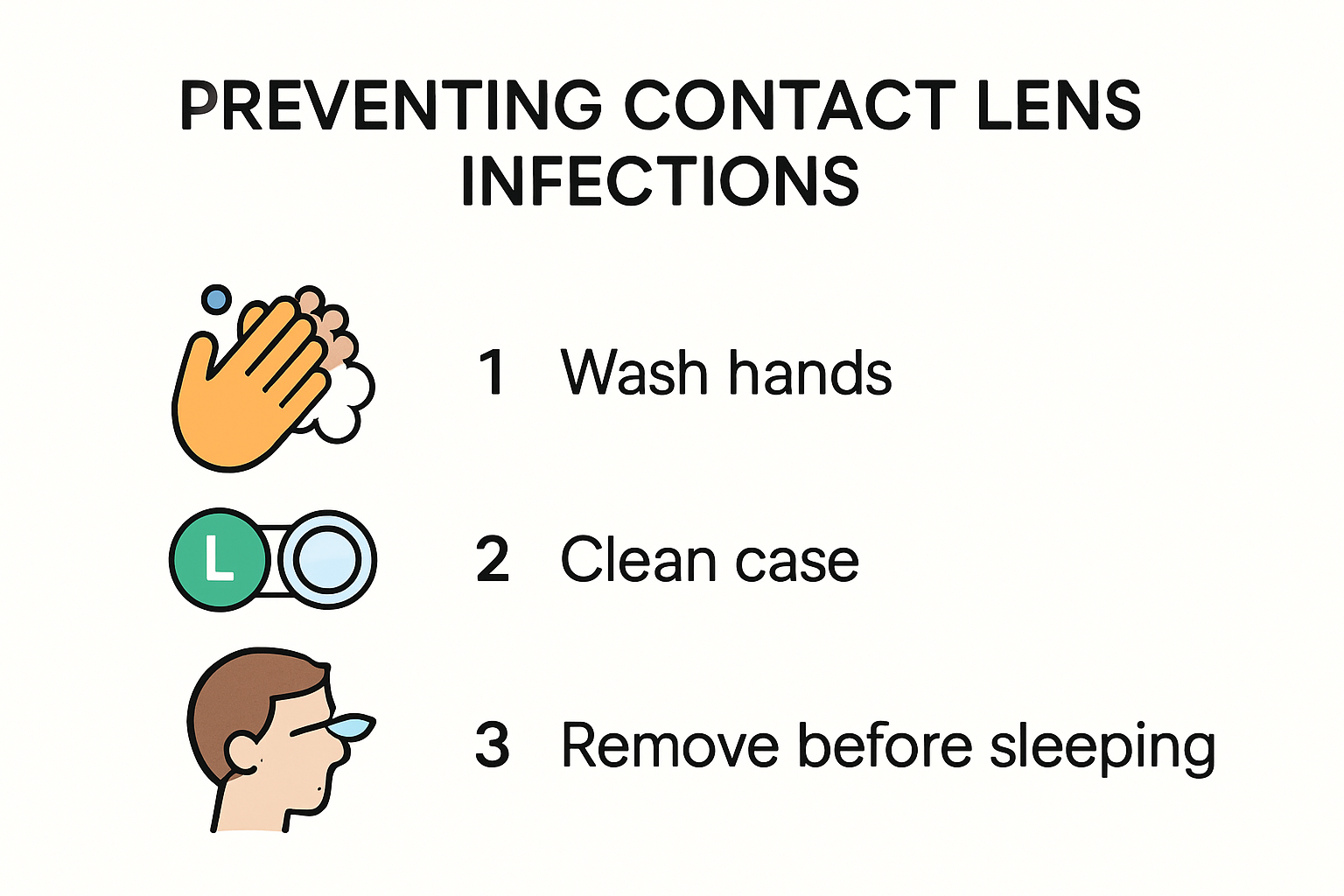
- Hand Washing: Always wash and dry hands thoroughly before handling lenses
- Lens Type Selection: Consider daily disposable lenses for reduced infection risk
- Solution Management: Use fresh, recommended contact lens solution daily
- Case Maintenance: Replace lens storage cases every three months
- Avoid Water Exposure: Keep lenses away from tap water, swimming pools, and showers
Advanced Prevention Techniques
ABC Action News emphasises that poor lens hygiene can increase infection risk more than threefold. Advanced prevention goes beyond basic cleaning and involves comprehensive eye care:
- Regular Eye Examinations: Schedule annual check-ups with an ophthalmologist
- Lens Replacement Schedule: Follow manufacturer’s recommended replacement intervals
- Environmental Awareness: Avoid wearing lenses in dusty or high-bacteria environments
- Hydration Management: Use lubricating eye drops designed for contact lens wearers
Technological Innovations in Infection Prevention
University of Sheffield researchers have developed an innovative ‘smart contact lens’ capable of detecting eye infections quickly and non-invasively. While this technology represents a promising future, current prevention relies on personal diligence.
Additional protective measures include:
- Removing lenses immediately if any irritation occurs
- Never sleeping with contact lenses
- Using only prescribed, recommended lens care products
- Maintaining a clean, dust-free lens storage environment
People with compromised immune systems, diabetes, or other chronic conditions should consult healthcare professionals for personalised lens wear guidance. By combining careful hygiene, regular professional consultations, and emerging technological solutions, contact lens wearers can protect their eye health and minimise infection risks.
When To See Your Doctor
Identifying the right moment to seek professional medical help is crucial for contact lens wearers. Timely intervention can prevent potential long-term eye damage and ensure swift treatment of serious conditions.
Urgent Warning Signs Requiring Immediate Medical Attention
NHS guidelines emphasise the critical importance of seeking immediate medical help if experiencing specific symptoms. Emergency medical care is necessary when encountering:
- Sudden Vision Changes: Wavy lines, flashing, or unexpected vision loss
- Extreme Light Sensitivity: Significant pain when looking at light
- Persistent Eye Pain: Continuous discomfort lasting more than a few hours
- Unusual Discharge: Thick, coloured, or excessive eye secretions
- Visible Eye Damage: Signs of corneal ulceration or surface injury
Contact lens wearers should treat these symptoms as potential medical emergencies, potentially indicating serious infections that could compromise long-term vision.
Specific Infection-Related Medical Consultations
Patient Information Resources recommend urgent medical referral for contact lens wearers experiencing the following conditions:
- Dendritic Keratitis: Any corneal ulcer pattern should be assumed potentially serious
- Persistent Inflammation: Continuous eye redness or swelling
- Compromised Vision: Blurriness or sudden visual disturbances
- Tissue Swelling: Noticeable changes in eye or eyelid structure
University Hospital Guidance specifically highlights symptoms that warrant professional assessment, including eye pain, tissue swelling, and crusting discharge on eyelids.
Preventative Medical Consultations
Beyond emergency scenarios, regular professional eye examinations are essential for contact lens wearers. Recommended consultation frequencies include:
- Annual comprehensive eye examinations
- Immediate consultation after any prolonged lens-related discomfort
- Check-ups for individuals with pre-existing medical conditions
- Evaluation before changing lens type or prescription
People with diabetes, autoimmune disorders, or compromised immune systems should schedule more frequent eye health assessments. These consultations can help detect potential issues before they develop into serious complications.
Remember, your eye health is irreplaceable. When in doubt about any unusual symptoms or changes in your vision, consult a healthcare professional promptly. Early detection and treatment can prevent potentially permanent eye damage and ensure continued safe contact lens wear.
Frequently Asked Questions
What are the common causes of contact lens eye infections?
Contact lens eye infections are often caused by improper hygiene, poor lens maintenance, extended wear, and contaminated storage cases that promote bacterial growth.
How can I identify symptoms of a contact lens infection?
Symptoms of a contact lens infection may include persistent eye pain, unusual discharge, sudden vision changes, increased light sensitivity, and redness or swelling around the eye. If you experience these, seek medical attention immediately.
What preventative measures can I take to avoid contact lens infections?
To prevent infections, always wash your hands before handling lenses, use fresh cleaning solution daily, replace your lens case every three months, and avoid wearing contacts while swimming or showering.
When should I see a doctor for a contact lens infection?
You should seek immediate medical attention if you experience severe eye pain, significant vision changes, inability to open your eye, or unusual discharge. Early intervention is crucial to prevent serious complications.
Safeguard Your Eye Health with Northern Optical Company
Did you know that improper contact lens hygiene can increase your risk of severe eye infections nearly fourfold? As highlighted in our Contact Lens Eye Infections Guide 2025, understanding the importance of proper lens care can be the difference between clear vision and potentially irreversible damage. At Northern Optical Company, we recognise the unique challenges that contact lens wearers face and are dedicated to providing the solutions you need— all under one roof.
Our comprehensive eye care services include:
- Standard & Enhanced Eye Tests: Thorough examinations ensuring your lenses are safe and effective.
- Personalised Lens Advice: From daily disposables to advanced options, we’ll help you choose the best for your needs.
- Expert Guidance & Care: Our friendly team is here to support you with rigorous hygiene protocols and regular check-ups, helping prevent infections before they start.
Don’t compromise your vision—schedule your eye examination today! Visit https://northernopticalcompany.com to book your appointment and take the first step toward making your eye health a priority.