

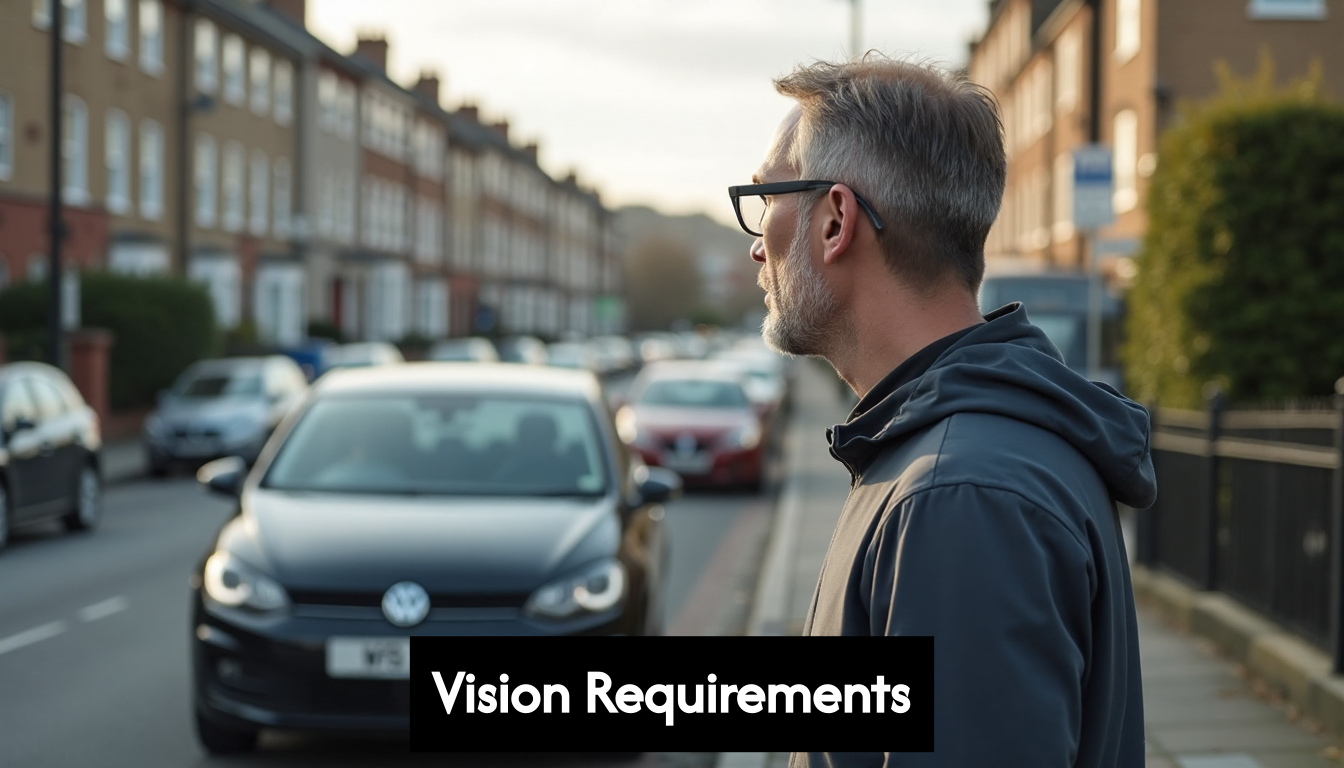
Every driver on UK roads faces one rule that cannot be ignored. You must be able to read a car number plate from 20 metres away and achieve at least 6/12 visual acuity on the Snellen scale or you cannot legally drive. Surprised? Most people focus on theory and hazard perception tests when preparing for their licence. The real gatekeeper is your eyesight. The strict standards for 2025 mean failing an eye test can take you off the road in seconds. Here’s why clear vision is your most important safety feature and what most drivers miss about these updated requirements.
Table of Contents
- What Are Current Driving Vision Standards?
- Vision Requirements For Different Driver Groups
- How To Prepare For A Vision Test In 2025
- Tips For Maintaining Safe Driving Vision
Quick Summary
| Takeaway | Explanation |
|---|---|
| Understand Legal Visual Requirements | Drivers must meet a minimum visual acuity of 6/12 on the Snellen scale and a horizontal visual field of at least 120 degrees to legally operate a vehicle in the UK. |
| Prepare for Vision Tests | Bring essential documentation, including your driving licence and medical history, and practice reading a number plate from 20 metres to assess your vision before a test. |
| Monitor Eye Health Regularly | Regular comprehensive eye examinations and immediate consultation for any vision changes are crucial for maintaining safe driving vision. |
| Utilise Corrective Lenses Properly | Always wear prescribed corrective lenses while driving and keep prescriptions current, along with managing backup pairs for emergencies. |
| Adopt Protective Vision Strategies | Protect your eyes by wearing UV-blocking sunglasses, managing screen time, maintaining a balanced diet, and staying hydrated to support overall eye health. |
What Are Current Driving Vision Standards?
Driving safely requires more than just skill behind the wheel – it demands clear and reliable vision. Understanding current driving vision requirements ensures both personal safety and legal compliance for all motorists.
Legal Visual Acuity Requirements
The UK driving vision standards are precise and non-negotiable. Learn more about optimal driving vision reveals that drivers must meet specific visual criteria to legally operate a vehicle. According to the Driver and Vehicle Licensing Agency (DVLA), the fundamental requirement is reading a standard car number plate from 20 metres away with corrective lenses if necessary.
The visual standards are categorised into two primary measurements:
- Distance Vision: You must achieve a minimum visual acuity of 6/12 on the Snellen scale. This means being able to read letters or numbers at a specific distance that indicates adequate sight for safe driving.
- Horizontal Visual Field: Drivers must maintain a horizontal visual field of at least 120 degrees. This requirement ensures peripheral vision is sufficiently wide to detect potential hazards from multiple angles while driving.

Professional Driving Vision Standards
For professional drivers such as lorry and bus drivers, the vision requirements become significantly more stringent. Research from the Association of Optometrists highlights that commercial vehicle operators must achieve at least 6/7.5 on the Snellen scale. These heightened standards reflect the increased responsibility and potential risks associated with operating larger vehicles.
Professional drivers undergo more frequent and comprehensive eye examinations to ensure continuous compliance. This includes:
- Regular medical check-ups
- Detailed vision assessments
- Comprehensive eye health screenings
Drivers with existing vision conditions or those using corrective lenses must demonstrate that their eyewear provides sufficient visual clarity to meet these exacting standards. Failure to comply can result in licence suspension or revocation, emphasising the critical nature of maintaining optimal vision for road safety.
While these standards might seem rigorous, they represent a crucial safeguard. Clear vision is not just a legal requirement but a fundamental aspect of responsible driving, protecting not only the driver but all road users.
Vision Requirements for Different Driver Groups
Every driver represents a unique vision profile, with specific requirements and considerations that vary across different age groups and professional categories. Understanding these nuanced vision standards is crucial for maintaining road safety and legal compliance.
Young and New Drivers
For young and newly licenced drivers, vision requirements are particularly critical. Learn about optimal driving lens solutions can help ensure clear understanding of these standards. According to Spire Healthcare, young drivers must meet the standard visual acuity of 6/12 on the Snellen scale, with or without corrective lenses. This requirement ensures that new drivers have sufficient visual clarity to detect potential road hazards quickly and respond appropriately.
Key considerations for young drivers include:
- Mandatory initial vision screening during driving licence application
- Regular eye examinations to track potential vision changes
- Immediate correction of any identified vision deficiencies
Professional and Commercial Drivers
Professional drivers face more stringent vision requirements due to the increased responsibility and complexity of their roles. Research from driving safety organisations highlights that lorry, bus, and taxi drivers must undergo more comprehensive vision assessments. These drivers are required to achieve a higher visual acuity of 6/7.5 on the Snellen scale, significantly more demanding than standard driving requirements.
Additional vision standards for professional drivers include:
- More frequent eye health screenings
- Mandatory reporting of any vision-related medical conditions
- Broader horizontal visual field requirements (often exceeding 120 degrees)
Older Drivers and Vision Considerations
Older drivers represent a unique group with specific vision challenges. While they must adhere to the same fundamental vision standards as other drivers, age-related vision changes necessitate more frequent and thorough eye examinations. The legal requirement remains consistent: maintaining a visual acuity of at least 0.5 (6/12) on the Snellen scale, with or without corrective lenses.
Key recommendations for older drivers include:
- Annual comprehensive eye examinations
- Prompt investigation of any vision changes
- Potential adaptation of driving habits based on vision capabilities
These differentiated vision requirements ensure that every driver, regardless of age or profession, maintains the necessary visual skills to navigate roads safely. Regular eye check-ups, proactive vision management, and understanding individual vision needs are fundamental to responsible driving.

How to Prepare for a Vision Test in 2025
Preparing for a vision test is a critical step in maintaining safe driving capabilities and ensuring compliance with legal vision requirements. Understanding the process and taking proactive steps can make your eye examination more efficient and comprehensive.
Pre-Test Preparation and Documentation
Learn about eye test procedures to ensure you are fully prepared. According to the Department for Transport, drivers should arrive at their vision test with specific documentation and personal information. Essential items to bring include:
- Current driving licence
- Medical history records
- List of current medications
- Recent prescription glasses or contact lenses
- Insurance and identification documents
Before the test, conduct a preliminary self-assessment. Warranty Wise recommends practicing the standard number plate test by reading a vehicle registration plate from 20 metres in good daylight conditions. This helps gauge your current visual acuity and prepares you for the professional assessment.
Understanding the Vision Test Process
Modern vision tests for drivers have evolved to include more comprehensive evaluations. The examination typically encompasses several key assessments:
- Visual Acuity Measurement: Determining your ability to see clearly at different distances
- Peripheral Vision Screening: Checking your lateral visual field
- Depth Perception Evaluation: Assessing your ability to judge distances accurately
- Colour Vision Assessment: Ensuring you can distinguish traffic signals and road markings
Professional optometrists use advanced diagnostic tools to provide a thorough examination. They will evaluate not just your vision for driving, but overall eye health and potential underlying conditions that might impact your driving capabilities.
Post-Test Recommendations
After completing your vision test, you will receive detailed insights into your visual health. Driving safety experts recommend taking the following steps based on your test results:
- If corrective lenses are recommended, update your prescription immediately
- Discuss any vision changes with your optometrist
- Schedule follow-up appointments if additional monitoring is suggested
- Update your driving licence information if vision requirements have changed
Remember that regular eye examinations are not just a legal requirement but a crucial aspect of responsible driving. By staying proactive about your vision health, you contribute to safer roads for yourself and other motorists. Vision testing is an investment in your personal safety and the safety of everyone sharing the road with you.
Tips for Maintaining Safe Driving Vision
Maintaining optimal vision is a critical aspect of safe driving. Your ability to perceive road conditions, detect potential hazards, and respond quickly depends on consistent eye health and visual clarity.
Regular Eye Health Monitoring
Discover how glasses enhance driving safety and understand the importance of proactive eye care. According to Spire Healthcare, drivers must be vigilant about their eye health and address any vision changes promptly. Key strategies for maintaining driving vision include:
- Annual comprehensive eye examinations
- Immediate consultation for any vision changes
- Tracking prescription updates
- Monitoring age-related vision developments
Professional eye care providers can detect early signs of conditions that might impact driving ability, such as glaucoma, cataracts, or diabetic retinopathy. Early detection allows for timely intervention and prevents potential driving limitations.
Protective Vision Strategies
Environmental and lifestyle factors significantly influence eye health. Research from driving safety experts highlights several protective strategies drivers can implement:
- UV Protection: Wear sunglasses with comprehensive UV blocking to prevent long-term eye damage
- Screen Time Management: Reduce digital eye strain through regular breaks and proper screen positioning
- Nutrition: Consume foods rich in vitamins A, C, E, and omega-3 fatty acids
- Hydration: Maintain adequate water intake to support overall eye health
Additionally, drivers should be aware of how certain medical conditions and medications can impact vision. Consulting healthcare professionals about potential visual side effects is crucial for maintaining safe driving capabilities.
Corrective Lens and Vision Aid Management
For drivers requiring vision correction, proper management of optical aids is essential. The Driver and Vehicle Licensing Agency emphasises the importance of always wearing prescribed corrective lenses while driving. Key considerations include:
- Keeping glasses or contact lens prescriptions current
- Carrying backup vision correction
- Cleaning optical devices regularly
- Replacing damaged or scratched lenses
- Choosing driving-specific lens coatings to reduce glare
Drivers must inform the DVLA about any significant eye conditions that could impact driving ability. This includes medical issues affecting both eyes or the remaining eye for monocular drivers. Transparency ensures road safety and legal compliance.
Maintaining safe driving vision is an ongoing commitment. By prioritising regular eye examinations, protecting eye health, and managing vision correction effectively, drivers can ensure they remain safe and confident on the road. Remember, your vision is not just a personal health matter – it’s a critical component of responsible driving that protects you and other road users.
Frequently Asked Questions
What are the minimum vision requirements for drivers in the UK?
Drivers must be able to read a standard car number plate from 20 metres away and achieve a minimum visual acuity of 6/12 on the Snellen scale, with a horizontal visual field of at least 120 degrees.
How often should drivers have their vision tested?
It is recommended that drivers have comprehensive eye examinations at least once a year and seek immediate assessment if they notice any changes in their vision.
What are the vision requirements for professional drivers?
Professional drivers, such as those operating buses or lorries, must achieve a higher visual acuity of at least 6/7.5 on the Snellen scale and undergo more frequent eye health screenings.
How can I prepare for my vision test in 2025?
To prepare for your vision test, bring your current driving licence, medical records, and recent prescription glasses. Additionally, practice reading a number plate from 20 metres to assess your vision beforehand.
Ready to Drive with Confidence? Ensure Your Eyes Are Road-Ready for 2025
With new vision standards coming into force, many drivers worry about passing the essential eye test and protecting their licence. If you are unsure whether your eyesight meets the strict 6/12 visual acuity, or struggle to read a number plate at 20 metres, you are not alone. Clear vision is not just a legal requirement, it is vital for your safety and peace of mind on every journey. At Northern Optical Company, we understand how important this is for drivers of all ages and backgrounds.
Do not wait for vision worries or last-minute test nerves to catch you out. Book your comprehensive eye test with our trusted Newcastle team and get honest advice, thorough checks and professional support tailored to your driving needs. Explore our clinical services, driving lenses and friendly care by visiting Northern Optical Company. Take the next step today and secure your driving future with confidence.
Recommended Articles
- How to Choose Driving Lenses: 2025 Guide
- What Are Driving Lenses? 2025 Clarity & Comfort Guide
- Contact Lenses for Drivers in 2025: Safety & Comfort Tips