

Eye problems can be a real mixed bag. Some are just a minor nuisance, while others are a genuine threat to your sight. Knowing the difference is critical. True eye emergency care is reserved for those heart-stopping moments—sudden vision loss, severe pain, or getting chemicals in your eye. These situations demand immediate professional help to prevent permanent damage.
The first step in protecting your vision is learning to tell the difference between a simple irritation and a full-blown crisis.
Emergency Symptoms vs Minor Irritations
Sometimes it’s hard to know if you should rush to A&E or just wait it out. This quick-reference table can help you make a more informed decision when every second might count.
| Symptom | What It Could Mean | Recommended Action |
|---|---|---|
| Sudden Vision Loss/Blurring | Retinal detachment, stroke, acute glaucoma | A&E Immediately. This is a critical sign. |
| Severe, Deep Pain | Acute glaucoma, corneal ulcer, foreign body | Seek urgent professional care. Do not delay. |
| Chemical Splash | Chemical burn to the cornea | Flush with water for 15-20 mins, then go to A&E. |
| Itchy, Watery Eyes | Allergies, mild conjunctivitis, dry eye | Try over-the-counter drops; book an optician appointment if it persists. |
| Gritty Sensation | Dry eye, small particle (e.g., dust, eyelash) | Try flushing with sterile eye wash. See an optician if it doesn't resolve. |
This table is a guide, but the golden rule is simple: if you are in any doubt, especially with pain or vision changes, get it checked out professionally.
When to Act Fast: Real-World Scenarios
It’s one thing to read a list of symptoms, but another to recognise them in the moment. Let’s think about some common situations.
Imagine you're doing a bit of DIY and a wood chip flies into your eye. At first, it's just scratchy. You try blinking and a gentle rinse with water, but the feeling doesn't go away. The pain is getting worse. This is when an irritation becomes an emergency. The chip could be stuck in your cornea, and trying to remove it yourself could cause serious scratches and lead to a nasty infection.
Another classic example is a chemical splash. You're cleaning the bathroom and some spray cleaner deflects off a tile and straight into your eye. That immediate, intense stinging and redness is a chemical burn. This is a clear-cut emergency where every second matters.
Red Flags You Should Never Ignore
Some signs are so serious they should send you straight for help. Don't wait and see with these:
- Sudden vision loss or a dramatic blurring in one or both eyes.
- Seeing a curtain or shadow creeping across your field of view.
- A sudden storm of flashes of light or a big increase in floaters, which can signal a retinal problem.
- Severe eye pain, particularly a deep, aching kind of pain.
- Any visible cut or puncture to the eyeball itself.
Recognising these critical signs helps you to act fast. Putting off getting help for a serious eye injury can have devastating consequences for your vision.
In the UK, eye problems are a significant reason people seek medical help. Ocular issues account for 1-3% of all GP visits each year, and A&E departments have seen a sharp rise in eye-related attendances. Research shows that up to 30% of patients at hospital eye casualty departments have conditions that could have been handled by a community optician. This highlights how important it is to know where to go for the right level of care.
Understanding what your symptoms mean helps you make the right call, getting you the help you need without putting extra pressure on emergency services. Prevention is always better than cure. Keeping up with regular check-ups is one of the best ways to protect your long-term eye health, and you can learn more about our comprehensive eye tests here.
First Aid for Common Eye Injuries at Home
When you're faced with an eye injury, what you do in those first few moments is critical. Acting quickly can make a world of difference, but the wrong move can easily make a bad situation much worse. Your gut reaction might not always be the right one—for example, rubbing a sore eye often feels natural, but it’s one of the worst things you can do.
Knowing the correct first aid depends on what kind of injury you're dealing with.
Handling Chemical Splashes
Getting a chemical in your eye—whether from a household cleaner, garden product, or something at work—is a true emergency. Your immediate and only goal should be to dilute and flush the chemical out as fast as you possibly can.
- Flush Immediately: Don't hesitate for a second. Get to the nearest tap or shower and start rinsing your eye with a steady stream of cool, clean water. Tilt your head so the injured eye is lower than the uninjured one. This simple step prevents the chemical from running into your good eye.
- Keep Flushing: This is the most important part. You need to keep rinsing the eye for at least 15-20 minutes. It feels like a lifetime and can be uncomfortable, but this duration is required to wash away any harmful residue.
- After Flushing: Even if your eye starts to feel better, you must get professional medical help right away. Some chemicals cause delayed damage that isn't immediately obvious.
For Cuts or Punctures
An injury that actually cuts or punctures the eyeball is a major medical emergency. In this scenario, your role is to protect the eye, not to treat it. Do not wash the eye, and absolutely do not try to remove any object that’s stuck in it.
An object stuck in the eye needs to be stabilised, not pulled out. Trying to remove it yourself can cause devastating, irreversible damage. Fashion a protective shield—the bottom of a clean paper cup taped over the socket works well—and head straight to A&E.
The shield must rest on the bone surrounding your eye, not on the eyeball itself, to avoid putting any pressure on the injury.
This image shows the proper technique for rinsing an eye, which is a key skill to have.
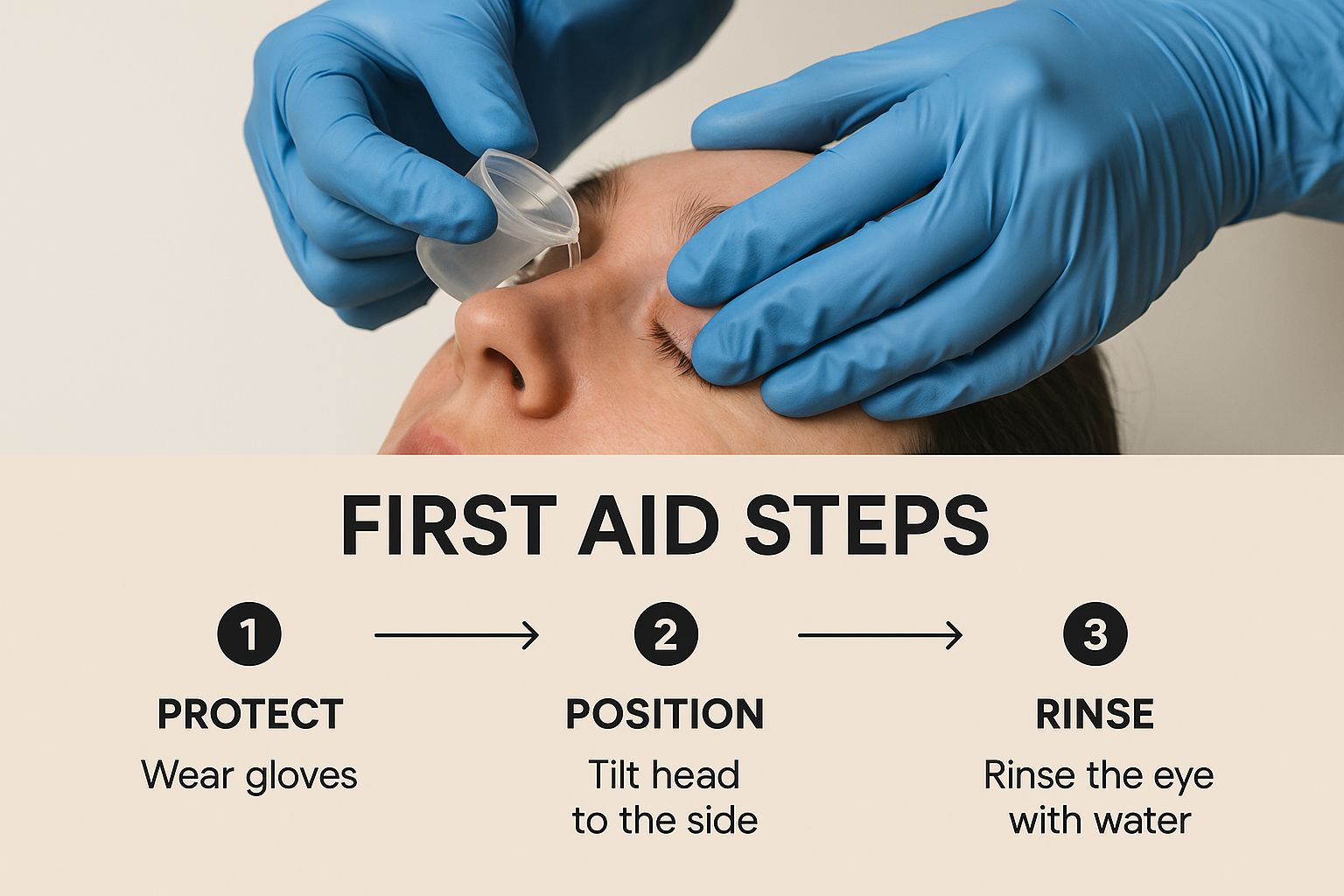
As you can see, the idea is to let the water or saline flow gently across the eye without applying any force, which is critical when dealing with chemical splashes.
Dealing with Foreign Objects
It's something we've all experienced: getting a bit of dust, sand, or an eyelash in the eye. Most of the time, your natural tears will do the job and wash it out. If it feels stuck, you can give it a gentle nudge in the right direction.
- Do Not Rub: It's tempting, but rubbing can easily scratch your cornea. This turns a minor annoyance into a painful problem called a corneal abrasion.
- Blink and Tear Up: First, just try blinking a few times. Often, this is enough to get your tears flowing and shift the particle. You can also try carefully pulling your upper eyelid down over your lower eyelid; sometimes the lower lashes can brush the speck away.
- Gentle Flushing: If blinking doesn't work, use a sterile eyewash solution or even just clean, lukewarm water to gently rinse the eye.
If the object feels sharp, seems to be embedded, or simply won't come out with gentle rinsing, stop trying. Cover the eye lightly and let a professional take a look. For more information on what to do and what to avoid in urgent situations, these general emergency care dos and don'ts offer some great advice that applies to more than just eyes. Knowing what not to do is often just as important as knowing what to do.
Finding the Right Emergency Eye Care in the UK
When something goes wrong with your eyes, panic can set in, and it's easy to assume that A&E is your only option. But in the UK, heading straight to the hospital isn’t always the quickest or most effective route. Knowing who to call can get you the specialist care you need far more efficiently.
Believe it or not, your first port of call for many urgent eye problems should be a local community optometrist. We're equipped with specialist tools to properly examine your eyes in a way a GP surgery simply can't. From a foreign object stuck in your eye to sudden redness or vision changes, an optician is often the best place to start.
Navigating Your UK Eye Care Options
For the most serious situations, of course, Accident & Emergency (A&E) is absolutely the right choice. If you're dealing with severe pain, a chemical splash, or a penetrating injury, don't hesitate—get to a hospital immediately. These departments are designed for major, sight-threatening trauma that requires urgent hospital treatment.
For everything else, you have better options. If you're unsure what to do, calling NHS 111 is a brilliant first step. Their trained advisors can assess your symptoms over the phone and point you towards the best local service, whether that's an urgent treatment centre or a dedicated eye casualty unit.
There's also the Community Urgent Eyecare Service (CUES). This is a fantastic NHS service that gives you direct access to a specialist for recent or sudden eye problems. You can often self-refer, getting an appointment much faster than you would through a hospital.
The eye care system is under a lot of pressure. Between 2015 and 2016, there were over 22.9 million attendances for eye health conditions in England alone. When you consider that optometrists carry out around 16 million sight tests each year, you can see how even a small percentage of those cases ending up in A&E can create a huge strain.
Who Should Be Your First Call?
Making the right choice doesn't just help you; it helps the entire NHS run more smoothly. I’ve found that breaking it down like this helps my patients understand where to go:
- Minor Irritations: For things like mild dryness or a bit of itchiness, a routine appointment with your local optician is the way to go.
- Urgent (But Not Critical) Issues: This is where your community optometrist or the CUES really shine. Think of a sudden increase in floaters, a painfully red eye, or a scratch on your cornea.
- True Emergencies: This is A&E territory. Severe trauma, chemical burns, and sudden, total vision loss all warrant an immediate trip to the hospital.
By choosing the right service, you free up A&E teams to focus on life-and-limb-threatening cases. Many people can get their eyes checked for free. Proactive care is the best defence, so it's always a good idea to see if you qualify for our NHS sight tests.
Who's More at Risk for an Eye Emergency?
When it comes to our health, knowing your personal risk factors is half the battle, and your eyes are no exception. While an eye injury can happen to anyone at any time, some of us are simply more likely to find ourselves needing eye emergency care. Pinpointing these factors isn't about causing alarm; it's about being proactive and prepared.
One of the biggest factors, unsurprisingly, is age. As we get older, our eyes go through a lot of natural changes. Some of these changes can lead to conditions that need urgent attention, like retinal detachments or occlusions, which often show up with sudden and frightening symptoms.
Age and Gender Patterns
If you look at the research, it’s clear that older people use emergency eye services far more often. This isn't just down to age-related diseases; it points to a wider vulnerability to a whole host of eye problems that can escalate without warning. Simply being aware of this puts you in a much stronger position.
One major study gives us a very clear picture of who's walking through the doors of an eye A&E. The researchers found that:
- The attendance rate for new eye emergencies is around 31 per 1,000 people each year.
- The largest group needing this care is made up of people between 50 and 90 years old.
- The absolute highest rate of attendance was among those aged 80 to 84.
This data shows a definite trend: the need for urgent eye care really ramps up in the second half of life. You can read the full study on eye emergency attendance rates to get a deeper understanding of the findings.
What's also interesting is that the same study spotted a difference between the sexes. It turns out that female patients over 50 were 17% more likely than men in the same age group to seek emergency eye care. The reasons for this are likely complex, but it’s a good reminder for women to be especially vigilant about their eye health as they get older.
Awareness is your best defence. If you fall into a higher-risk group, it doesn't mean an emergency is inevitable, but it does mean that routine eye examinations are even more important for you.
Putting This Knowledge Into Practice
So, what should you do with this information? If you’re over 50, or you have parents or relatives in this age bracket, it’s a brilliant idea to have a chat with an optometrist about a proactive care plan. A little forward-thinking can catch potential problems long before they become emergencies.
Regular eye health checks are the key. They give a professional the chance to spot the earliest warning signs, often before you've noticed anything is wrong yourself. This knowledge can turn vague anxiety about what might happen into the confidence of knowing you're on top of your eye health. It’s all about understanding your personal risk and making your vision a priority for the long run.
Recovery and Follow-Up After an Eye Emergency
Getting through the initial panic of an eye emergency is one thing, but what comes next is just as critical for protecting your sight. The recovery process really begins after you’ve left A&E or the optician's practice. Careful, professional follow-up is what helps you heal properly and avoid long-term problems.
Once you've had that initial emergency treatment, you should have a clear plan of action. This isn't a "one-and-done" scenario. Your eye's healing journey needs to be guided by a professional who can catch any bumps in the road before they turn into serious issues.
What to Expect During Your Recovery
Every injury is different, so every recovery will be, too. It’s common to experience temporary changes like blurred vision or being more sensitive to light. While often a normal part of the healing process, you need to know what's expected and what's a red flag.
Most follow-up care plans will include a few key things:
- Follow-Up Appointments: You'll almost certainly need to see an optometrist again. These check-ups are key for tracking your eye’s healing and making sure no infection is setting in.
- Prescribed Medications: You’ll likely be given eye drops or ointments. Following the instructions to the letter is required for managing inflammation, preventing infection, and giving your eye the best chance to heal.
- Lifestyle Adjustments: You might need to wear a protective shield (especially when you sleep) or take a break from things like heavy lifting, sports, or swimming.
Sticking to this advice isn't just a suggestion—it’s a fundamental part of your treatment. Skipping drops or missing appointments can undo all the good work from your emergency care.
The Role of Your Local Optometrist
Your local optician, like us here at Northern Optical Company, is central to your long-term recovery. A&E departments are fantastic at handling the immediate crisis, but community optometrists are perfectly set up to manage your ongoing care. We have the specialised equipment and know-how to monitor your healing in great detail.
This continuity of care is incredibly important. We can see how you're progressing over time, answer any questions that pop up, and offer reassurance when you need it. It’s also our job to perform comprehensive eye health checks to get a full picture of your eye's condition after the incident.
Think of your optometrist as your partner in recovery. We are your go-to resource for any concerns, providing a familiar, expert, and accessible point of contact.
After any significant eye event, getting a really detailed look at the internal structures of your eye is a smart move. An enhanced eye examination provides that extra peace of mind. It uses advanced imaging to check the health of your retina and optic nerve, making sure there's no hidden damage from the injury.
Tips for a Smooth Recovery at Home
While we guide the clinical side of your recovery, there's plenty you can do at home to help things along. Simple, sensible steps can make a real difference to your comfort and the final outcome.
For instance, protect your eye from bright light by wearing good sunglasses, even indoors if you find it helps. More importantly, know the warning signs that mean you need to get back in touch.
Don’t wait for your next scheduled appointment if you notice:
- A sudden increase in pain
- A sharp drop in your vision
- New flashes of light or a sudden shower of floaters
If any of these occur, contact your optometrist or NHS 111 immediately.
Common Questions About Eye Emergencies
When you're faced with an eye problem, it's natural to feel a bit lost and have a million questions running through your head. Knowing what to do (and what not to do) can make all the difference. Let's walk through some of the most common questions we get asked about eye emergency care.
Can I Go to My Local Optician for an Eye Emergency?
Absolutely. For many urgent eye problems, your local optician should be your first port of call. Most high street practices are perfectly set up to handle things like red or painful eyes, a sudden storm of flashes and floaters, or that nagging feeling of something stuck in your eye.
An experienced optometrist can often treat you right there and then. If your situation is more serious and needs hospital care, they have the expertise to get you an urgent referral to the right specialist. You'll almost always be seen and sorted much faster this way than by sitting for hours in a crowded A&E.
What Should I Never Do if I Have Something in My Eye?
The golden rule is never rub it. I know it's a powerful instinct, but rubbing can easily turn a minor irritation into a painful scratch on your cornea. Worse, it could push a foreign body even deeper into your eye's delicate tissues.
Also, please resist the urge to remove anything that looks embedded or sharp with your fingers, tweezers, or cotton buds. You could cause serious, permanent damage. The best first step is to let your tears do their job or try a gentle rinse with a sterile eyewash solution. If it's still stuck, lightly cover the eye and get professional help immediately.
How Do I Know if My Child's Eye Problem Is an Emergency?
It's a classic parenting dilemma, isn't it? My advice is always to err on the side of caution with children's eyes. You should seek immediate medical help if your child has an obvious injury, is in clear pain, or is complaining they can't see properly.
Look out for these serious red flags that mean you need to get them seen straight away:
- One eye seems to bulge, wander, or move differently from the other.
- The eye is watering constantly and uncontrollably.
- Any kind of chemical has splashed into their eye.
- The pupil looks an unusual shape or size.
If it's something milder, like a bit of redness without any pain, a quick call to your local optometrist is a great place to start. They can tell you over the phone whether it’s something to worry about.
Is Sudden Blurry Vision an Emergency?
Yes, without a doubt. Sudden, unexplained blurry vision needs to be treated as an emergency, especially if it's only in one eye. The situation becomes even more critical if it's accompanied by other symptoms like flashes of light, a dark shadow or "curtain" descending over your vision, or a blinding headache.
These could be signs of sight-threatening conditions, such as a retinal detachment, a stroke affecting the eye, or a sudden, severe form of glaucoma. All of these require immediate medical intervention to have any chance of preventing permanent vision loss. This is not a "wait and see" situation. Please, contact an urgent eye care provider right away. For more practical advice on keeping your vision safe, you can always find helpful articles on our eye care blog.
At Northern Optical Company, we know just how frightening an eye emergency can be. Our team is always here to offer expert care and reassurance, from urgent assessments to long-term follow-up. If you have any worries at all about your eye health, don't hesitate to get in touch with us at https://northernopticalcompany.com.