

Getting the hang of contact lenses is a rite of passage for many, and it all starts with that first attempt. Think of it less as a clinical procedure and more as a new skill, like learning to tie a shoelace. It might feel a bit clumsy initially, but soon it becomes pure muscle memory.
We'll walk you through preparing your space, handling the lens with confidence, and gently placing it on your eye. Mastering this little routine is what transforms new, nervous wearers into seasoned pros who can do it in their sleep.
Your First Time with Contact Lenses
So, you're ready to try contact lenses. It’s completely normal to feel a mix of excitement and a little bit of apprehension. That initial experience is your launchpad into a world of clear, frame-free vision, so let's make it a good one.
The single best piece of advice? Relax. Being nervous about touching your eye is a natural reflex, one that we're all born with. The sensation of a tiny, soft lens on your fingertip is new, but it's a feeling that millions of people get used to incredibly quickly. A calm, patient approach will make all the difference.
Understanding Your Lens Options
Before a lens even gets near your eye, it helps to know what you’re working with. Your optometrist is your most important partner here; they will have prescribed a specific type of lens based on your vision, the unique shape of your eye, and your lifestyle.
In the UK, you’ll most likely encounter one of these two types:
- Daily Disposables: These are the ultimate in convenience. You put in a fresh, sterile pair every morning and simply throw them away at night. No cleaning, no solutions, no fuss.
- Monthly/Bi-Weekly Lenses: These reusable lenses are worn daily but require a bit of nightly care. You'll need to clean and store them in a special solution before reusing them the next day.
The contact lens market in the UK is massive, with over 3.9 million people choosing them for their vision correction. It's no surprise that daily disposables are the top choice, accounting for a huge 78.8% of the market's value. People really value the simplicity and hygiene they offer.
Your optometrist’s fitting appointment is non-negotiable. This isn't just about getting a prescription; it's where you get hands-on training. They will physically show you how to insert, remove, and care for your lenses, making certain you leave their office feeling confident. This one-on-one guidance is the cornerstone of safe and happy lens wear.
Getting used to contacts is about more than just the physical steps; it's about embracing a new kind of freedom. For many, making the switch from glasses is a genuine lifestyle upgrade. If you're still weighing your options, you can explore the many benefits of contact lenses in our detailed guide.
Preparing to Put Your Lenses In

Before a lens gets anywhere near your eye, you need to have a clean, methodical setup. I always think of it as a pre-flight check; getting it right every single time is what prevents common problems like irritation or, worse, an infection. Trust me, this routine will quickly become second nature, giving you confidence and keeping your eyes happy and healthy.
The first, non-negotiable step is to wash your hands thoroughly. Your fingers are the last thing to touch the lens before it meets your eye, so they have to be spotless. Use a plain, simple soap – nothing with extra moisturisers, oils, or perfumes. Those fancy soaps can leave a residue on your fingers that transfers straight to your lens, leading to cloudy vision and serious discomfort.
Lather up for a good 20 seconds, rinse completely, and then dry your hands with a lint-free towel. I can't stress this enough. A tiny piece of fluff on your lens can feel like a boulder in your eye.
Creating Your Clean Zone
Your environment really does matter. I recommend setting up your little lens station in a well-lit place, like the bathroom counter, but always be cautious around the sink. It's a good idea to lay down a clean, dark-coloured towel. Why dark? If you accidentally drop a lens, it'll be a hundred times easier to spot against a dark background. The towel also stops it from bouncing into oblivion or, the ultimate nightmare, going down the drain.
With clean hands and a prepared space, you're ready to handle the lens. Gently tip it out of the case into the palm of your hand, along with a bit of fresh solution. Please, never try to pinch it out with your fingernails – that's one of the easiest ways to tear a lens.
Now, take a second to give the lens a quick inspection. Put it on the tip of your index finger and have a close look. You're checking for two main things:
- Damage: Are there any tiny nicks, rips, or rough spots on the edge? If you see any damage at all, throw it away. It's not worth the risk.
- Debris: Can you spot any specks of dust, lint, or maybe a flake of mascara? If so, just give it a gentle rinse with some more fresh solution.
The Taco Test Is Your Friend
Figuring out if your lens is inside out is a classic hurdle for new wearers. An inverted lens feels weird, moves around too much, and won't give you clear vision. This is where the famous "taco test" saves the day.
Gently pinch the lens between your thumb and forefinger as if you're about to fold it. If the edges point straight up, forming a perfect little "taco," it's the right way round. If the edges flare outwards, looking more like a saucer with a rim, it’s inside out.
Once you’ve confirmed the lens is clean, undamaged, and facing the right direction, you're ready to go. This whole preparation process might seem a bit fussy at first, but with a little practice, it'll take you less than a minute. Getting these checks down is fundamental to wearing your contact lenses safely and comfortably.
How to Insert Contact Lenses Correctly
Right, this is the moment. You’ve got clean hands, a perfect, pristine lens sitting on your fingertip, and you're ready to put it in. I’ll be honest, getting the hang of this takes a bit of patience. Your blinking reflex is incredibly strong, but with a bit of practice, you'll learn to work around it.
Don't worry if the first few tries feel a bit clumsy—millions of us have been there and mastered it. The only real goal here is to keep your eyelids open long enough for the lens to touch your eye. Let's walk through how to make that happen without the frustration.
With the lens balanced on your dominant index finger, use your other hand to reach over your head and gently pull your upper eyelid upwards, right from the lash line. This gives you a surprisingly firm grip and stops you from blinking.
At the same time, use the middle finger of the hand holding the lens to pull your lower eyelid down. This creates a really wide, stable opening, giving you a clear path. It feels a bit odd at first, but this two-handed method is the key to having total control.
This image shows that exact hand position perfectly.
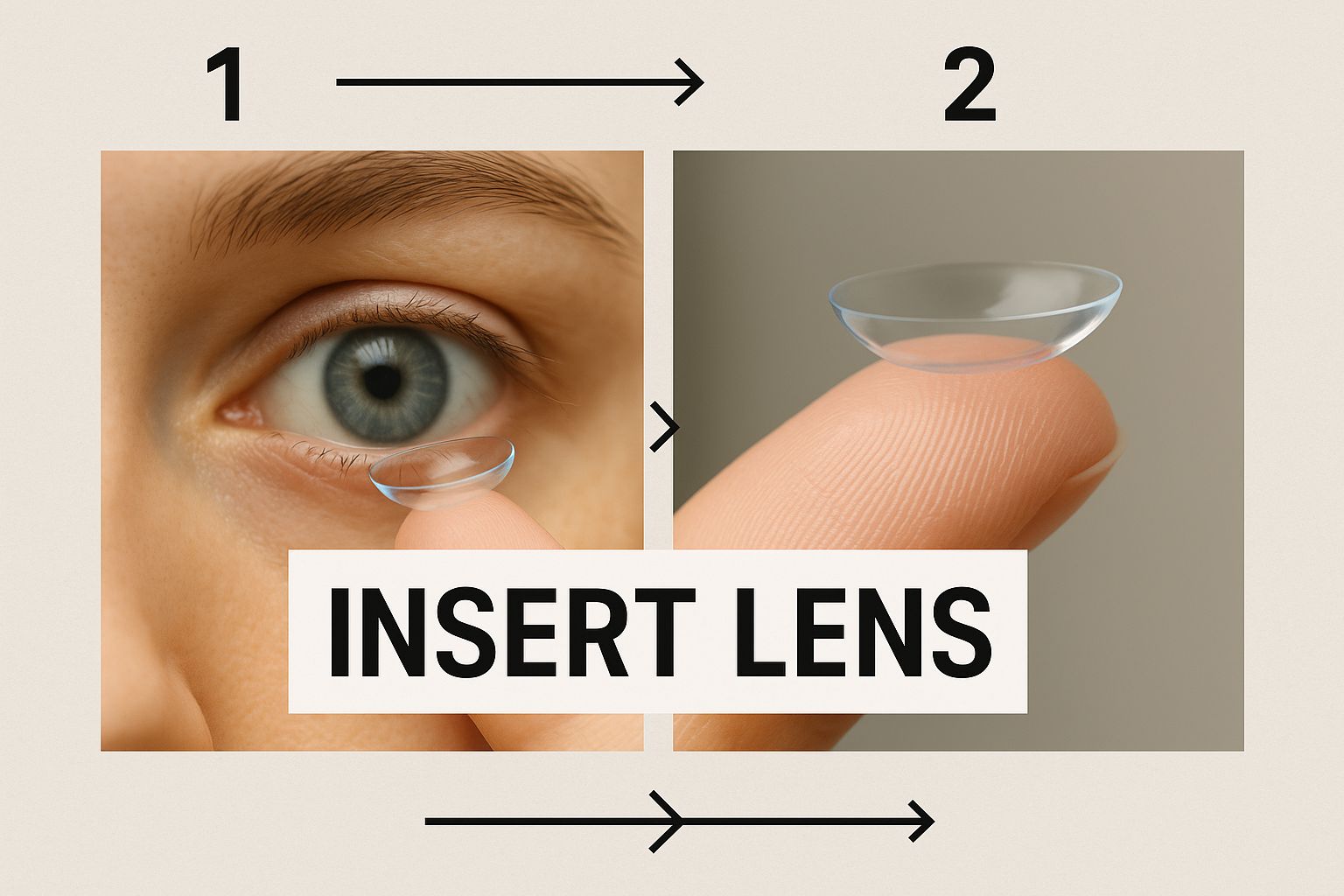
It’s all about bringing the lens to your eye steadily and confidently, just like you see here.
Finding Your Placement Technique
This is where you can experiment a little to see what feels most natural.
- Look Straight Ahead: Many people find it easiest to look directly into a mirror, guiding the lens straight onto their pupil. This gives you a clear, head-on view of the whole process.
- Look Upwards: Another fantastic technique is to look up at the ceiling. This moves your sensitive cornea out of the direct line of fire. You can then gently place the lens on the sclera (the white part of your eye) first.
If you try the 'look up' method, once the lens makes contact, it will naturally slide into the correct position over your pupil as you look forward and blink.
Bring the lens slowly towards your eye until it touches the surface. There's no need to rush or poke. The moment it touches, you'll feel it almost suction onto the moisture of your eye. Keep holding your lids open for a second more, then slowly let go. A few gentle blinks will settle it perfectly into place.
When the lens is in correctly, you shouldn't feel it at all. Your vision should be sharp and clear. If you feel any irritation, a scratching sensation, or if your vision is blurry, something's not quite right.
The Quick Lens Insertion Checklist
To get it right every time, run through these simple checks. It's a quick mental list that can help build a solid routine.
| Action | Why It Matters | Quick Tip |
|---|---|---|
| Clean, Dry Hands | Prevents transferring dirt and germs to your lens and eye, which can cause serious infections. | Always use a lint-free towel to dry your hands. |
| Lens on Fingertip | Provides a stable base and keeps the lens in the correct orientation for insertion. | Make certain the lens is the right way out (bowl-shaped, not like a saucer). |
| Pull Upper Eyelid Up | The most effective way to stop your powerful blink reflex from getting in the way. | Use your non-dominant hand reaching over your head for the best control. |
| Pull Lower Eyelid Down | Creates the widest possible opening, giving you a clear and easy target. | Use the middle finger of the hand holding the lens. |
| Look Straight or Up | Helps you either target the pupil directly or place the lens on the less sensitive white of the eye. | Try both! See which one feels more comfortable and less intimidating. |
| Slow, Gentle Placement | A slow, steady hand prevents you from flinching and helps the lens make clean contact. | Don't jab. Let the moisture of your eye draw the lens from your finger. |
| Slow Release & Blink | Allows the lens to settle properly and stay centred for clear vision. | Blink a few times gently, don't squeeze your eyes shut. |
Following these actions will help make the process smooth and trouble-free from the start.
Troubleshooting Common First-Time Fumbles
It's completely normal for things to go a bit sideways when you're starting out.
- The lens falls out: It happens! Just pick it up, give it a thorough rinse with fresh solution, and try again. Never, ever use tap water.
- It folds on your finger: Annoying, but easy to fix. Put it back in your palm with a few drops of solution and gently nudge it back into its proper bowl shape.
- It's uncomfortable in your eye: This usually means one of three things: it’s inside out, there's a tiny speck of dust trapped underneath, or the lens is torn. The best thing to do is take it out immediately, rinse it well with solution, and inspect it carefully before trying to put it back in.
A little persistence is all you need. Before you know it, this whole routine will feel as second-nature as brushing your teeth.
Removing Your Contact Lenses Safely
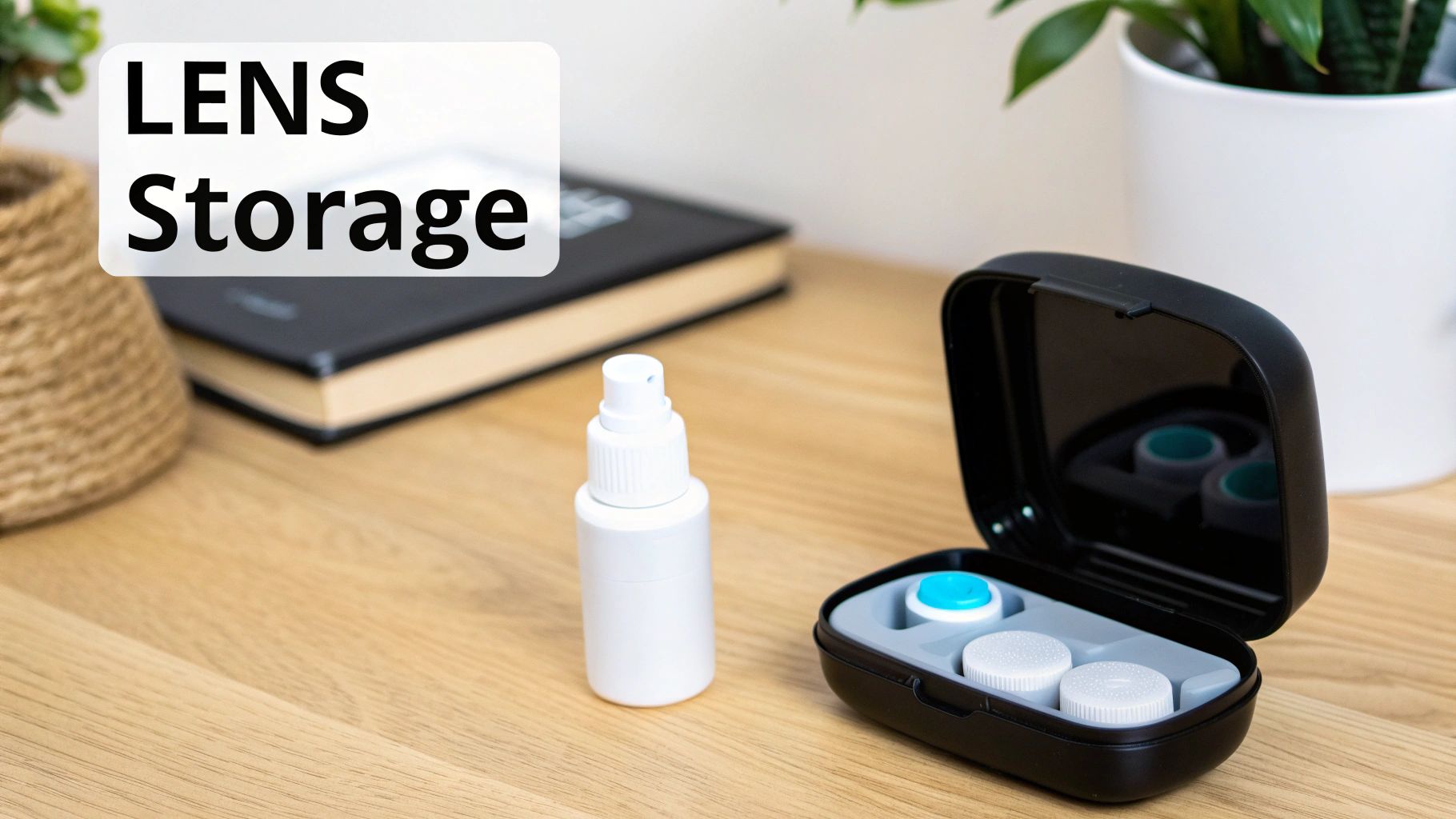
Taking your lenses out at the end of the day is just as important as putting them in correctly. A gentle and consistent removal routine is key to protecting your eyes and keeping reusable lenses in top shape. Don't worry, just like putting them in, this process will quickly become second nature.
The golden rule hasn't changed: wash and dry your hands with soap and water first. You don't want any grime or bacteria getting near your eyes, especially after they've been covered all day. It’s always a good idea to work in a well-lit area, maybe with a clean towel laid out on the counter just in case a lens makes a break for it.
There are a couple of tried-and-true methods for getting soft contact lenses out. Give both a go to figure out which one feels most comfortable and gives you the best control.
The Standard Pinch Method
This is the most common approach and probably the one your optician showed you first. It's direct, quick, and very effective once you’ve got the motion down.
- Look Up, Pull Down: Tilt your head back and look up towards the ceiling. Use the middle finger of one hand to hold your upper eyelid out of the way, and the middle finger of your other hand to pull your lower eyelid down. This gives you a nice, wide area to work with.
- Gently Pinch: With the thumb and index finger of your dominant hand, move them towards your eye and gently pinch the surface of the lens. This light pressure is just enough to break the suction holding the lens in place.
- Lift Away: Once you feel the lens release, it will fold slightly and come away from your eye easily. Remember to only use the pads of your fingers—never your fingernails. You could scratch your eye or tear the delicate lens.
The Slide and Pinch Method
For some people, touching the centre of their eye just feels a bit strange, even after they've been wearing lenses for ages. If that sounds like you, the slide method is a brilliant alternative.
You’ll still hold your eyelids open the same way. The difference here is that instead of pinching the lens directly over your pupil, you use your index finger to gently slide it down onto the sclera—the white part of your eye.
Once the lens is on this less sensitive area, it’s much easier to pinch it out with your thumb and index finger. Many people find this technique reduces that automatic blink reflex and gives them more confidence. For more great habits, have a look at these tips for safe contact lens use to keep your eyes happy and healthy.
What If a Lens Feels Stuck?
If a lens feels like it won't budge, it's almost always because it's dried out a bit. This can happen after a long day or if you've accidentally napped with them in. Whatever you do, don't try to force it out. Instead, apply a few sterile rewetting drops, blink a few times, and just wait a minute. The moisture will help the lens become mobile again, making it easy to remove.
Daily Care and Common Mistakes to Avoid
Getting the hang of contact lenses is one thing, but keeping your eyes healthy for the long haul comes down to your daily routine. Think of it less as a chore and more as a commitment to your eye health. A solid, consistent care routine is your best bet for avoiding discomfort and, more importantly, preventing serious eye infections.
There are two golden rules I always stress with my patients, and they're completely non-negotiable. First, never sleep in your lenses except if your optician has given you the green light with extended-wear lenses. Your cornea—the clear front part of your eye—breathes. Sleeping in standard lenses literally suffocates it. Second, never, ever use tap water to clean or store them. It’s teeming with microorganisms that can cause nasty, sight-threatening infections.
The Right Way to Clean and Store Lenses
If you wear reusable lenses, proper cleaning is your number one defence against problems. This is definitely not the place to be looking for shortcuts.
The gold standard is the ‘rub and rinse’ method. It’s simple but incredibly effective. Once you’ve taken a lens out, put it in the clean palm of your hand, add a few drops of fresh multipurpose solution, and then gently rub both sides with your fingertip for about 20 seconds. This physical rubbing action is what actually dislodges the film of protein and other debris that builds up during the day. After a good rub, give the lens a final rinse with more fresh solution before putting it into its case.
And don't forget the case itself! Always tip out the old solution, rinse the case with fresh solution (not water!), and leave it to air dry upside down on a clean tissue. Make it a habit to replace your case at least every three months. A fresh case is a clean case.
The biggest mistake I see people make is 'topping up' old solution instead of replacing it completely. Once it's been used, the solution's disinfecting power is gone. Adding fresh solution to the old stuff is like trying to wash dirty dishes in used bathwater—it just doesn't work.
Avoiding Common Lens Wearer Pitfalls
Even people who’ve worn lenses for years can fall into bad habits. Just being aware of these common slip-ups can save you a lot of trouble and keep your lenses feeling comfortable.
- Wearing Lenses Too Long: Always stick to the replacement schedule your optician gave you, whether that’s daily, bi-weekly, or monthly. Pushing your lenses past their lifespan starves your eyes of oxygen and can lead to serious complications.
- Ignoring Discomfort: If a lens feels scratchy, itchy, or your vision goes blurry, take it out straight away. Don't try to "power through" it. Often, a quick clean and re-insertion is all it needs, but listening to your eyes is key.
- Forgetting Backup Glasses: Always have an up-to-date pair of glasses handy. Some days your eyes will just need a break. It's also a bad idea to wear lenses when you have a cold or your allergies are flaring up.
The soft contact lens market here in the UK is growing fast. Projections show revenues climbing from around USD 540.2 million in 2024 to nearly USD 769.6 million by 2030. Much of this growth comes from better materials like silicone hydrogel, which allows more oxygen to reach the eye—a factor directly tied to the good daily habits we're talking about. To brush up on the fundamentals, our contact lenses basics guide is a great place to start.
Handling Everyday Scenarios
So, what do you do when life happens?
If you drop a lens (and it happens to everyone), just find it, then give it a thorough clean and disinfection with fresh solution before you even think about putting it back in. If your eyes feel dry throughout the day, reach for rewetting drops made specifically for contact lenses—your standard eye drops won't do the trick. Knowing how to handle these little hiccups confidently is a massive part of wearing contact lenses safely and comfortably.
Common Questions for New Lens Wearers
Even after you’ve got the basics down, a few questions always seem to come up. It's completely normal. Think of this as your go-to guide for those little "what if?" moments that can pop up when you're starting out. Getting truly comfortable with your new lenses is all about knowing how to handle the small stuff with confidence.
One of the first things people ask about is makeup. It’s a classic chicken-or-the-egg question, but with a clear answer: always put your lenses in first, before you touch any makeup. This simple habit keeps oils, powders, and bits of mascara from getting trapped under the lens, which is a surefire way to cause irritation. When you’re taking it all off at night, just do the reverse—lenses out first, then makeup remover.
What If a Lens Is Uncomfortable?
You’ve put your lens in, but something just feels… off. Maybe it’s a bit scratchy, or your vision seems slightly blurry. Whatever you do, don't just try to power through it. Usually, the cause is something simple: a tiny speck of dust, a lens that’s inside-out, or a minuscule tear you didn't spot earlier.
The fix is straightforward:
- Carefully take the lens out.
- Give it a good rinse with fresh contact lens solution.
- Look it over again for any issues before putting it back in.
If it still doesn't feel right, that's your cue to stop. Take the lens out for the day and reach for your glasses instead. If you find the problem keeps happening, it's always smart to get it checked. We cover this and other issues in our guide to common contact lens problems.
Navigating Other Common Concerns
The market for contact lenses in the UK has seen steady growth, which is great news for wearers. More people are getting answers to their initial worries and embracing the freedom lenses offer. This growth has also made the market more competitive; one industry measure, the Herfindahl–Hirschman Index, dropped from 1915 in 2017 to 1221 in 2023, showing more choice for consumers.
A question we hear all the time is, "Can I swim in my contact lenses?" The answer is a firm no. Water from pools, lakes, rivers, and even your shower can contain nasty microorganisms that may lead to serious eye infections. If you absolutely need to see clearly while swimming, the safest bet is a pair of daily disposables worn with watertight goggles—and you must throw the lenses away as soon as you're out of the water.
Building up your knowledge is the best way to become a confident, happy lens wearer for years to come. For more background on different types of lenses and other key topics, you can find a lot of useful general contact lens information.
At Northern Optical Company, our team is always here to answer your questions and guide you through your contact lens journey. Visit us for expert advice and fittings.