

Taking your contacts out is usually a simple affair. With a clean pair of hands and a steady gaze, you just look up, pull your lower eyelid down, and gently pinch the lens out. It might sound a bit strange at first, but a calm approach is all it takes to make this a quick and comfortable part of your daily routine.
Your Guide to Confident Contact Lens Removal
If you're new to contact lenses, the thought of taking them out can be a little intimidating. Touching your own eye just doesn't feel natural, does it? But I promise, with a bit of practice and the right technique, it will soon become second nature—just another part of your wind-down routine at the end of the day.
This guide will help you get there. We’ll focus on the standard 'pinch' method for soft lenses, which is what most people wear. More importantly, we'll build the good hygiene habits that are absolutely fundamental for keeping your eyes healthy.
Why Proper Technique Matters
When it comes to contact lenses, good habits are everything. A sloppy removal technique can do more than just cause a bit of irritation; it can lead to things like a scratched cornea or even more serious problems.
A gentle and clean approach is non-negotiable. Trying to force a lens out, using unwashed hands, or getting lazy with your lens case solution can introduce harmful bacteria, which is a fast track to a nasty eye infection.
With over 3.9 million people in the UK now wearing contact lenses, knowing how to care for them properly has never been more significant. This huge number of wearers really highlights why mastering safe removal is a fundamental skill for your long-term eye health. You can explore more about UK contact lens trends to see just how popular this vision solution is.
Quick Comparison of Soft vs RGP Lens Removal
While this guide focuses on soft lenses, it's good to know that the technique for hard lenses—often called Rigid Gas Permeable or RGP lenses—is quite different. Most people start with and stick to soft lenses, but understanding the distinction is helpful.
Below is a quick table summarising the main differences.
| Technique Element | Soft Lenses | Hard (RGP) Lenses |
|---|---|---|
| Material Feel | Flexible, pliable, and conforms to the eye's shape. | Stiff, smaller in diameter, and holds its shape. |
| Primary Method | Gently pinching the lens material between thumb and forefinger. | Using the eyelids to 'blink' or 'pop' the lens out. |
| Tools | Hands are usually sufficient. | A small suction cup tool is often used for easier removal. |
| Eye Movement | Looking up or to the side can help make the lens easier to grasp. | A steady, forward gaze is typically required for the blink method. |
Getting the right process down from the very beginning is the best way to avoid picking up bad habits that can be hard to break later on. The goal is to make your contact lens experience safe and comfortable from day one.
Getting Ready for a Safe and Easy Removal
Before you touch your eyes, let's talk about setting the stage. Getting your little station ready is the key to a smooth, hygienic removal process every single time. It's a simple habit that makes a world of difference in preventing eye infections.
First, find a clean, well-lit space with a mirror. Good lighting is critical, especially when you're new to this, as it helps you see exactly what you're doing. Have a lint-free towel and your contact lens case handy on a clean countertop.
The Hand-Washing Ritual
This is the most significant part of the whole process, so don't rush it. Your hands are covered in germs, and the last place you want those is in your eyes.
- Soap and Water are a Must: Lather your hands with a mild, basic soap and warm water. Scrub for at least 20 seconds.
- Rinse Well: Any soap residue left on your fingers can cause some serious stinging if it transfers to your lens or eye. Rinse everything off completely.
- Dry Hands Thoroughly: Grab that lint-free towel. Regular towels can leave tiny fibres on your fingertips, which feel like tiny bits of grit if they get stuck to your lens.
Making this a non-negotiable part of your routine is the bedrock of good contact lens hygiene. It's the best way to avoid nasty complications, and you can learn more about how to prevent bacterial infections from a broader perspective.
Here's a pro tip I swear by: have your lens case open and filled with fresh solution before you start. That way, the moment the lens comes out, it goes straight into its clean home. No fumbling around with one eye closed trying to open the case.
This small bit of prep work transforms removal from a fiddly chore into a quick, easy part of your evening. For more practical advice on lens care, have a look at our tips for safe contact lens use.
Removing Soft Contact Lenses with the Pinch Method
Ask any seasoned contact lens wearer, and they’ll tell you the 'pinch' method is the go-to technique for taking out soft lenses. It might feel a bit fiddly and unnatural at first, but trust me, after a few attempts, it will become second nature. The trick is to be gentle and deliberate.
Getting into Position
First, be certain you're in front of a well-lit mirror. Look directly at your eye.
Using the middle finger of your non-dominant hand (the one you don't write with), reach up and pull your upper eyelid firmly against your brow bone. This little trick stops you from blinking at the crucial moment.
Now, with the middle finger of your dominant hand, pull your lower eyelid down. You’ve just created a nice, wide space to work with, making the bottom of the lens easy to reach.
This image shows exactly what the final part of the pinch looks like.
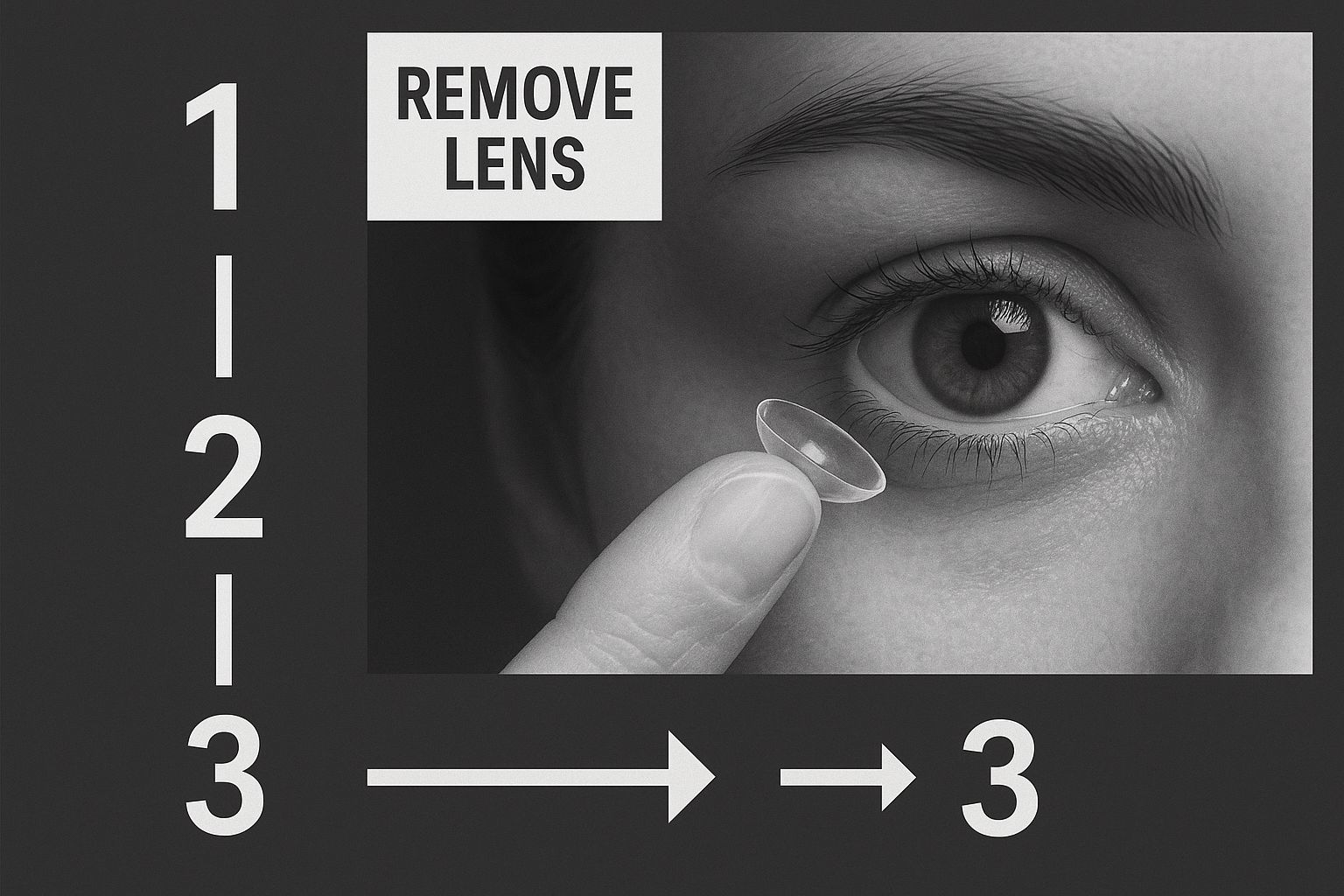
Notice how the fingers gently fold the lens to lift it away.
Making the Move
With your eyelids held open, shift your gaze upwards. Bring the tip of your dominant index finger in and lightly touch the bottom edge of the lens. No need to poke, just a soft touch will do.
Gently slide the lens down off your cornea (the coloured part of your eye) and onto the white part, known as the sclera. The sclera isn't as sensitive, which makes the whole process more comfortable. This movement also helps to break the natural suction holding the lens against your eye.
Time for the final step. Bring your thumb and index finger together to gently pinch the lens. It should fold easily between your fingertips, allowing you to lift it straight out. Always use the soft pads of your fingers—never your nails, as they can tear the lens or, worse, scratch your eye.
Having trouble? If your fingers are slipping, simply dry them on a clean, lint-free towel. If they feel too dry, a single drop of rewetting or saline solution on your fingertip can help.
This technique is a lifesaver for most soft lens wearers, but remember there are many different designs out there. You can explore them in our contact lens types guide.
It's no surprise that more people are learning this daily routine. With vision correction needs on the rise, it's projected that there will soon be over 3.9 million contact lens wearers in the UK alone.
Tackling Hard or RGP Contact Lenses
If you wear Rigid Gas Permeable (RGP) lenses, you’ll know they’re a different beast from soft contacts. Often called hard lenses, they're smaller and firmer, which means you can’t just pinch them out like you would a soft lens. There are two main ways to get them out, and most experienced wearers swear by one or the other: the manual blink technique or a handy little removal tool.
The blink method is quite clever because it uses your own eyelids to pop the lens out. To do this, lean over a clean, flat surface (like a towel-covered counter) and open your eye wide, looking straight into the mirror. Place your index fingers together at the outer corner of your eye, making a ‘V’ shape with the tips.
Now, pull the skin firmly outwards toward your ear. Don't be shy with it. While holding that tension, give a single, forceful blink. This action should catch the edge of the lens, breaking the suction and allowing it to pop right out onto the surface below.
Using a Removal Tool
Some people just can't get the knack of the blink method, and that's perfectly fine. This is where a small suction cup remover, designed for RGP lenses, comes in. It can make the whole process much easier.
Here's how it works:
- Start by placing a single drop of your contact lens solution on the tip of the suction cup. This moisture is key to getting a good grip.
- Looking straight ahead, bring the tool directly to your eye and gently touch the cup to the centre of the lens. You’ll feel it immediately stick.
- With the tool attached, just pull it straight away from your eye. The lens will come with it.
Once the lens is out, you need to get it off the tool. To break the suction, simply squeeze the handle of the remover or, even better, gently slide the lens sideways off the cup. This avoids any risk of scratching or damaging your lens.
This little gadget offers a lot more control, which can be a real confidence-booster if you find the manual technique a bit intimidating. My advice? Give both methods a try. You'll quickly figure out which one feels right for you and your eyes.
Troubleshooting Common Removal Problems
Even seasoned contact lens wearers run into trouble now and then. It’s completely normal to have a day where a lens just doesn't want to come out. The most important thing is not to panic—a bit of patience and the right technique will almost always solve the problem.
Most of the time, a stubborn lens is simply a dry lens. When your eye or the lens itself lacks moisture, it can create a suction-like effect, sticking firmly to the surface of your cornea. You'll know this is happening if the usual pinch method feels like it's doing nothing.
The fix is simple: add moisture. Don't ever try to peel or force a stuck lens off your eye. Instead, reach for your rewetting drops or a sterile saline solution and apply a generous amount. Blink several times to help the liquid work its way underneath the lens. You should feel it start to move more freely within a minute or so.
What if the Lens Folds or Goes Missing?
It can be alarming when a soft lens folds over on itself or disappears from the centre of your eye. More often than not, it's just hiding under your upper eyelid. I know it might feel like it’s lost back there, but rest assured, it’s physically impossible for a lens to get stuck behind your eye. Your anatomy won't allow it.
To coax it out, try this:
- Close your eye and gently massage your eyelid in a circular motion.
- Look down towards your chin, then slowly open your eye. This can often push the lens back into view.
- A few more rewetting drops can also help it float down.
Key Takeaway: If you ever feel sharp pain, notice significant redness, or experience blurry vision while trying to remove a lens, stop what you're doing. This could signal a scratch on your cornea (a corneal abrasion) or another issue that needs professional attention. It’s always best to contact your optician straight away in these cases.
To help you quickly identify and fix these little frustrations, here’s a table summarising the most common issues.
Common Removal Issues and Solutions
| Problem | Primary Cause | Recommended Solution |
|---|---|---|
| Lens feels stuck | Dryness in the eye or on the lens itself. | Apply rewetting drops or sterile saline; blink to rehydrate and loosen the lens. |
| Lens folds in the eye | Pinching too hard or unevenly during removal. | Add rewetting drops, close your eye, and gently massage the lid to unfold it. |
| Can't find the lens | Lens has shifted, usually under the upper eyelid. | Close your eye, look down, and gently massage the eyelid to guide it back to the centre. |
| Stinging or irritation | Unwashed hands, residue on fingers, or a damaged lens. | Re-wash hands thoroughly. Inspect the lens for any tears before re-inserting or discarding. |
Learning to handle these occasional hiccups is just part of the contact lens journey. For a more comprehensive overview, our guide to common contact lens problems offers even more insights. Being prepared helps you stay confident and keeps your eyes safe and healthy.
Looking After Your Eyes and Lenses
Once your contacts are out, you're not quite done. What you do next is just as important for keeping your eyes healthy and getting the most out of your reusable lenses. Think of it as the final, critical step in your daily contact lens routine.
If you wear monthlies or two-weeklies, cleaning them straight away is non-negotiable. Don't leave it until the morning. The whole point is to get rid of the natural build-up—like proteins and lipids from your tears—that has accumulated on the lens surface throughout the day.
Caring for Your Lenses
The best way to get your lenses properly clean is what we call the 'rub and rinse' method. It’s simple but incredibly effective.
Just place one lens in the clean, dry palm of your hand. Add a few drops of fresh, multipurpose contact lens solution, and then gently rub the lens with your fingertip in a back-and-forth motion for about 15-20 seconds. This gentle friction is brilliant at dislodging stubborn deposits that a simple rinse would miss.
Once you’ve finished rubbing, rinse the lens thoroughly with a bit more fresh solution before popping it into your clean lens case.
A huge mistake I see people make is just topping up the old solution in their lens case from the night before. This is a massive no-no. Old solution is no longer effective at disinfecting and is likely swimming with bacteria. Always tip out the old liquid, rinse the case with fresh solution, and fill it up again. Every single time.
Giving Your Eyes a Rest
Your eyes have been working hard all day. Taking your lenses out gives your corneas a chance to breathe, letting them absorb the maximum amount of oxygen from the air, which is fundamental for keeping them healthy. This little break helps prevent that dry, gritty feeling and reduces the risk of irritation.
This is why having a good, up-to-date pair of glasses is a fundamental part of your eyecare, not just a 'nice to have'. You’ll rely on them for:
- Those early mornings before you’ve put your lenses in.
- Relaxing in the evenings after you’ve taken them out.
- Giving your eyes a day off when they feel tired or look a bit red.
- When you’re unwell or have any kind of eye irritation that means you can't wear contacts.
Following these simple aftercare habits will make all the difference in keeping your eyes comfortable and your vision clear, day after day.
Got a Question About Taking Your Lenses Out?
Even seasoned contact lens wearers run into the odd hiccup now and again. If you're new to lenses, you probably have a few questions. Let's tackle some of the most common ones I hear from people.
What If My Lens Feels Glued to My Eye?
This is a classic problem, and it almost always comes down to one thing: a dry lens. Don't panic, and definitely don't try to peel it off. That's a recipe for irritation.
First, wash your hands thoroughly. Then, grab some sterile rewetting drops or saline solution and put a few drops directly into your eye. Close your eye for a moment and gently massage your eyelid. A few good blinks should help the moisture get underneath the lens, allowing it to move freely again so you can pinch it out as usual.
Can a Contact Lens Really Get Lost Behind My Eye?
Short answer: no. It's a common fear, but it's physically impossible. A thin membrane called the conjunctiva covers the white of your eye and connects to the inside of your eyelids, creating a natural barrier. Nothing can get past it.
If you can't find the lens, it’s probably just folded up or tucked away under your upper eyelid. Try looking down towards your nose, adding a few lubricating drops, and then gently massaging your eyelid. This usually coaxes it back into a position where you can see and remove it.
One thing I can't stress enough: unless your optician has fitted you with extended-wear lenses, you must never sleep in them. It starves your cornea of oxygen and massively increases the risk of a nasty eye infection.
Mastering the removal process is just as significant as putting them in. For a full refresher, have a look at our guide on how to wear contact lenses.
If you're consistently struggling or experiencing any pain, it’s time to speak to a professional. The team here at Northern Optical Company is always ready to help with any part of your lens-wearing journey. You can book an eye test with us by visiting https://northernopticalcompany.com.