

Most people think of eye tests as something you do after your vision gets blurry. Surprisingly, over 19.6 million sight tests are carried out each year in England alone, making regular optician visits one of the most common health checks. Yet here’s the twist. Those eye appointments might be protecting far more than your eyesight—your next check-up could uncover hidden health conditions long before any symptoms appear.
Table of Contents
- Recognising Common Signs You Need An Optician
- Age-Specific Advice: From Children To The Elderly
- Special Considerations For Contact Lens Wearers And Active Lifestyles
- How Regular Optician Visits Benefit Everyday Life
Quick Summary
| Takeaway | Explanation |
|---|---|
| Recognise Visual Symptoms | Persistent headaches, double vision, or difficulty focusing warrant immediate consultation with an optician to prevent deterioration and catch underlying conditions early. |
| Age-Specific Check-Ups | Eye health needs change with age: children’s vision should be assessed early, adults should monitor for presbyopia, and seniors must have annual eye exams to detect age-related diseases. |
| Care for Contact Lens Wearers | Contact lens wearers must maintain proper hygiene and seek professional guidance to avoid complications and ensure their lenses fit their lifestyle needs. |
| Regular Optician Visits Are Crucial | Regular check-ups go beyond vision correction, identifying potential systemic health issues and improving quality of life through enhanced performance and early disease detection. |
Recognising Common Signs You Need an Optician
Your eyes are complex and delicate sensory organs that communicate crucial health information. Identifying when to visit an optician isn’t always straightforward, but certain signals should prompt immediate attention. Understanding these signs can help prevent potential vision deterioration and catch underlying health conditions early.
Visual Changes That Demand Professional Assessment
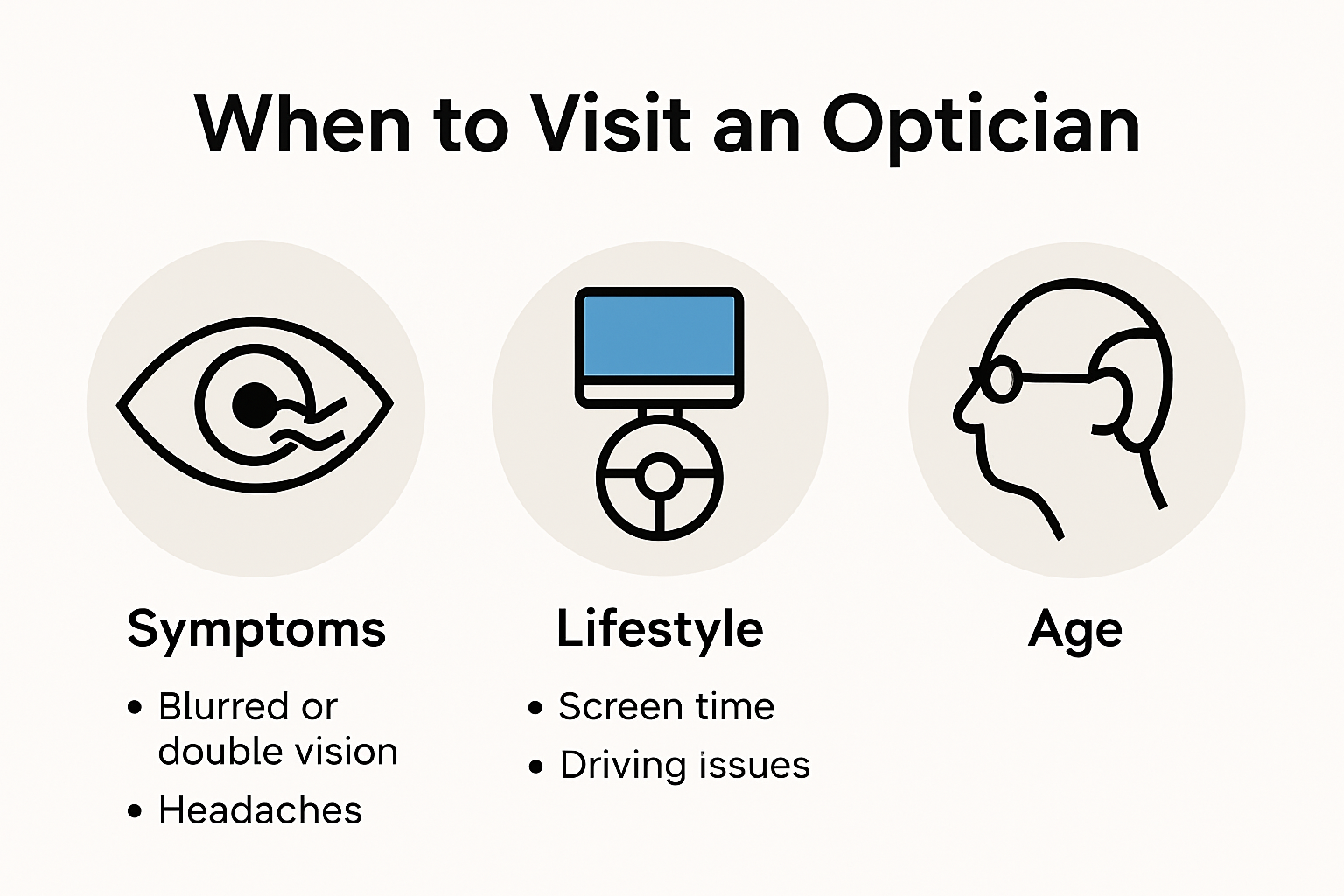
Blurred vision represents more than a minor inconvenience. When your sight becomes progressively unclear or objects appear less defined, it signals a potential need for professional eye examination. Insights from our comprehensive vision guide suggest that sudden or gradual visual changes could indicate refractive errors, eye strain, or more serious health conditions.
Specific visual symptoms warrant immediate optician consultation:
- Persistent Headaches: Frequent headaches, especially after reading or screen work, might indicate eye strain or incorrect prescription.
- Double Vision: Experiencing double images could suggest eye muscle problems or neurological issues.
- Difficulty Focusing: Struggling to focus on objects at different distances might indicate presbyopia or other vision changes.
Lifestyle and Environmental Indicators
Beyond direct visual symptoms, certain lifestyle factors signal the need for an eye examination. According to recent research, environmental and personal factors significantly impact eye health.
Key lifestyle indicators include:
- Increased difficulty driving at night
- Needing significantly more light for reading or close tasks
- Digital screen use exceeding four hours daily
- Family history of eye conditions like glaucoma or diabetes
Age Related Vision Changes
Age plays a critical role in eye health. While younger individuals might experience vision changes due to digital strain, older adults face more complex eye health challenges. Our guide on comprehensive eye tests recommends regular check-ups become increasingly important as you age.
For adults over 40, watch for:
- Reduced near vision clarity
- Increased light sensitivity
- Longer adaptation times in changing light conditions
Remember, early detection through professional eye examinations can prevent potential long-term vision complications. If you experience any of these signs, schedule an appointment with a trusted optician who can provide comprehensive vision assessment and personalised care.
Your vision is precious. Trust the experts who understand its complexity and importance.
Age-Specific Advice: From Children to the Elderly

Eye health is a lifelong journey that requires tailored attention at every stage of life. Different age groups face unique vision challenges that demand specialised care and proactive monitoring. Understanding these age-specific considerations helps ensure optimal eye health and early detection of potential vision problems.
Childhood Vision Care: Laying the Foundation
The first decade of life is critical for vision development. Our comprehensive guide to children’s eye care highlights the importance of early intervention. According to the College of Optometrists, children should have their first comprehensive eye examination between four and five years old, before starting school.
Key considerations for childhood eye care include:
- Screening for refractive errors like myopia or astigmatism
- Checking eye muscle coordination and alignment
- Assessing colour vision and depth perception
- Monitoring overall eye health and development
Parents should watch for signs of potential vision issues such as squinting, frequent eye rubbing, sitting too close to screens, or holding reading materials extremely close.
Adult Vision: Navigating Changing Needs
Adult vision undergoes significant transformations across different life stages. Dr Paramdeep Bilkhu from The College of Optometrists advises, “If you notice any changes in your sight or experience any problems with your eyes, contact your optometrist as soon as possible” according to recent guidance.
Vision challenges vary by age group:
- 20-40 years: Digital eye strain from prolonged screen use
- 40-55 years: Onset of presbyopia and potential reading difficulties
- 55-65 years: Increased risk of age-related eye conditions
Most adults require eye examinations every two years, though individuals with specific health conditions might need more frequent checks.
Senior Eye Health: Proactive Protection
As we age, eye health becomes increasingly complex. Research indicates that older adults face higher risks of conditions like glaucoma, cataracts, and macular degeneration. Regular comprehensive eye examinations become crucial for early detection and management.
Special considerations for seniors include:
- Annual eye examinations
- Screening for age-related eye diseases
- Assessing impact of chronic health conditions on vision
- Evaluating potential medication interactions affecting eye health
Whether you’re a child, adult, or senior, professional eye care adapts to your unique needs. Regular check-ups, awareness of age-specific risks, and proactive monitoring form the cornerstone of lifelong eye health.
Remember, your vision is a precious gift. Protect it at every stage of life with professional, personalised eye care.
Special Considerations for Contact Lens Wearers and Active Lifestyles
Contact lenses offer incredible flexibility for individuals with dynamic lifestyles, but they also demand careful attention and specialised eye care. Understanding the unique requirements of contact lens wear is crucial for maintaining optimal vision and eye health, particularly for those engaged in sports, professional activities, or frequent travel.
Professional Guidance for Contact Lens Care
The Association of British Dispensing Opticians (ABDO) emphasises the critical importance of professional guidance in contact lens management. Our comprehensive guide to contact lens selection highlights that not all contact lenses are created equal. Different lifestyles and activities require specific lens types and care routines.
Key professional recommendations include:
- Regular comprehensive eye examinations
- Precise lens fitting assessments
- Personalised lens care instructions
- Monitoring for potential eye health complications
Professional opticians can help you select lenses that match your unique lifestyle demands, whether you’re an athlete, professional, or someone with specific visual needs.
Active Lifestyle Lens Considerations
For individuals with active lifestyles, contact lens selection goes beyond simple vision correction. UK Civil Aviation Authority guidelines recommend a minimum wearing adaptation period of 8 hours a day for 5 days a week before relying on lenses during demanding activities.
Special considerations for active lens wearers include:
- Selecting sports-specific lens designs
- Understanding moisture and durability requirements
- Preparing backup eyewear for critical activities
- Managing lens hygiene in varied environmental conditions
Athletes and professionals in safety-critical roles must pay extra attention to lens performance and eye health, ensuring their visual correction supports rather than hinders their performance.
Preventing Lens-Related Complications
Contact lens wearers face unique eye health challenges that require proactive management. Specialist opticians recommend maintaining strict hygiene protocols and recognising early signs of potential complications.
Warning signs that warrant immediate professional consultation include:
- Persistent eye redness
- Unusual discharge or discomfort
- Reduced visual clarity
- Increased light sensitivity
- Dry or irritated eyes
While contact lenses offer remarkable vision correction and lifestyle flexibility, they are not a one-size-fits-all solution. Each individual requires personalised advice, regular professional assessments, and a commitment to proper lens care.
Remember, your eyes are complex and delicate. Trust professional opticians to guide you towards safe, comfortable, and effective contact lens wear that supports your active lifestyle.
How Regular Optician Visits Benefit Everyday Life
Eye health extends far beyond simply obtaining a prescription for glasses or contact lenses. Regular optician visits represent a critical investment in overall personal wellbeing, offering comprehensive insights that impact multiple aspects of daily life. Exploring the vital role of opticians reveals how these professional consultations contribute to holistic health management.
Beyond Vision: Comprehensive Health Screening
Optician visits are more than routine eye examinations. According to recent NHS data, vision treatment services account for the largest outpatient attendances across England, underscoring their significance in preventative healthcare.
Professional eye examinations can detect early signs of systemic health conditions such as:
- Diabetes
- High blood pressure
- Cardiovascular diseases
- Neurological disorders
- Early-stage cancers
These screenings provide a unique window into your overall health, often identifying potential issues before they become more serious medical concerns.
Enhancing Daily Performance and Quality of Life
Accurate vision correction directly influences personal and professional performance. Primary eye care services in England provide over 19.6 million sight tests annually, demonstrating the widespread recognition of vision’s critical role in everyday functioning.
Key areas where regular optician visits improve daily life include:
- Enhanced workplace productivity
- Improved driving safety
- Reduced digital eye strain
- Better academic and learning performance
- More comfortable recreational activities
Proper vision correction can transform how you interact with the world, making tasks smoother and more enjoyable.
Preventative Care and Long-Term Eye Health
The UK’s new Eye Care Data Hub predicts increasing prevalence of eye conditions, emphasizing the importance of proactive monitoring. Understanding early intervention strategies can significantly reduce the risk of permanent vision loss.
Preventative measures during regular optician visits include:
- Monitoring age-related vision changes
- Tracking potential hereditary eye conditions
- Recommending lifestyle adjustments
- Providing personalised eye health guidance
- Early detection of progressive eye diseases
These consultations are not just medical check-ups but strategic investments in your long-term visual and overall health.
Regular optician visits represent a holistic approach to healthcare. They offer far more than vision correction—they provide comprehensive insights, support daily performance, and protect your most precious sensory experience. Prioritising these check-ups is an investment in yourself, ensuring clarity, comfort, and continued wellbeing.
Frequently Asked Questions
When should I schedule my first eye exam for my child?
Children should have their first comprehensive eye examination between four and five years old, before starting school, to ensure proper vision development.
What are the common signs that indicate I need to see an optician?
Common signs include persistent headaches, double vision, difficulty focusing, increased difficulty driving at night, or needing significantly more light for reading.
How often should adults get their eyes checked?
Most adults should have their eyes examined every two years. However, those with specific health conditions may require more frequent check-ups.
What special considerations should contact lens wearers keep in mind?
Contact lens wearers must maintain proper hygiene, follow professional guidance for lens care, and monitor for any signs of complications, such as persistent eye redness or decreased clarity.
Ready to Take Charge of Your Eye Health in 2025?
If the signs and advice in this guide have you questioning whether it is time for your next eye test, you are not alone. From blurred vision and digital eye strain to age-related changes or worries about contact lens comfort, the challenges covered here are all real reasons to visit a trusted optician. Whether you are looking for tailored advice for your child’s first exam, navigating the transition into reading glasses, or seeking advanced screenings for long-term eye health, you deserve a clinic that combines cutting-edge technology with personal care. Discover why so many local families turn to Northern Optical Company, Newcastle’s independent, family-run optician dedicated to transforming your vision and wellbeing.
Take the uncertainty out of your next step. Book your comprehensive eye assessment with our experienced team today and experience the difference of truly personalised care. Visit our main site or explore all our services in our Uncategorized section. Your eyes are worth a professional check now for a clearer, healthier tomorrow.
Recommended Articles
- Understanding the Vital Role Your Optician Plays in Vision Care
- How to Prepare for Eye Test: Easy Guide for All in 2025
- Understanding the Importance of Local Opticians in 2025