
Choosing between glasses and contact lenses might seem straightforward, but the differences run deeper than mere looks or habit. Here is a surprise for you. A striking 60 percent of UK adults actually choose glasses over contacts due to convenience and cost-effectiveness. That flips the trend you might expect in our tech-loving age, so the real question is not just about vision but how each choice shapes your comfort, confidence, and daily life.
Table of Contents
- Comparing Glasses And Contacts For Daily Use
- Key Considerations By Age And Lifestyle
- Health, Comfort, And Safety Factors
- Style, Convenience, And Cost In 2025
Quick Summary
| Takeaway | Explanation |
|---|---|
| Convenience Matters | Glasses are easier to wear and maintain, while contact lenses require careful handling and hygiene practices. 60% of UK adults prefer glasses for their immediate wearability and lower maintenance. |
| Cost-Effectiveness Varies | Glasses tend to be a more stable long-term investment as they last several years, while contact lenses can incur ongoing costs depending on frequency of use and type of lenses. |
| Age and Activity Influence Choice | Young wearers often prefer contacts for self-confidence in sports, while seniors may opt for glasses for practicality and ease of use due to potential dexterity issues. |
| Health and Safety Factors | Long-term contact lens wear can risk corneal health, making it essential to weigh the physiological impacts of each option. Glasses can provide a protective barrier against environmental factors. |
| Style and Personal Expression | Glasses now serve as a fashion statement, offering diverse styles and smart technology integration, while contact lenses provide invisibility but lack aesthetic versatility. |
Comparing Glasses and Contacts for Daily Use
Choosing between glasses and contact lenses involves more than just vision correction. Each option presents unique advantages and challenges for daily wear, impacting comfort, lifestyle, and overall eye health.
Convenience and Practical Considerations
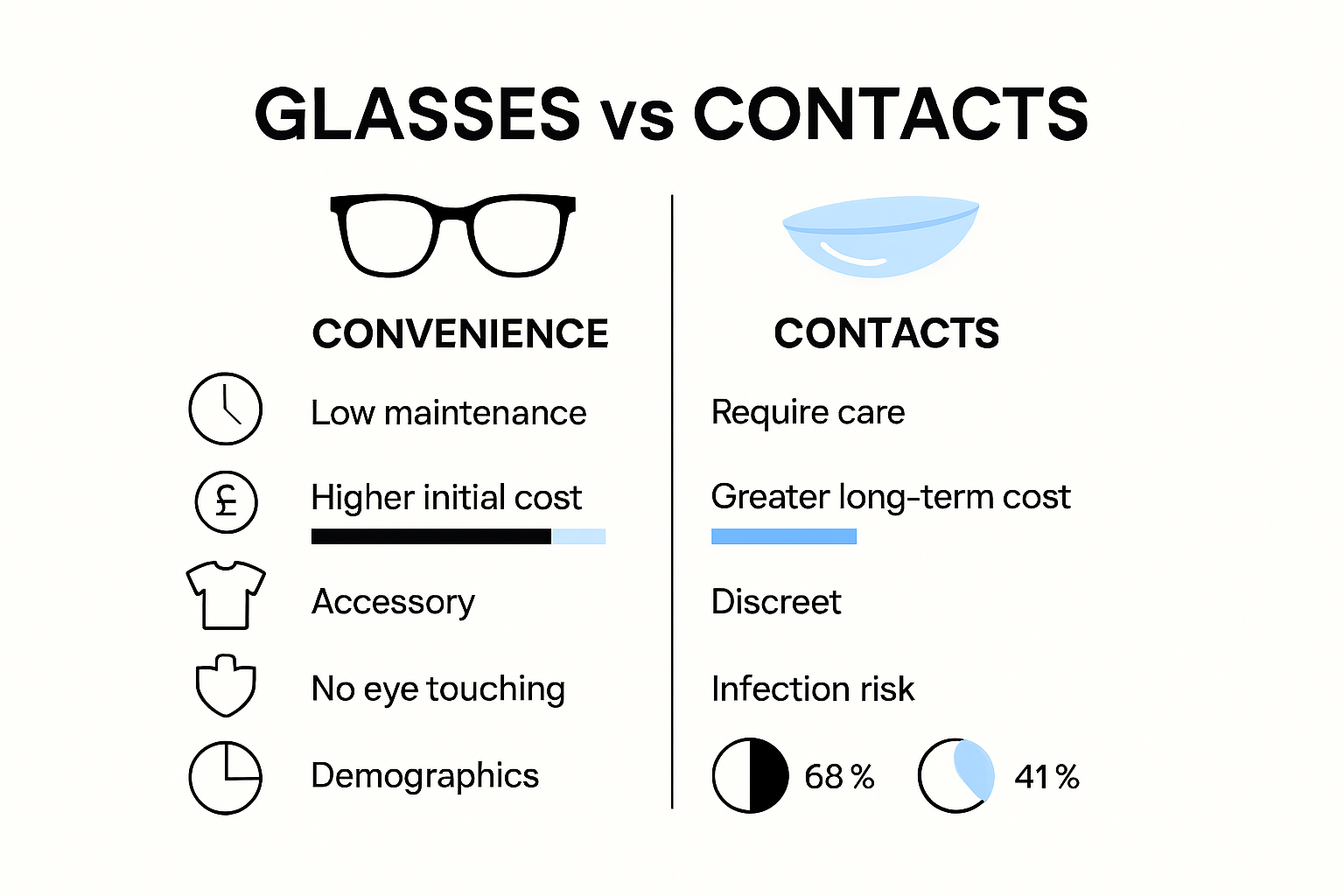
When considering daily eyewear, convenience plays a critical role. Glasses offer immediate wearability – simply put them on and go. According to a YouGov survey, 60% of UK adults prefer glasses primarily due to their ease of use and lower maintenance requirements.
Contact lenses, by contrast, demand more careful handling. Insertion, removal, cleaning, and storage require meticulous attention. Wearers must maintain strict hygiene protocols to prevent potential eye infections. Research indicates long-term contact lens wear can lead to structural changes in the cornea, including alterations in epithelial oxygen uptake and potential vision complications.
Cost and Long-Term Wear Considerations
Economic factors also influence the glasses versus contacts debate. A study published in the British Contact Lens Association journal developed a comprehensive cost-per-wear model revealing nuanced financial implications. Research showed that daily replacement lenses are most cost-effective when worn 1-3 days per week, while reusable monthly lenses become more economical with 4-7 days of weekly use.
Glasses represent a more stable investment. A single pair can last several years with proper care, whereas contact lens wearers face recurring monthly or quarterly replacement costs. Additionally, glasses provide an extra layer of eye protection from dust, debris, and UV radiation without requiring additional accessories.
Lifestyle and Personal Comfort
Ultimately, the choice between glasses and contacts depends on individual lifestyle and personal preferences. Active individuals might prefer contacts during sports or physical activities, while those working in dusty environments might find glasses more protective.
For those seeking more information about making this decision, our comprehensive guide to vision correction options can provide deeper insights tailored to your specific needs.
Whether you choose glasses or contacts, the most important factor is maintaining excellent eye health through regular professional examinations and following recommended wearing guidelines. Each option offers unique benefits, and the right choice varies for each individual’s specific requirements and daily routine.
Key Considerations by Age and Lifestyle
Selecting the right vision correction method requires careful evaluation of individual needs across different life stages and activity levels. Each age group and lifestyle presents unique challenges and opportunities when choosing between glasses and contact lenses.
Children and Teenagers: Building Vision Confidence
For younger individuals, vision correction goes beyond medical necessity and enters the realm of personal development. Research from the British Contact Lens Association reveals remarkable satisfaction rates among young wearers—97% of children aged 8 to 12 and 99% of teenagers between 13 and 17 report positive experiences with contact lenses.
Teenagers often prefer contact lenses for improved self-confidence and enhanced performance in sports and physical activities. Glasses can sometimes feel restrictive during high-energy activities, whereas contacts provide unobstructed peripheral vision and stability during movement. The psychological impact of feeling comfortable and confident cannot be understated during these formative years.
Active Adults and Sports Enthusiasts
Individuals with dynamic lifestyles require vision correction that adapts seamlessly to their physical demands. The NHS advises that contact lenses can offer a wider field of vision, which proves advantageous for athletes and active professionals.
Runners, cyclists, and team sport participants frequently choose contact lenses to eliminate the risk of glasses falling or breaking during intense physical activity. Contacts provide stable vision without additional protective eyewear, making them ideal for outdoor adventures and competitive sports. However, individuals working in dusty or high-debris environments might find glasses offer better environmental protection.
Seniors and Long-Term Vision Care
As individuals age, vision correction becomes more complex. According to a YouGov survey, 60% of UK adults prefer glasses, with seniors often gravitating towards this option for practicality and ease of use.
Older adults might find contact lenses challenging due to potential dexterity issues with insertion and maintenance. Glasses offer easier handling, integrated reading capabilities, and additional protection from environmental factors. For those interested in exploring age-appropriate vision solutions, our comprehensive guide to senior eyewear provides tailored recommendations.
Regardless of age or lifestyle, the most critical factor remains individual comfort and eye health. Regular professional consultations ensure that vision correction methods evolve alongside changing physical needs, providing optimal clarity and quality of life.
Here’s a comparison table that organises the main differences, benefits, and drawbacks between glasses and contact lenses for everyday use.
| Factor | Glasses | Contact Lenses |
|---|---|---|
| Convenience | Easy to put on and take off; minimal daily effort | Require handling, insertion, removal, and cleaning |
| Cost | One-time purchase; lasts several years | Ongoing costs for replacements & solutions |
| Maintenance | Occasional cleaning only | Strict hygiene required daily |
| Eye Protection | Provides barrier against dust, UV, debris | No environmental protection |
| Sports/Activity | May slip/break; restricts movement | Stable fit; unobstructed peripheral vision |
| Fashion/Style | Wide variety of frames; fashion accessory | Invisible; does not alter appearance |
| Health Risks | Minimal if cleaned; no direct contact with eye | Risk of infection, corneal changes if misused |
Health, Comfort, and Safety Factors
Vision correction extends far beyond mere visual clarity. The choice between glasses and contact lenses involves complex considerations of eye health, personal comfort, and long-term safety that impact daily quality of life.
Corneal Health and Physiological Impact
Long-term vision correction methods can significantly influence ocular physiology. Research indicates that prolonged contact lens wear can lead to decreased corneal sensitivity, a condition fortunately reversible upon discontinuing lens use. This subtle yet critical physiological change underscores the importance of understanding how different vision correction methods interact with eye anatomy.
Contact lenses create a direct interface with the eye’s surface, potentially introducing risks not present with glasses. Improper hygiene, extended wear, or using lenses beyond recommended replacement schedules can lead to complications such as corneal infections, oxygen deprivation, and increased susceptibility to inflammatory conditions. Glasses, by contrast, provide a protective barrier while allowing natural eye breathing and movement.
Digital Eye Strain and Modern Work Environments
With increasing digital engagement, vision correction must address emerging challenges. The Cochrane Database of Systematic Reviews highlights a critical gap in current understanding, noting no conclusive evidence that eyeglasses or contact lenses effectively prevent eye symptoms associated with computer use.
This finding emphasizes the need for comprehensive vision solutions that go beyond traditional correction. Anti-reflective coatings, blue light filtering technologies, and ergonomic considerations become increasingly important for individuals spending significant time in digital environments. For professionals seeking tailored advice, our comprehensive guide to vision correction options offers insights into managing digital eye strain.
Psychological and Social Dimensions of Vision Correction
Beyond physical health, vision correction methods carry profound psychological implications. A study in Optometry and Vision Science revealed that daily disposable contact lenses significantly improved quality of life measures for teenagers, including perceptions of appearance, social satisfaction, and personal confidence.
For many individuals, the choice between glasses and contacts transcends medical necessity. Glasses can serve as a fashion statement, expressing personal style and personality. Contact lenses offer invisibility and freedom of movement, particularly beneficial for those engaged in sports or performing arts. The emotional and social dimensions of vision correction are as important as their medical functionality.
Ultimately, the most appropriate vision correction method varies individually. Factors such as eye health, lifestyle, professional requirements, and personal comfort must be carefully balanced. Regular professional consultations, comprehensive eye examinations, and a holistic approach to vision care remain paramount in making informed decisions about glasses and contact lenses.
Style, Convenience, and Cost in 2025
In 2025, the vision correction landscape continues to evolve, blending technological innovation with personal style and practical considerations. The choice between glasses and contact lenses extends far beyond simple visual correction, encompassing lifestyle, economic factors, and individual expression.
Fashion and Personal Expression
Glasses have transformed from medical necessity to fashion statement. Research from contemporary eyewear trends reveals that consumers increasingly view eyewear as an extension of personal style. Frame designs now range from minimalist titanium frames to bold, statement pieces that complement individual personalities. Contact lenses, while offering invisibility, cannot match the aesthetic versatility of glasses.
Designers in 2025 have pushed boundaries, creating frames that integrate smart technology, offer blue light filtering, and provide customizable looks. For professionals and fashion enthusiasts alike, glasses have become a crucial accessory that communicates personal brand and aesthetic sensibility. The ability to change frames seasonally or for different occasions provides an unparalleled level of style flexibility that contact lenses simply cannot replicate.
Economic Considerations and Long-Term Value
Analysis from optical industry experts highlights the complex economic landscape of vision correction. While contact lenses might seem more affordable initially, the long-term costs tell a different story. A YouGov survey indicates that 60% of UK adults prefer glasses, with cost-effectiveness being a significant factor.
Glasses offer a more sustainable investment. A quality pair can last several years with proper care, whereas contact lens wearers face recurring monthly expenses for lenses, cleaning solutions, and replacement supplies. The average contact lens wearer spends significantly more annually compared to someone who invests in a durable pair of glasses. Additionally, glasses provide added benefits like built-in UV protection and potential blue light filtering without additional cost.
To clarify the age-specific and lifestyle-related considerations discussed above, the following table groups key factors and preferences by age group and activity level.
| Age/Lifestyle Group | Preference Trend | Key Considerations |
|---|---|---|
| Children (8–12) | High satisfaction w/ contacts | Confidence, sports performance, parental guidance |
| Teenagers (13–17) | Very high contact lens satisfaction | Self-image, sports, peer acceptance |
| Active Adults/Sports | Often contacts preferred | Field of vision, stability during activity, protection |
| Adults in Dusty Environments | Glasses often preferred | Eye protection, safety, practicality |
| Seniors | Glasses often preferred | Ease of use, dexterity, integrated reading ability |
Convenience and Lifestyle Integration
Convenience remains a critical factor in the glasses versus contacts debate. Contact lenses require meticulous daily maintenance – careful insertion, removal, cleaning, and storage. This routine can be challenging for individuals with busy lifestyles or those with limited dexterity. Glasses, by contrast, offer simplicity. Put them on, take them off, and clean occasionally.
For those seeking more nuanced guidance, our expert vision correction guide provides comprehensive insights into selecting the most suitable option for individual needs.
The modern consumer demands more than just vision correction. They seek solutions that seamlessly integrate with their lifestyle, reflect their personal style, and provide long-term value. Whether choosing glasses or contacts, the key is finding a solution that enhances comfort, confidence, and visual clarity while aligning with personal and financial priorities.
Frequently Asked Questions
What are the main advantages of glasses over contact lenses?
Glasses are easier to wear and maintain, requiring less daily effort. They also provide an extra layer of eye protection from dust, debris, and UV radiation without the need for additional accessories.
Why do many people prefer contact lenses?
Many individuals prefer contact lenses for aesthetic reasons, as they offer unobstructed peripheral vision and can enhance self-confidence, especially during sports and physical activities.
How do costs compare between glasses and contact lenses?
Glasses are generally a more stable long-term investment, lasting several years with proper care. In contrast, contact lenses incur ongoing costs for replacements and cleaning solutions, which can add up significantly over time.
Which option is better for children and teenagers?
For children and teenagers, contact lenses are often preferred as they can boost self-confidence and performance in sports. However, glasses may offer practicality and ease of use, particularly for younger children.
Discover Comfort and Clarity Tailored to Your Lifestyle
Struggling to choose between glasses and contact lenses? You are not alone. The article explored how your daily routine, comfort, and even confidence can be shaped by this decision. Factors like convenience, long-term costs, health, and style all play a role in what truly works for you or your family. At Northern Optical Company, we understand these personal pain points and help you navigate every option with honest, friendly advice using the latest technology in eye health.
Experience what it feels like to have eye care built around your individual needs. Book a comprehensive eye exam or browse the latest eyewear and contact lenses with guidance tailored to your lifestyle and budget. Trust your local, independent experts to help you look good and see clearly. Start your journey to better vision and personal comfort by visiting Northern Optical Company today.
Recommended
- Are Contacts Better Than Glasses? 2025 Guide For Every Lifestyle
- Key Benefits of Contact Lenses for Your Eyes
- How to Choose Contact Lenses: A 2025 Guide for Every Lifestyle
- Best Eyewear for Seniors in 2025: Top Choices for Comfort and Clarity
- How to Choose Sports Glasses: A 2025 Guide for Every Lifestyle
- Children and Contact Lenses: A Parent’s Guide for 2025