

Your eyes work overtime every time you get behind the wheel, yet few drivers realise that around 720,000 motorists in Britain are still driving with defective eyesight. Surprising as it sounds, most people focus on car maintenance and road safety checks, but eye care barely crosses their minds. Here is where it gets interesting. Simple eye exercises can do more than just reduce strain. They can actually sharpen your reaction time and expand your peripheral vision, making every drive safer for you and everyone around you.
Table of Contents
- Why Eye Exercises Matter For Drivers
- Simple Eye Exercises To Reduce Strain
- Eye Health Tips For All Ages And Lifestyles
- When To Seek Professional Eye Care Advice
Quick Summary
| Takeaway | Explanation |
|---|---|
| Importance of Eye Exercises | Regular eye exercises improve reaction time, reduce eye strain, and enhance peripheral awareness, which are crucial for safe driving. |
| 20-20-20 Rule | Implement the 20-20-20 rule: every 20 minutes, look at something 20 feet away for 20 seconds to relax eye muscles and prevent fatigue. |
| When to Seek Professional Help | Drivers should seek professional eye care if experiencing difficulty reading number plates, persistent night driving challenges, or sudden visual changes to ensure safety. |
| Comprehensive Eye Care | Tailor eye care strategies to life stages and lifestyles, ensuring adequate protection and regular examinations to maintain optimal vision health. |
| Nutrition for Eye Health | A balanced diet rich in omega-3 fatty acids, lutein, zeaxanthin, and vitamins A, C, and E supports long-term eye function and overall health. |
Why Eye Exercises Matter for Drivers
Driving demands extraordinary visual performance that goes far beyond basic eyesight. For motorists, optimal visual function isn’t just about reading road signs or recognising distant objects – it’s about maintaining split-second reaction capabilities that can mean the difference between safety and potential disaster.
The Critical Link Between Vision and Road Safety
Drivers face unique visual challenges that require consistent eye muscle conditioning and awareness. According to research highlighting defective eyesight among UK motorists, approximately 720,000 drivers are currently operating vehicles with compromised visual capabilities. This staggering statistic underscores why targeted eye exercises are not merely recommended but essential.
The physical demands of driving create specific strain on eye muscles. Long hours behind the wheel, constant scanning of road conditions, managing peripheral awareness, and adapting to varying light conditions challenge our visual system in ways most people rarely consider. Sustained focus on distant and near objects, rapid eye movements between mirrors and road, and managing glare from oncoming vehicles require remarkable ocular flexibility and strength.
Preventing Visual Fatigue and Enhancing Driving Performance
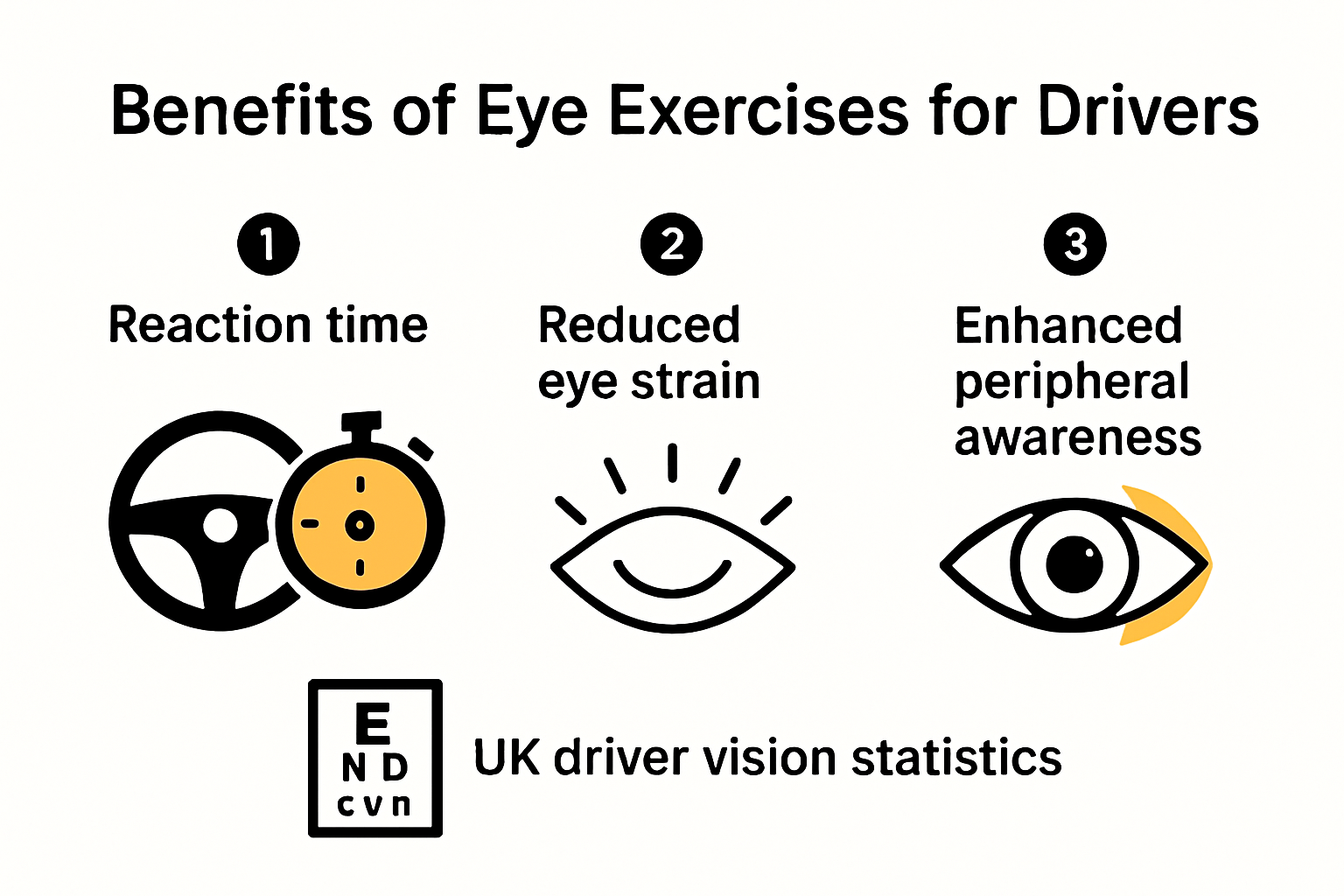
Regular eye exercises provide multiple benefits specifically tailored to drivers’ needs. By systematically training eye muscles, drivers can:
- Improve Reaction Time: Strengthened eye muscles respond more quickly to sudden changes in road conditions.
- Reduce Eye Strain: Targeted exercises help manage the continuous visual scanning required during driving.
- Enhance Peripheral Awareness: Developing better eye muscle control increases overall visual field perception.
Interestingly, our comprehensive guide on driving vision requirements reveals that meeting legal visual standards involves more than just static visual acuity. Drivers must maintain a horizontal visual field of at least 120 degrees and demonstrate consistent visual performance under varying conditions.
Statistics reveal a concerning trend: one-third of drivers require corrective lenses, and 40% have not undergone a sight test in the past two years. This lack of proactive eye care significantly increases risk on the road. Eye exercises offer a proactive approach to maintaining and potentially improving visual capabilities beyond standard corrective measures.
Drivers of all ages can benefit from consistent eye muscle training. Whether you’re a young professional navigating city streets or a seasoned driver with decades of experience, these exercises can help maintain and potentially improve visual performance. The key is understanding that eye health is dynamic – it requires ongoing attention and care.
By integrating simple, targeted eye exercises into your routine, you’re not just maintaining vision – you’re investing in your safety, the safety of your passengers, and everyone else sharing the road with you. Your eyes are your most critical driving tool, and like any precision instrument, they require regular maintenance and care.
Simple Eye Exercises to Reduce Strain
Drivers spend countless hours with eyes fixed on the road, creating significant visual strain that can impact both driving performance and overall eye health. Understanding and implementing simple eye exercises can make a substantial difference in maintaining visual comfort and reducing fatigue during long journeys.
The 20-20-20 Rule: A Driver’s Visual Reset
One of the most effective strategies for reducing eye strain is the 20-20-20 rule. This technique involves taking a 20-second break every 20 minutes to look at an object 20 feet away. For drivers, this means periodically shifting focus from the road to a distant landmark or horizon. This exercise helps relax eye muscles, reduce tension, and prevent the cumulative strain of prolonged visual concentration.
While driving, implementing this rule requires strategic planning. During brief stops at traffic lights or rest areas, drivers can perform quick eye relaxation techniques. Looking at distant trees, road signs, or landscape features can provide the necessary visual reset. Our comprehensive guide on eye care practices offers additional insights into maintaining eye health during extended periods of visual focus.
Targeted Eye Movement Exercises for Drivers
Several specific exercises can help drivers maintain eye muscle flexibility and reduce strain:
-
Eye Rolling: Slowly rotate your eyes in a complete circular motion, first clockwise, then counterclockwise. According to optical health experts, this exercise can enhance eye muscle flexibility and improve circulation, helping to alleviate tension built up during long drives.
-
Focus Shifting: Alternate between focusing on near and far objects. While safely parked or during brief stops, practice switching focus between your dashboard and a distant object. This exercise helps train eye muscles to adapt quickly to different visual distances.
-
Blinking Exercises: Conscious blinking helps lubricate the eyes and reduce dryness. Drivers often unconsciously reduce blinking when concentrating, leading to eye strain. Practice intentional, slow blinks during drives to keep eyes refreshed.
Research suggests that while these exercises cannot permanently correct vision, they can significantly reduce discomfort from prolonged visual tasks. They promote relaxation and increase blood flow to the eye muscles, providing temporary relief and preventing long-term strain.
It’s crucial to remember that these exercises are supplementary to regular eye care. Drivers should still schedule routine eye tests and use appropriate corrective lenses if needed. Professional eye examinations can identify underlying issues that simple exercises cannot address.
Drivers of all ages and experience levels can benefit from incorporating these simple eye exercises into their routine. Whether you’re a professional long-haul driver or someone who enjoys weekend road trips, these techniques can help maintain eye health and improve overall driving comfort. By treating your eyes with the same care and attention you give to your vehicle, you’re investing in safer, more comfortable journeys.
Eye Health Tips for All Ages and Lifestyles
Eye health is a universal concern that transcends age, profession, and lifestyle. Whether you’re a professional driver, an office worker, or a retiree, maintaining optimal visual wellness requires a proactive and comprehensive approach that adapts to changing life stages and personal needs.
Comprehensive Eye Care Across Life Stages
Understanding that eye health is not a one-size-fits-all concept is crucial. Each age group and lifestyle presents unique visual challenges that demand tailored strategies. Our comprehensive guide on eye care practices highlights the importance of recognising these individual needs.
For young adults, digital screen exposure poses significant risks. The average person spends over 7 hours daily engaging with digital devices, creating unprecedented strain on eye muscles. Implementing the 20-20-20 rule becomes essential: every 20 minutes, look 20 feet away for 20 seconds to reduce eye fatigue.
Middle-aged individuals often encounter presbyopia, a natural age-related vision change requiring reading glasses or progressive lenses. Regular eye examinations become increasingly critical during this life stage. Experts recommend comprehensive eye tests every two years to detect early signs of conditions like glaucoma, diabetes, and high blood pressure.
Lifestyle-Specific Vision Protection Strategies
Drivers face unique visual challenges that demand specialized attention. Research indicates approximately 720,000 motorists in Britain are driving with defective eyesight, underscoring the critical need for regular vision assessments and appropriate corrective measures.
Key lifestyle-specific recommendations include:
- Office Workers: Use anti-glare screen filters, adjust monitor brightness, and maintain proper ergonomic distance.
- Outdoor Professionals: Wear UV-protective sunglasses and wide-brimmed hats to reduce sun-related eye damage.
- Digital Professionals: Implement blue light filtering technologies and take regular screen breaks.
Seniors require more frequent eye examinations and may need specialized vision solutions. Age-related macular degeneration, cataracts, and reduced peripheral vision become more prevalent, necessitating proactive management.
Nutrition plays a pivotal role in maintaining eye health across all life stages. Nutrients like omega-3 fatty acids, lutein, zeaxanthin, and vitamins A, C, and E support optimal eye function. A diet rich in leafy green vegetables, fish, and colorful fruits can significantly contribute to long-term visual wellness.
Technology offers innovative solutions for vision protection. Blue light filtering glasses, adaptive lens technologies, and advanced diagnostic tools enable more personalized eye care approaches. However, these technological interventions should complement, not replace, fundamental eye health practices.
Regardless of age or lifestyle, certain universal principles remain constant. Protect your eyes from excessive UV exposure, maintain a balanced diet, stay hydrated, get sufficient sleep, and schedule regular professional eye examinations. Your eyes are complex, delicate instruments that deserve consistent, thoughtful care.
By understanding and implementing these targeted strategies, individuals can preserve and enhance their visual health, ensuring clear, comfortable vision throughout their lifetime. Remember, eye health is not a destination but an ongoing journey of awareness, protection, and proactive management.
When to Seek Professional Eye Care Advice
Recognising when to seek professional eye care is crucial for maintaining optimal vision and ensuring safety, particularly for drivers who rely on precise visual perception. While many individuals postpone eye examinations, understanding the critical signs that warrant professional intervention can prevent potential vision-related complications.
Driving-Specific Vision Assessment Triggers
Our comprehensive guide on identifying when to get eye tests highlights several key indicators that drivers should never ignore. The UK government’s driving vision standards mandate specific visual acuity requirements that every driver must meet.
Critical warning signs necessitating immediate professional eye care include:
- Difficulty Reading Number Plates: If you struggle to read a vehicle number plate from 20 metres away, this is a clear signal to consult an optometrist.
- Persistent Night Driving Challenges: Experiencing increased glare, halos around lights, or reduced visibility during nighttime driving.
- Sudden Visual Changes: Unexplained blurriness, sudden vision distortions, or intermittent visual disruptions.
Professional Assessment Beyond Driving Needs
Drivers should understand that eye health extends far beyond driving capabilities. The Association of Optometrists emphasizes that professional eye assessments are crucial for comprehensive health monitoring. Many systemic health conditions first manifest through eye-related symptoms.
Recommended frequency of professional eye examinations varies by age and individual health factors:
- Young Adults (20-39): Every 2-3 years
- Middle-Aged Adults (40-64): Every 2 years
- Seniors (65+): Annually or as recommended by a healthcare professional
Specific medical conditions and lifestyle factors may necessitate more frequent eye examinations. Individuals with diabetes, hypertension, or a family history of eye diseases should consult their optometrist more regularly.
Preparing for Your Professional Eye Assessment
To maximize the effectiveness of your eye examination, prepare thoroughly with our professional eye test preparation guide. Bring comprehensive medical history, list current medications, and be prepared to discuss any visual symptoms or concerns.
Professional eye care advice becomes particularly crucial for drivers when:
- Experiencing vision changes affecting driving performance
- Noticing increased eye strain or fatigue
- Having underlying health conditions that might impact vision
- Requiring updated prescription for corrective lenses
Drivers must recognize that vision is dynamic and can change rapidly. Regular professional assessments are not merely a recommendation but a critical safety measure. An undetected vision problem can transform a routine drive into a potentially dangerous situation.
Remember, your eyes are sophisticated sensory instruments that require consistent professional care. By proactively seeking expert advice and maintaining regular eye examinations, you’re not just protecting your vision – you’re safeguarding your ability to navigate the world safely and confidently.
Whether you’re a professional driver, a weekend road tripper, or someone who occasionally gets behind the wheel, prioritizing your eye health is an investment in your safety and quality of life.
Frequently Asked Questions
What are the best eye exercises for drivers?
Simple eye exercises for drivers include the 20-20-20 rule, eye rolling, focus shifting between near and far objects, and intentional blinking to reduce strain and enhance visual flexibility.
How does the 20-20-20 rule help drivers?
The 20-20-20 rule involves looking at something 20 feet away for 20 seconds every 20 minutes. This helps relax eye muscles, reduces fatigue, and maintains optimal visual performance, which is crucial for safe driving.
When should drivers seek professional eye care?
Drivers should seek professional eye care if they experience difficulty reading number plates from 20 metres away, have persistent challenges with night driving, or notice sudden changes in vision, as these can indicate underlying issues affecting safety on the road.
Why is eye health important for drivers?
Good eye health is vital for drivers as it directly impacts reaction times, peripheral awareness, and overall driving performance. Maintaining vision through exercises and regular check-ups ensures safer driving for everyone on the road.
Ready to Take Your Driving Vision Further?
Driving safely starts with sharp, comfortable eyesight. The article highlighted the importance of exercises like the 20-20-20 rule and warned of the dangers of eye strain and unchecked visual changes for those behind the wheel. Yet the truth is, no amount of exercise can replace the confidence you get from a thorough professional eye check, especially when conditions on the road can change in a heartbeat.
If you’ve noticed signs of fatigue during longer journeys or find it harder to read number plates at a glance, it is the perfect time to put your eye health first. At Northern Optical Company, our family-run team specialises in personalised eye care for drivers of all ages and offer friendly advice and advanced testing to help you meet and surpass the DVLA vision standards.
Make this the year you drive with complete confidence. Book your next eye test with us for professional support, expert guidance on driving lenses, and a warm welcome every time you visit. Your safer, clearer journeys start here. Visit Northern Optical Company to take the next step towards worry-free driving.
Recommended Articles
- Contact Lenses for Drivers in 2025: Safety & Comfort Tips
- Driving Vision Requirements 2025: Essential Guide for All Drivers
- How to Choose Driving Lenses: 2025 Guide