
That gritty, sandy feeling in your eyes isn't just a minor annoyance. It’s a classic sign that your tear film, the delicate, protective layer of moisture on your eye's surface, is out of balance. This thin coating is needed for keeping your vision clear and your eyes comfortable. When it's disrupted, you get that tell-tale irritation, burning, or even blurry vision we call dry eye.
It's an incredibly common problem, but many people just put up with the discomfort, not realising that a few simple, preventative steps can bring lasting relief.
Getting to the Root of Dry Eyes
To tackle dry eyes, it helps to know what you’re dealing with. The problem usually boils down to one of two things:
- Not Enough Tears (Aqueous Deficient): This is when your tear glands simply don't produce enough of the watery part of your tears. Your eyes feel dry because there literally isn’t enough moisture to go around.
- Tears Evaporating Too Quickly (Evaporative): This is the more frequent culprit. It happens when the oily layer of your tear film, produced by tiny glands in your eyelids, isn't working correctly. This oil acts like a lid, stopping the watery layer from evaporating. Without it, your tears disappear into thin air far too fast.
How Everyday Life Affects Your Eyes
These issues are often triggered by our modern lifestyles. Think about it: our daily life in the UK, from a centrally heated home in winter to an air-conditioned office in the summer, creates environments that are terrible for tear evaporation.
Then there's screen time. Hours spent staring at a computer, tablet, or phone cause our natural blink rate to plummet—sometimes by more than half. Every time you blink, you're spreading a fresh layer of tears across your eyes. Fewer blinks mean more time for dry spots to form.
Dry eye is a huge issue across the UK. While formal diagnoses sit at around 9.6% of adults, a massive 21% report experiencing symptoms. It’s clear many people are affected but aren't necessarily seeking professional help for it.
This isn't just a small bother; it has a real impact on quality of life. Research shows it's a significant condition in the UK, affecting more women than men and becoming more common as we get older.
The scale of the problem is clear from NHS data, which recorded over 6.4 million prescription items for treatments like artificial tears in a single year. That cost the health service over £27 million. You can dig deeper by reviewing the full study about dry eye prevalence in the UK.
This is precisely why prevention is so powerful. It’s about taking control of your eye health proactively, so you’re not just constantly fighting off the symptoms after they’ve already started.
Tweak Your Environment to Banish Dryness
It's easy to overlook, but your immediate surroundings have a massive impact on how your eyes feel. Think about the dry, centrally heated air in most UK homes during winter, or the non-stop blast of air conditioning in the office. Both can rob your eyes of moisture, leaving them feeling gritty and sore. The good news is that a few small, deliberate changes to your personal spaces can bring significant relief.
One of the best things you can do is get a handle on the humidity in your most-used rooms. When the air is dry, your tears evaporate much faster than they should. An easy fix is to run a humidifier in your bedroom or home office. No humidifier? No problem. Something as simple as placing a bowl of water near a radiator can help add a bit more moisture back into the air.
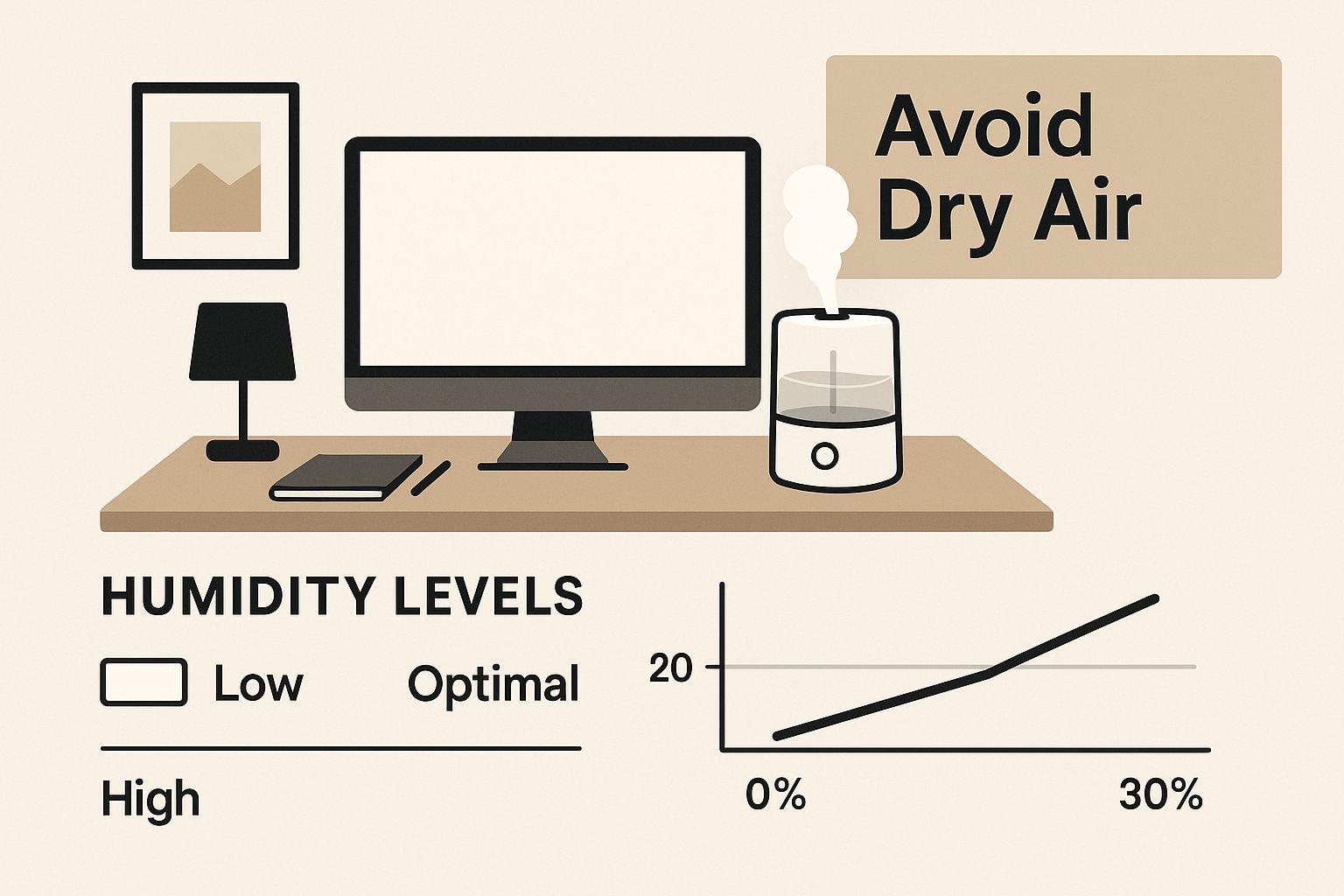
As you can see, a small humidifier can make a world of difference in creating a more comfortable, eye-friendly workspace.
To give you a clearer picture, here’s a quick summary of some simple environmental adjustments you can make at home or in the office.
Environmental Adjustments for Eye Comfort
| Area of Focus | Recommended Action | Reason |
|---|---|---|
| Air Humidity | Use a humidifier or place bowls of water near heat sources. | Low humidity causes tears to evaporate too quickly. Adding moisture to the air slows this process down. |
| Airflow | Position yourself away from direct fans, vents, or heaters. | Constant moving air acts like a blow-dryer on your eyes, causing rapid moisture loss. |
| Screen Position | Place your computer monitor 20 to 28 inches away and slightly below eye level. | This encourages a slight downward gaze, which means your eyelids are more closed, reducing tear evaporation. |
| Outdoor Protection | Wear wraparound sunglasses or a wide-brimmed hat. | These create a physical barrier against wind, dust, and UV rays, which can all trigger dryness. |
Making these small tweaks consistently can lead to a noticeable improvement in your daily eye comfort.
Watch Out for Airflow and Glare
The direction of airflow is another sneaky culprit. Make a conscious effort to sit away from the direct line of fans, heaters, and air-con vents. It might seem harmless, but having air constantly blowing towards your face is a surefire way to dry out your eyes.
When it comes to your screens, positioning is everything. Your monitor should sit about 20 to 28 inches from your face and just below your natural eye level. This angle means your eyelids don't have to be wide open, which slows down tear evaporation and keeps your eyes more lubricated while you work.
You also need to manage ambient light. Harsh glare from windows can add to eye strain and make dryness feel worse. It’s worth looking into practical tips on how to reduce glare from windows to create a more comfortable visual environment.
Key Takeaway: You have more control over environmental triggers than you might realise. Simple adjustments to humidity, airflow, and screen placement can dramatically reduce the daily strain on your eyes.
Shielding Your Eyes When You’re Out and About
Your environment doesn't end at your front door. The Great British weather, especially the wind, can be unforgiving on sensitive eyes. Protecting them when you're outdoors is just as critical as managing your indoor spaces.
Here are a few practical ways to shield your eyes from the elements:
- Invest in Wraparound Sunglasses: These are brilliant. They provide a physical barrier against wind, dust, and pollen—all major irritants that can make dry eyes worse. They create a small pocket of more humid air right around your eyes.
- Wear a Hat with a Brim: A simple cap or a wide-brimmed hat can do wonders to shield your eyes from overhead wind and sun, cutting down on direct exposure.
- Steer Clear of Smoky Environments: Smoke is a huge irritant that can quickly cause red, sore, and dry eyes. If you can, try to avoid areas with heavy smoke from cigarettes, bonfires, or barbecues.
Building Healthier Screen and Work Habits
It’s no secret that most of us are glued to our screens. Whether it’s a computer for work, a tablet for browsing, or a phone for just about everything else, this constant screen time is a major culprit behind dry, irritated eyes. You don't have to give up your devices to find relief. It's about building smarter, healthier habits around how you use them.
A brilliant and easy-to-remember technique is the 20-20-20 rule. I recommend this to my patients all the time because it's so simple and effective.
- Every 20 minutes…
- Look at something 20 feet away…
- For a full 20 seconds.
This simple act gives your focusing muscles a break and reminds you to blink properly. It’s surprisingly easy to forget! Try setting a recurring timer on your phone or use a simple browser extension to nudge you. A quick gaze out the window or across the room is all it takes to reset your eyes.
The Importance of a Full Blink
Here’s something many people don’t realise: when we're absorbed in what's on a screen, our blink rate can plummet by more than 50%. Worse still, the blinks we do manage are often weak, partial "half-blinks." These don't do a proper job of spreading a fresh layer of tears across the surface of your eye.
You have to be deliberate about it. Try this: consciously close your eyes slowly, feeling your eyelids gently touch, and then open them again. This full, complete blink is what activates the tiny meibomian glands along your eyelids. These glands release the oily layer of your tears, which stops them from evaporating too quickly and keeps your eyes comfortable.
In the UK, dry eye is incredibly common, affecting roughly one in four people. That’s an estimated 17 million of us dealing with symptoms, and our ever-increasing screen time is a huge part of the problem. You can find more details on how digital devices contribute to dry eye statistics in the UK.
These long sessions staring at screens often cause a collection of issues known as digital eye strain. If this sounds familiar, learning more is the first step towards feeling better. We cover this in detail in our guide to computer vision syndrome treatment.
Optimising Your Screen for Comfort
Beyond just taking breaks, your physical setup makes a massive difference. Staring at a glaringly bright screen in a dimly lit room is a recipe for eye strain and dryness because it forces your eyes to constantly adjust.
A simple trick is to match your screen’s brightness to the lighting in your environment. Pull up a white background, like a blank page in a word processor. If it looks like a lamp, it’s far too bright. If it seems grey and murky, it’s probably too dark.
Most phones, tablets, and computers now have a "night mode" or a blue light filter. I highly recommend switching this on in the evenings. It warms up the colours on your screen, reducing harsh glare and making the display feel much gentler on your eyes. Making these small adjustments a part of your routine can create a much more comfortable and sustainable working environment for your eyes.
How Your Diet and Hydration Affect Your Eyes
When your eyes feel gritty and dry, it’s easy to blame your screen or the central heating. What you're putting on your plate and in your glass plays a surprisingly crucial role. Your diet and hydration levels have a direct line to the quality of your tears, meaning you can fight that uncomfortable dry feeling from the inside out.

Think of it this way: your tears need the right ingredients to work properly. One of the star players here is omega-3 fatty acids. These fats are needed for the tiny meibomian glands along your eyelids. These glands produce the oily layer of your tear film, which acts like a protective seal to stop your tears from evaporating too quickly.
Without enough of that oil, your tears disappear almost as soon as you blink, leaving your eyes exposed and irritated. A diet rich in omega-3s helps reduce inflammation and keeps that oil flowing, giving you a more stable, comfortable tear film.
Foods to Weave Into Your Weekly Shop
Getting more omega-3s into your diet doesn't have to be complicated. It can be as simple as making a few smart swaps during your next food shop.
Here are a few power-packed options to look for:
- Oily Fish: Think salmon, mackerel, herring, and sardines. Just two portions a week can make a real difference.
- Nuts and Seeds: Flaxseeds are a fantastic source, but walnuts and chia seeds are great, too. Sprinkle them on your morning porridge or yoghurt.
- Fortified Foods: Keep an eye out for eggs, yoghurts, and milk that have been fortified with extra omega-3s.
The idea of "eating for your eyes" can feel like a big task, but small, consistent changes are what truly count. If you're looking for more inspiration, we've put together some great ideas in our guide on eye health and nutrition tips.
Don't Forget Water and Vitamins
This might sound like a no-brainer, but it’s amazing how often we forget it: proper hydration is non-negotiable. Your tears are made up mostly of water. If you’re dehydrated, your body simply can't produce enough tears to keep your eyes lubricated. A reusable water bottle on your desk can be a powerful (and simple) tool for your eye health.
Vitamins also have a part to play in keeping the surface of your eye healthy.
- Vitamin A is famous for its role in protecting the cornea (the transparent front part of your eye). You’ll find it in orange-coloured foods like carrots and sweet potatoes, as well as leafy greens.
- Vitamin D, the "sunshine vitamin," is also thought to help reduce inflammation on the eye's surface. Your body naturally produces it from sunlight, but you can top up your levels with oily fish and fortified foods.
It's always a good idea to chat with your GP or a healthcare professional before starting any new vitamin supplements. They can help figure out if you actually have a deficiency and guide you on the right approach. A balanced diet should always come first.
Choosing and Using Eye Drops
When your eyes are screaming for relief – feeling gritty, dry, and just plain uncomfortable – a good bottle of artificial tears can be a great help. These lubricating drops are designed to supplement your own natural tears, bringing back that much-needed moisture.
But step into any chemist and you're met with a wall of options. It's confusing. The key is knowing what you're looking for, and it usually starts with one main distinction.
With or Without Preservatives?
The biggest difference you'll find is between drops that contain preservatives and those that are preservative-free.
-
Standard Drops (with preservatives): These are your everyday, cost-effective options. The preservatives are there to stop bacteria from growing in the bottle after you've opened it. If you only need drops once or twice a day for mild dryness, these are often perfectly fine.
-
Preservative-Free Drops: These typically come in small, single-use vials. Because they don't have preservatives, they are far gentler on sensitive eyes. I always recommend these for anyone with moderate to severe dry eye, or if you find yourself needing to use drops more than four times a day. The preservatives in standard drops can start to cause irritation with frequent use.
Matching the Drop to Your Discomfort
Beyond preservatives, the type of drop matters. For a general scratchy feeling, a standard lubricating drop often does the trick.
But what if you wake up and your eyes feel sore and sticky? That’s where a thicker, gel-based drop can provide more heavy-duty, lasting relief. These gels create a protective film over the eye's surface that doesn't evaporate as quickly, making them brilliant for overnight use.
Eye drops are a fantastic tool, but they aren't a cure-all. Think of them as part of a bigger picture. When you combine them with the lifestyle and environmental tweaks we've discussed, you create a much more powerful strategy for managing dry eyes.
Dry eye is incredibly personal; what brings relief to one person might do nothing for another. Research from UK hospitals shows just how varied the condition is, with diagnosis rates fluctuating from 42.9% to 62.3% among patients. For many, the root cause is actually meibomian gland dysfunction (MGD), which messes with the oily layer of your tear film. You can read more about the challenges of diagnosing dry eye in the UK to understand its complexity.
Getting the Drops In: A Quick Guide
Putting in eye drops can feel awkward at first, but with a bit of practice, it becomes second nature. A good technique helps the drop actually get where it needs to go without waste or contamination.
Here’s a simple, clean method:
- Always start with clean hands. Wash them thoroughly with soap and water. You don’t want to introduce any germs into your eye.
- Tilt your head back and look up at the ceiling.
- Gently pull your lower eyelid down with one finger to create a small pocket. This is your target.
- With your other hand, hold the bottle just above your eye. Crucially, do not let the tip touch your eye, eyelid, or fingers.
- Squeeze a single drop into the pocket.
- Gently close your eye for 30 to 60 seconds. Try not to blink hard or squeeze your eye shut, as that will just push the drop out. A great little tip is to press lightly on the inner corner of your eye (near your nose) to block the tear duct and keep the drop on your eye's surface for longer.
This simple routine helps the lubricant coat your eye properly. For more personalised tips, our guide on the best eye care practices for every lifestyle has some great advice.
And remember, if over-the-counter drops just aren't cutting it, that's your cue to have a chat with your optometrist.
Common Questions About Preventing Dry Eyes
https://www.youtube.com/embed/SQ7NXQcUomM
Even when you're doing everything right, you might still have a few lingering questions about keeping dry eyes at bay. It's completely normal. Understanding when it's time to see a professional, how your lifestyle choices play a part, and what long-term management really looks like can give you that extra bit of confidence.
Let’s tackle some of the most common queries I hear from people dealing with this frustrating condition.
When Should I See a Doctor for Dry Eyes?
You should book in with your GP or optometrist if your symptoms just won't go away, feel particularly severe, or aren't getting better with simple self-care like using drops and adjusting your environment.
It’s especially critical to get a professional opinion if you start experiencing eye pain, significant redness, or any changes in your vision. These could be red flags for a more serious underlying issue. A professional can give you a proper diagnosis, rule out other conditions, and suggest treatments you can't get over the counter, like prescription eye drops or in-clinic procedures. Catching things early is always the best defence.
A professional evaluation is the only way to be certain about what’s causing your symptoms. What feels like simple dryness could be linked to something else entirely. A thorough check-up provides peace of mind and a clear path forward.
Can Contact Lenses Make Dry Eyes Worse?
Absolutely. For some people, wearing contact lenses can be a major trigger for dry eye symptoms. Lenses sit directly on your eye, which can interfere with the natural tear film by soaking up moisture. They can also limit the amount of oxygen reaching the cornea.
If you’re a contact lens wearer and you’re struggling with dryness, a chat with your optometrist is the best next step. They might suggest:
- Switching to a different lens material, like silicone hydrogel, which is designed for dry eyes.
- Moving to daily disposables, as a fresh pair each day is often more comfortable.
- Using special rewetting drops that are formulated to be safe for contact lenses.
Sometimes, just giving your eyes a regular break by wearing your glasses can make a world of difference.
Is There a Permanent Cure for Dry Eyes?
For many, dry eye is a chronic condition that needs to be managed rather than permanently cured. The long-term outlook really depends on the root cause. If your dryness is coming from environmental factors or too much screen time, consistent lifestyle changes can often resolve the symptoms completely. Managing these triggers is often tied to other types of visual discomfort, too. For a deeper look at that, our guide on how to prevent eye strain has some great advice.
If the condition is linked to the natural ageing process, an autoimmune disorder, or a side effect of medication, it usually requires ongoing management. The main goal of treatment and prevention is to keep symptoms under control, maintain your eye comfort, and protect your quality of life so you can carry on with your daily activities without discomfort.
At Northern Optical Company, we believe that expert guidance is key to managing dry eyes effectively. If you're struggling with persistent symptoms, book an eye test with our friendly team in Newcastle for a personalised assessment and treatment plan.