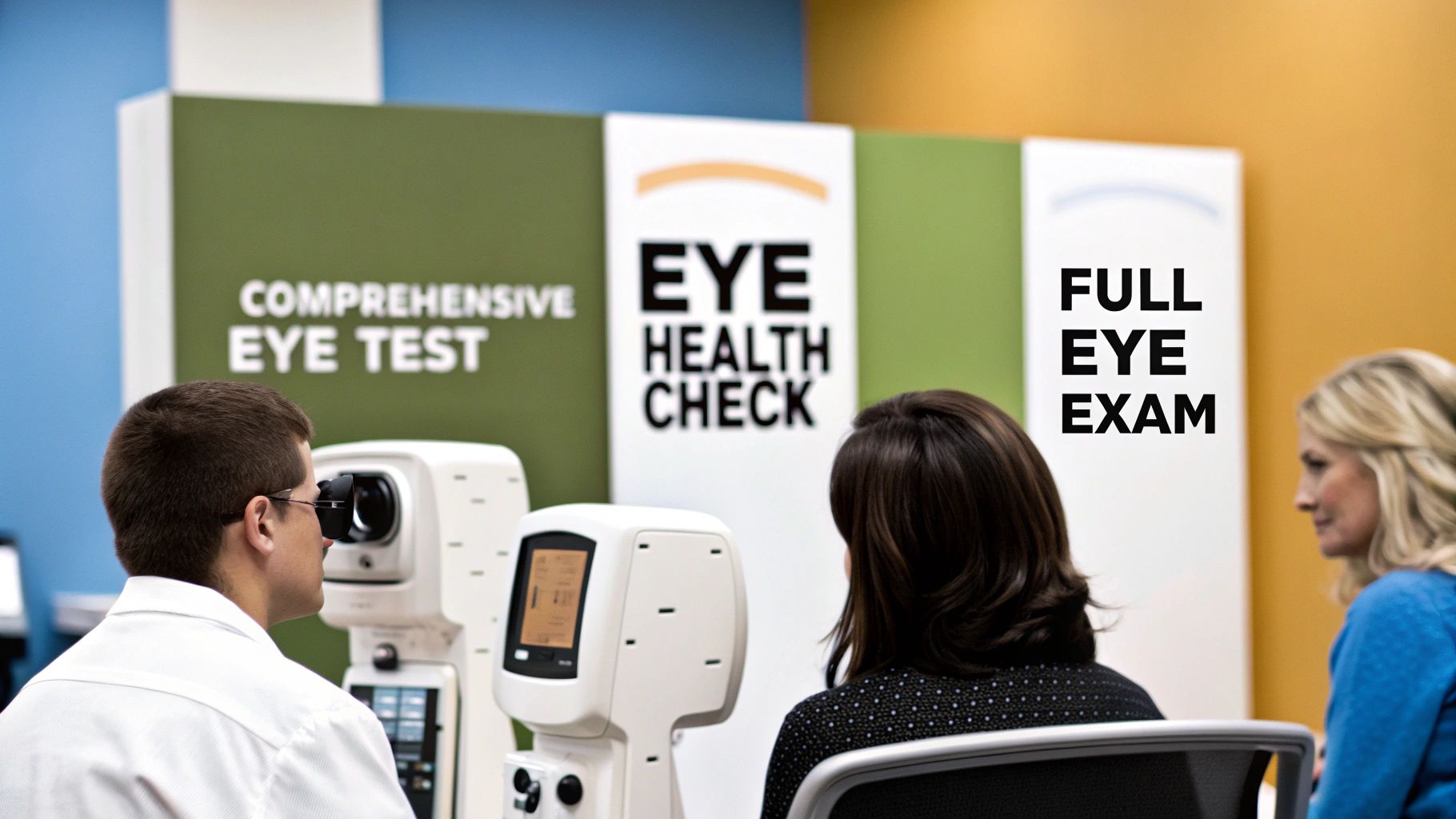
A comprehensive eye test is much more than checking your prescription. It's a complete health MOT for your eyes, looking deep into your visual system to catch potential problems long before they become serious.
Many sight-threatening conditions, like glaucoma, cataracts, and diabetic retinopathy, often creep up without any obvious early symptoms. This detailed examination is designed to uncover them.
What's Really Involved in a Comprehensive Eye Test?
It helps to think of a standard sight test as a quick vision check, focused on getting you the right glasses or contact lenses. A comprehensive eye test is a full diagnostic investigation. It gives your optometrist a detailed picture of not just what you can see, but the physical health and structure of your eyes.
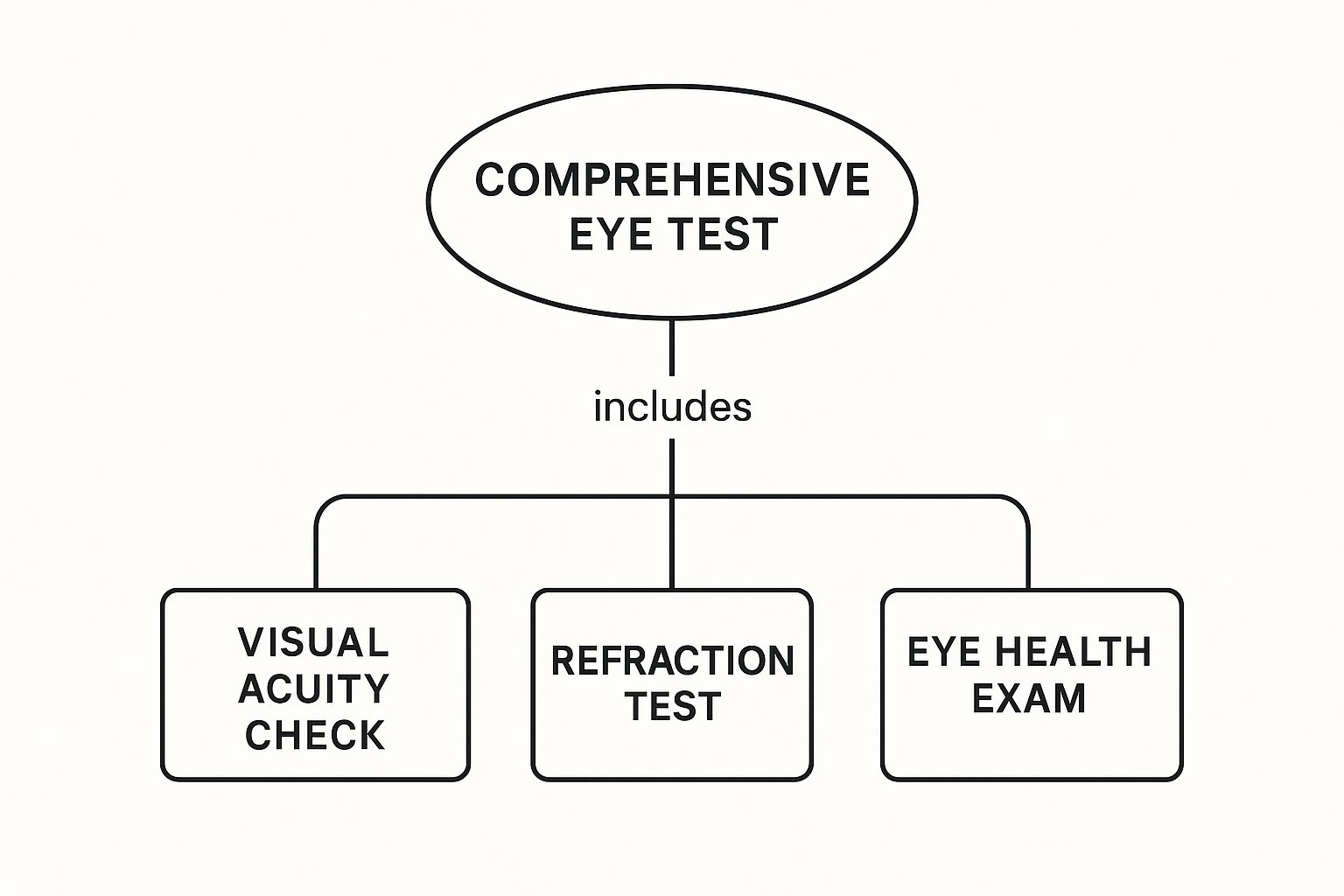
This deeper look has two main goals. First, it measures how sharp your vision is, how well you focus, and how effectively your eyes work as a team. Second—and more critically—it acts as an early warning system, screening for diseases that could put your sight at risk if ignored. It's a proactive step that should be part of everyone's long-term health plan.
To grasp the difference, let’s compare them side-by-side.
Standard Sight Test vs Comprehensive Eye Test
| Feature | Standard Sight Test | Comprehensive Eye Test |
|---|---|---|
| Primary Goal | Determine a prescription for glasses or contact lenses. | Assess overall eye health and detect diseases, while also determining a prescription. |
| Duration | Typically shorter, around 20 minutes. | More in-depth, often lasting 40-60 minutes. |
| Key Components | Visual acuity (reading chart), refraction. | Includes refraction, visual field testing, tonometry (eye pressure), and detailed retinal imaging. |
| Disease Screening | Limited to very basic checks. | Screens for glaucoma, cataracts, macular degeneration, diabetic retinopathy, and other systemic issues. |
| Technology Used | Standard phoropter and chart. | Advanced tools like OCT scans, retinal cameras, and automated visual field analysers. |
One is a basic check, while the other is a complete health assessment.
Why This Deeper Look Matters So Much
The statistics bring home the importance of this kind of detailed exam. Right now, around 2 million people in the UK live with sight loss, and that number is projected to climb to nearly 2.7 million by 2030. A staggering fact is that experts estimate 50% of sight loss cases could have been prevented with the right care at the right time.
A comprehensive eye test is one of the most powerful tools we have for catching problems early. It’s also a unique window into your overall health, sometimes revealing the first signs of conditions like diabetes or high blood pressure.
This is why regular, thorough examinations are critical. They’re not just about seeing clearly today; they're an investment in protecting your vision for the future. To understand more, you can explore our guide on why eye tests matter for your health.
What to Expect During Your Eye Examination
Walking into an eye examination can feel a little daunting, but knowing what’s coming can make the whole process much more comfortable. A comprehensive eye test isn't just one single check; it's a series of steps, each one giving your optometrist another piece of the puzzle to build a complete picture of your vision and eye health. Think of it as a guided tour of your eyes, from reading the classic letter chart to looking deep inside the eye itself.
The first thing we'll do is have a chat. We'll go over your medical history and discuss any vision problems you've noticed. This helps us understand what to look out for. A great way to get the most out of this is to jot down any questions or concerns you have beforehand. For more advice, have a look at our guide on how to prepare for your eye test for your appointment to go as smoothly as possible.
Assessing Your Vision and Prescription
The first order of business is to figure out just how clearly you can see and what sort of correction, if any, you might need.
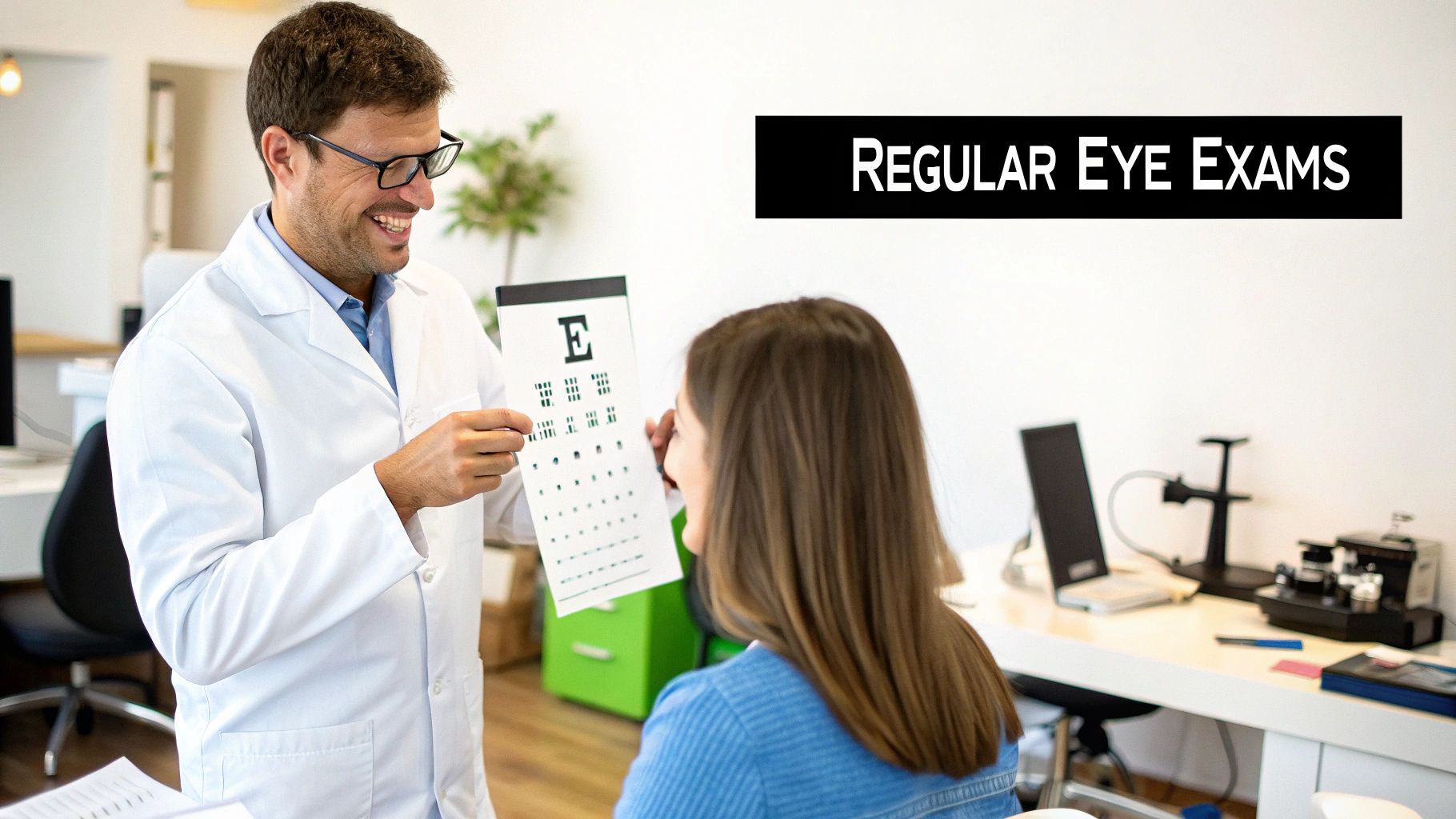
We’ll begin with a visual acuity test. This is the familiar letter chart you probably picture when you think of an eye test, known in the trade as a Snellen chart. You'll be asked to read letters that get progressively smaller, which gives us a baseline measurement of your vision's sharpness.
Next up is the refraction assessment, the part where we pinpoint your exact prescription. You'll look through a large, specialised instrument called a phoropter, which looks a bit like a futuristic mask with lots of lenses. Your optometrist will flick between different lens options, asking you which one makes the letters on the chart look clearer. Your simple "one or two?" feedback is what helps us find the precise lens power needed to give you the sharpest vision.
Checking How Your Eyes Work Together
Seeing clearly is only half the story. Your eyes also need to work perfectly as a team. We'll run a few checks to assess how well your eyes align, move, and coordinate with each other.
These tests are designed to spot issues like strabismus (often called a squint) or subtle focusing problems that can lead to eye strain and even double vision. Making sure your eyes are synchronised is crucial for comfortable, effortless sight.
A comprehensive eye test is a blend of familiar procedures and detailed health screenings. It's a structured process designed to evaluate every aspect of your vision, from basic clarity to the complex structures inside your eye.
Examining the Health of Your Eyes
This is where a comprehensive eye test truly shows its value. Your optometrist will use several advanced tools to get an up-close look at the different parts of your eye, both inside and out.
One of the key procedures is tonometry, which you might know as the 'puff of air' test. It’s a quick and painless way to measure your eye's internal pressure (intraocular pressure). A gentle puff of air is aimed at your cornea to get a reading. High pressure can be an early warning sign for glaucoma, a serious condition that can damage the optic nerve without you noticing any symptoms.
Your optometrist will carry out two more key checks:
- Slit-Lamp Examination: Using a high-powered microscope with a bright light, we examine the front parts of your eye. This includes your cornea, iris, and lens, helping us spot signs of cataracts, tiny scratches, or other issues on the eye's surface.
- Ophthalmoscopy: This is how we see right to the back of your eye. Using a special handheld instrument called an ophthalmoscope, we inspect your retina, blood vessels, and optic nerve. This is critical for screening for conditions like diabetic retinopathy and macular degeneration.
The Advanced Tech Behind a Modern Eye Test
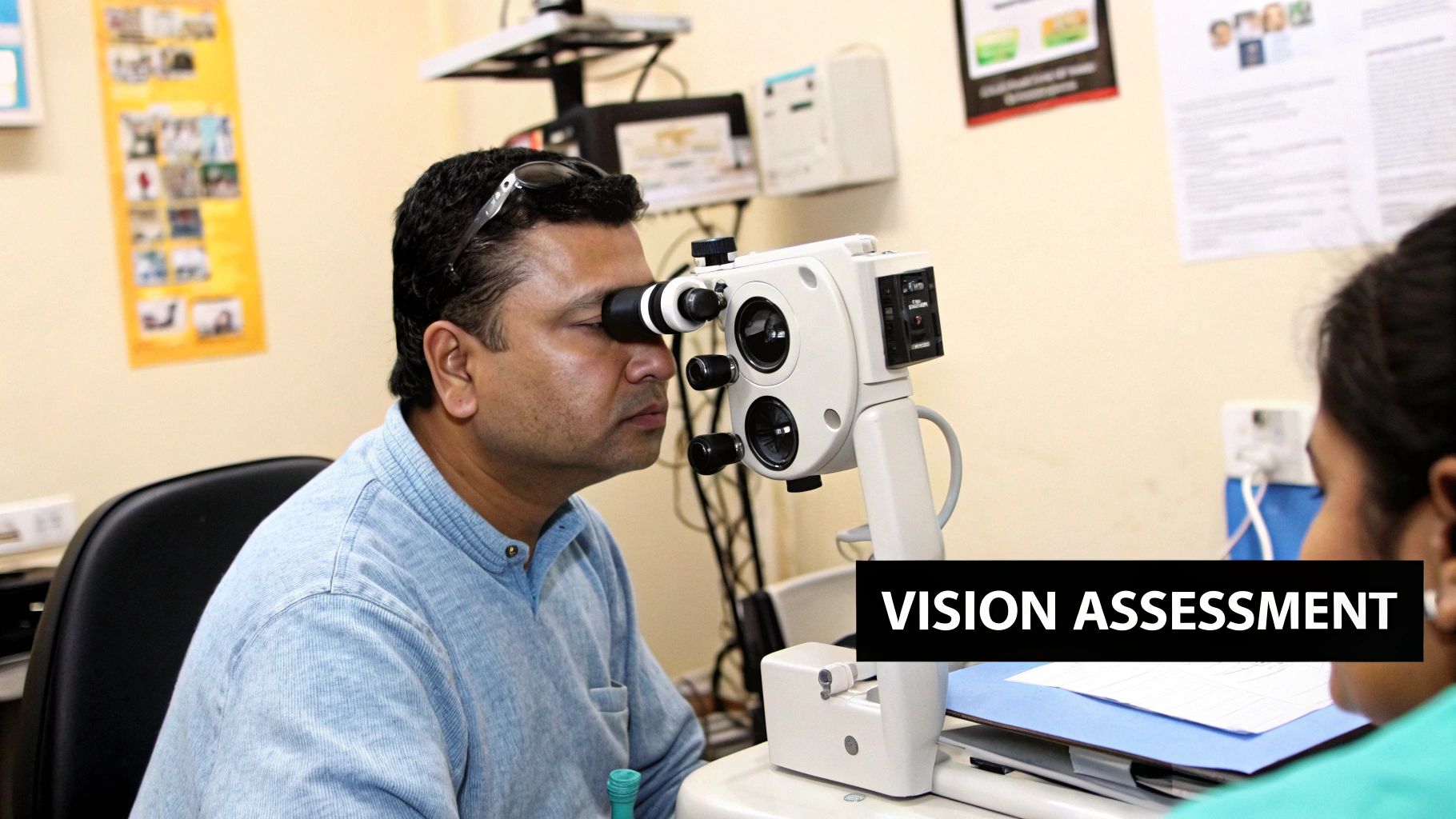
A truly comprehensive eye test today goes far beyond reading letters off a chart. We now have incredible equipment that lets us see deep beneath the surface of your eye, uncovering details that were simply invisible without invasive procedures in the past.
This technology gives us a profound understanding of your eye health. It’s all about spotting the most subtle changes that might hint at the very beginning of a serious condition, long before you’d ever notice a problem yourself. The aim is always to catch things at their earliest, most treatable stage.
One of the most remarkable pieces of kit we use is the Optical Coherence Tomography scanner, or OCT for short. The easiest way to think of it is like an ultrasound, but for your eye. Instead of sound waves, it uses light to take thousands of cross-sectional scans, building up a detailed 3D map of your retina and its distinct layers.
This lets your optometrist see right through the retina's surface and measure the thickness of each individual layer. This level of detail is a massive benefit for spotting conditions like glaucoma, diabetic retinopathy, and age-related macular degeneration (AMD) as early as possible. With AMD, for instance, an OCT scan can show tiny structural changes years before they ever start to blur your central vision.
Building a Permanent Record of Your Eye Health
Another powerful tool in our arsenal is digital retinal photography. This is exactly what it sounds like: we take a high-resolution, wide-angle photograph of the back of your eye. This single picture captures your retina, optic nerve, and the intricate network of blood vessels in stunning clarity.
This photograph is incredibly useful for two key reasons:
- Immediate Assessment: It provides a clear, panoramic view of your inner eye, helping us to identify any immediate health concerns on the spot.
- Future Comparison: It creates a permanent digital baseline of your eye's condition. At every future visit, we can compare new photos against this original, making it easy to track even the smallest changes over months or years.
Think of it like this: having a historical library of your retinal images creates a visual timeline of your eye health. It allows your optometrist to monitor for gradual shifts that might otherwise be missed, offering a powerful way to manage your eye health for the long term.
The image you see above is an OCT scan of a healthy macula – the part of your retina responsible for sharp, detailed central vision. Those different colours represent the distinct layers of retinal tissue, giving your optometrist a structural map of this area. By analysing this map, we can spot thinning, swelling, or other irregularities that are completely invisible in a standard exam, providing a far more complete picture of what’s really going on inside your eye.
Detecting Health Conditions Beyond Poor Vision
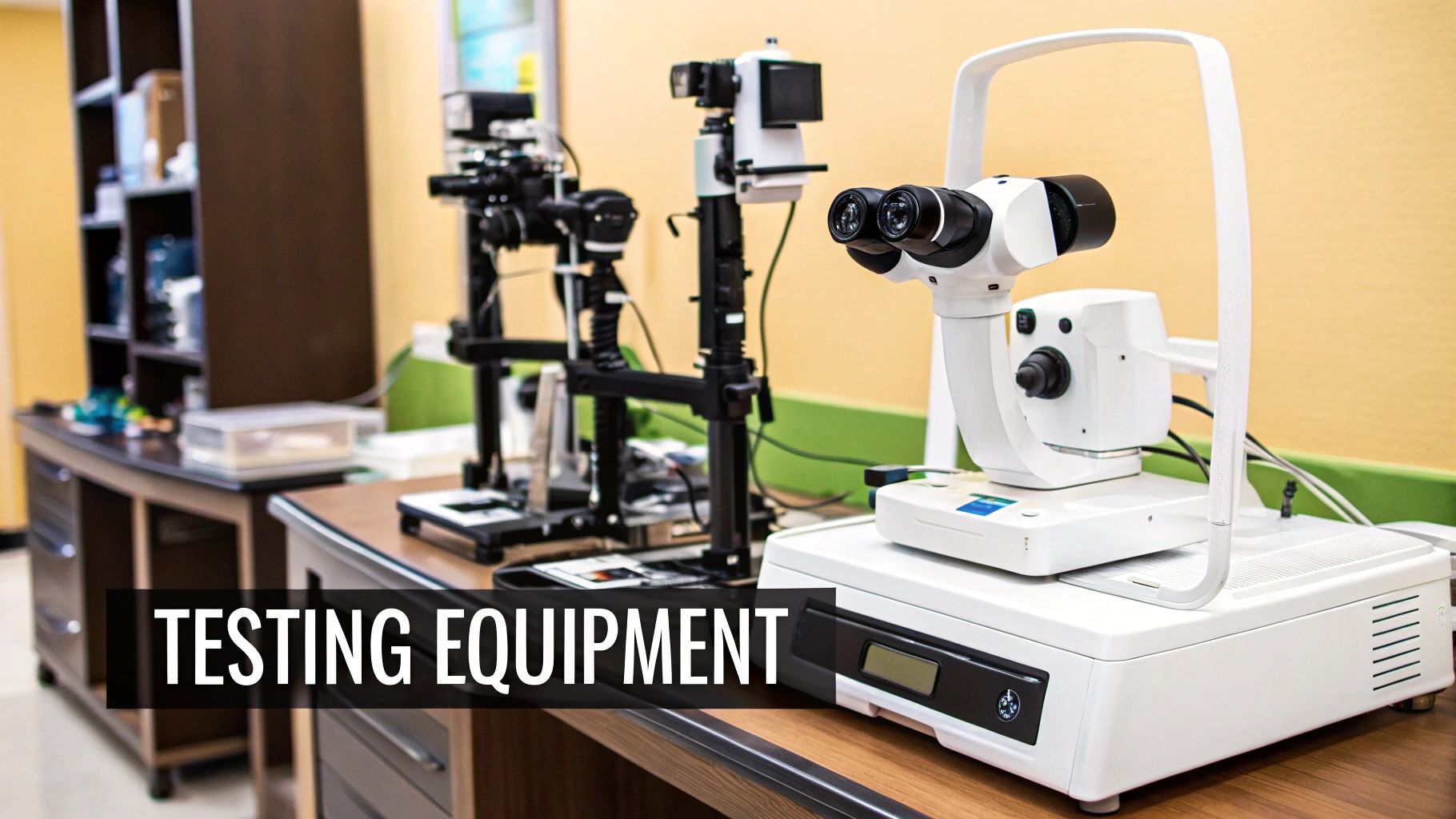
A comprehensive eye test is much more than just a check of your vision. Think of it as a unique window into your general wellbeing, often revealing the very first signs of health conditions that affect your whole body.
This is because the delicate blood vessels and nerves at the back of your eye are a direct extension of your body's wider vascular and neurological systems. They provide a clear, real-time picture of what might be happening elsewhere, making your optometrist a critical partner in your overall healthcare team.
A Window to Your General Wellbeing
It often surprises people to learn just what an optometrist can spot during a thorough examination. The internal structures of the eye can show early evidence of systemic diseases, sometimes long before you notice any other symptoms.
For example, diabetes can cause tiny retinal blood vessels to leak or swell—a condition called diabetic retinopathy. High blood pressure can make the arteries in your eye appear narrow or stiff. Even high cholesterol can leave small, visible fatty deposits.
The connection between your eyes and your overall health is undeniable. By inspecting the retina, optic nerve, and blood vessels, your optometrist can detect clues related to diabetes, hypertension, high cholesterol, and in rare cases, even certain tumours or autoimmune disorders.
This insight is more important than ever. Projections show that over the next ten years, the number of people in the UK living with conditions like late age-related macular degeneration (AMD), glaucoma, and cataracts is set to rise significantly. We’re looking at expected increases of 24.4% for late AMD, 15.9% for glaucoma, and 16.7% for cataracts. You can explore the full report and learn more about these eye care projections from the UK Eye Care Data Hub.
Beyond Disease Detection
A comprehensive eye test isn't just about spotting major health concerns; it also addresses common issues that affect your daily life. Digital eye strain is a perfect example. If you experience frequent headaches or tired eyes from long hours at a screen, we can often help with specific lens coatings or advice on better workplace habits.
Making simple ergonomic changes can make a world of difference. Consulting an ultimate guide to laptop stands, for instance, can help you create a much more comfortable workstation setup.
These advanced tests can also uncover specific visual processing difficulties. For certain learning challenges, we offer specialised assessments. You can find out more about our approach in our guide to a dyslexia eye test. This proactive focus on both minor discomforts and major health risks is what makes a regular, thorough eye examination so valuable.
How Often You Should Get an Eye Test
Knowing how often you need a comprehensive eye test is one of the simplest yet most effective ways to protect your sight for the long run. So, what’s the magic number? For most adults here in the UK, the general advice is to book an examination at least every two years.
This two-year interval is a great rule of thumb. It’s frequent enough to catch most changes to your prescription and to screen for the early signs of common eye conditions. It's just a starting point. Your personal health profile and age play a massive role in determining the right schedule for you.
Here’s a straightforward table outlining the standard recommendations.
Recommended Eye Test Frequency by Age and Risk
| Group | Recommended Frequency | Key Considerations |
|---|---|---|
| Children & Teens | Annually | Vision changes rapidly during growth. Early detection of issues like lazy eye or squints is critical. |
| Adults (18-60) | Every 2 years | This applies if you have no symptoms or specific risk factors for eye disease. |
| Adults (Over 60) | Annually | The risk of age-related conditions like glaucoma, cataracts, and macular degeneration increases significantly. |
| High-Risk Adults | Annually or as advised | This includes individuals with diabetes, a family history of eye disease, or those on certain medications. |
Think of these guidelines as your baseline. Your optometrist will always give you a personalised recommendation based on what they see during your exam.
Age-Related Recommendations
As we journey through life, our eyes are right there with us, and their needs change over time. The risk for certain conditions naturally increases, which is why your eye test schedule should adapt accordingly.
- For children, vision can change in the blink of an eye. That’s why we recommend a test before they start school and then at least once a year to make sure everything is developing correctly.
- For most adults under 40 with no particular risk factors, sticking to the two-year schedule works perfectly well to keep things in check.
- Once you pass 40, the game changes a bit. The risk for conditions like presbyopia (the need for reading glasses) and glaucoma starts to climb, so moving to more frequent checks is a smart move.
When You Need More Frequent Checks
Beyond your age, other factors can put you into a higher-risk group, making yearly check-ups necessary.
If you have diabetes, a family history of glaucoma, or are taking medications that can affect the eyes, an annual comprehensive eye test is non-negotiable. This regular monitoring is the best defence for catching and managing potential problems before they become serious.
If you fall into any of these categories, your optometrist is your best guide. For a deeper look into this, you can read our full article on how often to get eye tests.
It is shocking to learn that an estimated 19 million UK adults are overdue for their eye tests. This is especially concerning when 90% of UK adults say sight is the sense they value the most. There's a clear disconnect between understanding the importance of our vision and actually taking the steps to protect it.
Your Comprehensive Eye Test Questions Answered
It’s completely normal to have a few questions before any kind of health appointment. We want you to feel comfortable and well-prepared, so we’ve put together some straightforward answers to the questions we hear most often about comprehensive eye tests.
How Long Does a Comprehensive Eye Test Take?
A really thorough examination can't be rushed. While a simple sight check might be done and dusted in 20 minutes, you should set aside a bit more time for a proper comprehensive eye test. Plan for it to last somewhere between 40 and 60 minutes.
This gives your optometrist ample time to chat about your health history, carry out all the required vision and health checks, and properly explain everything they find without you feeling like you're on a conveyor belt. If you need any special procedures, like having your pupils dilated, the appointment might take a little longer.
Is the Examination Uncomfortable or Painful?
Absolutely not. A comprehensive eye test is designed to be a comfortable experience and shouldn't be painful at all. The vast majority of the tests are non-invasive; you’ll mostly be looking at charts and through different lenses, which is quite straightforward.
Some people are a bit wary of the "puff of air" test (non-contact tonometry), which checks your eye pressure. It can make you jump, but it’s over in a flash and doesn't hurt. If we need to use eye drops to dilate your pupils, they might sting for a second. Your vision will then be a bit blurry and sensitive to light for a few hours, but we'll always explain exactly what to expect before we do anything.
What Happens if a Problem Is Found?
First things first: try not to worry. If your eye test does reveal a potential issue, our job is to explain the findings clearly and walk you through what comes next.
The real power of a comprehensive eye test is in early detection. Catching something early nearly always leads to more effective ways to manage or treat it.
Depending on what we find, the next steps might involve:
- Further Monitoring: Some conditions simply need a closer look, meaning we might ask you to come back for more frequent check-ups.
- A Treatment Plan: This could involve prescribing medication, like specialised eye drops to manage glaucoma.
- Referral to a Specialist: For certain conditions, the best course of action is to refer you to an ophthalmologist (a hospital eye specialist) for more in-depth assessment or treatment.
Whatever the outcome, your optometrist will be your guide, making sure you fully understand your eye health and feel completely supported in your care.
How Much Does a Comprehensive Eye Test Cost?
The cost can vary. In the UK, many people are entitled to a free NHS sight test, which covers the fundamental checks.
A more detailed comprehensive eye test, which includes advanced screening like an OCT scan, typically involves an additional private fee. This simply reflects the sophisticated equipment used and the extra clinical time needed for that deeper look into your eye health. We see it as a small investment for the invaluable peace of mind that comes with it.
At Northern Optical Company, we’re committed to providing thorough, unhurried eye care that always puts your health first. Book your comprehensive eye test with us today and get the complete picture of your vision and wellbeing.
Book Your Comprehensive Eye Test in Newcastle