That gritty, burning sensation in your eyes isn't just a simple annoyance. It’s a tell-tale sign that your tear film, the delicate moisturising layer that protects your eyes, isn't working as it should. Dry eye syndrome happens when your tears can't properly lubricate your eyes, either because you don't produce enough of them, or because the tears you do make are poor quality and evaporate far too quickly.
Why Your Eyes Feel Dry: A Simple Explanation
Picture your eye's surface being shielded by a smooth, liquid film. This isn't just salty water; it's a sophisticated, three-layered coating that keeps your vision clear and your eyes comfortable. When this shield is compromised, you start to feel those classic dry eye symptoms, from stinging and redness to frustratingly blurry vision. To really grasp what causes dry eye, we first need to look at this delicate structure.
Each of the three layers has a specific job. If just one of them is out of kilter, it can throw the whole system off balance and lead to discomfort.
The Three Layers of Your Tear Film
Your tear film is a small miracle of natural engineering, with three distinct layers working in harmony to protect and moisturise the front of your eye.
-
The Mucin Layer: This is the base coat, sitting directly on your eye's surface. Think of it like a primer for paint; its job is to help the watery layer above it spread evenly across the cornea. Without a healthy mucin layer, tears simply won't stick to the eye properly.
-
The Aqueous Layer: The middle and thickest layer is mostly water. This is the part produced by your lacrimal glands (tear glands), and it’s responsible for providing moisture, washing away dust and debris, and delivering nutrients to your eye's surface. When most people think of "not enough tears," they're thinking of a problem with this aqueous layer.
-
The Lipid Layer: The very top layer is an oily film produced by tiny glands along your eyelids called the meibomian glands. This lipid layer is the sealant, preventing the watery layer below it from evaporating too quickly. A good analogy is a lid on a cup of hot tea—it keeps the good stuff from disappearing into thin air.
This diagram helps to visualise how these three layers work together to create a stable tear film.
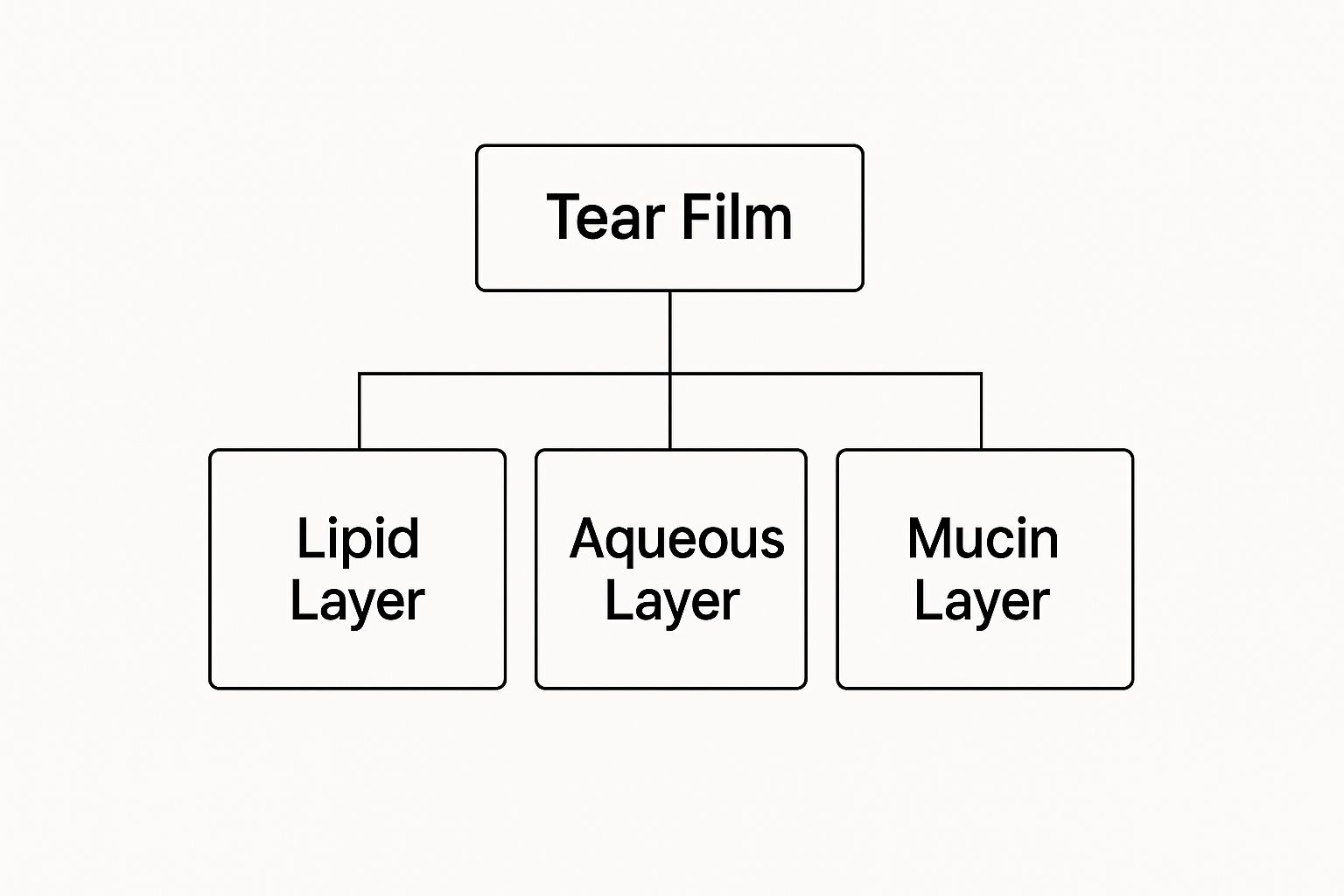
As you can see, a problem with the lipid, aqueous, or mucin layer can easily disrupt the entire tear film, leading to those familiar feelings of dryness and irritation.
The Two Main Types of Dry Eye Syndrome
When the tear film breaks down, it typically leads to one of two main categories of dry eye disease. Understanding which one you might have is the first step towards finding the right relief.
| Type of Dry Eye | What Happens | Common Contributing Factors |
|---|---|---|
| Aqueous Deficient Dry Eye | The lacrimal glands don't produce enough of the watery (aqueous) component of your tears. | Ageing, certain medical conditions (e.g., Sjögren's), medications. |
| Evaporative Dry Eye | Tears evaporate too quickly because the oily (lipid) layer is compromised or insufficient. | Meibomian Gland Dysfunction (MGD), infrequent blinking, environment. |
While both types cause discomfort, it's the second one—evaporative dry eye—that is often the primary culprit.
A significant number of dry eye cases are linked to a problem with that crucial oily layer. When the tiny meibomian glands in your eyelids get blocked or stop working correctly, it directly sabotages the tear film's protective barrier. This specific condition is known as Meibomian Gland Dysfunction (MGD).
Dry eye disease is incredibly common here in the UK, with some studies showing diagnosis rates in hospital settings as high as 48.7%. Digging deeper, MGD is a major player, with around 51.3% of dry eye patients showing signs of this glandular issue. This means that for more than half of people with dry eyes, the problem stems from a breakdown in tear film stability caused by MGD. You can learn more about the connection between dry eye and MGD on Dovepress.com.
How Your Environment and Lifestyle Affect Your Eyes
While what’s happening inside your eyes is key, the world around us—and the way we live in it—plays a massive role in dry eye. Your daily habits and immediate surroundings can either be a soothing balm for your eyes or the very reason they feel gritty and sore. Getting to grips with these external triggers is often the first real step towards finding lasting comfort.
So many of our modern routines, especially those glued to a screen, are notorious for making dry eye symptoms flare up. When we’re intensely focused on a computer, phone, or tablet, our natural blink rate can plummet by more than half, and we don't even notice it's happening. Blinking is your eye's built-in windscreen wiper, spreading a fresh, even layer of tears; fewer blinks mean that protective layer evaporates far too quickly, leaving the eye's surface exposed and vulnerable.
This isn't just a hunch; it's a widespread issue. Environmental and lifestyle factors are significant contributors to dry eye disease right across the UK. In one study looking at young adults, a staggering 60.4% reported symptoms consistent with the condition. What's fascinating is that they spent an average of 10.8 hours per day staring at screens, but screen time alone wasn't the deciding factor. It really drives home that a cocktail of different factors is usually to blame.
The Dry Air Around You
The air in our homes and offices is often a hidden culprit. Central heating during the winter and blasting the air conditioning in summer both have the same effect: they suck the moisture right out of the air. This low-humidity environment is a perfect recipe for accelerating tear evaporation.
Think of it this way: if you leave a damp flannel in a warm, centrally heated room, it’ll dry out in no time. Your eyes are no different. It’s why so many people find their symptoms get much worse during the colder months when the heating is on full blast.
It's not just about temperature. General humidity levels can make or break your eye comfort. It's well worth learning how to control indoor humidity, as even small adjustments can bring surprising relief.
Practical Steps For Everyday Relief
The good news is you have more control than you think. You don't need to completely upend your life to find relief; it’s more about making small, conscious changes that add up over time.
A few proactive strategies can dramatically lessen the impact your environment has on your eyes. One of the most powerful habits for anyone who uses screens is the 20-20-20 rule—it's a simple trick to combat digital eye strain and give your eyes a much-needed break.
Here are a few useful tips you can start using today:
- Practise the 20-20-20 Rule: Every 20 minutes, look away from your screen at something about 20 feet away for at least 20 seconds. This simple reset relaxes your focusing muscles and helps you remember to blink.
- Consciously Blink More Often: It sounds simple, but try to make a mental note to blink fully and frequently, especially when you're absorbed in work or reading. A proper, full blink is what coaxes the oils from your meibomian glands.
- Position Your Screen Correctly: Make sure your computer monitor is slightly below your eye level. When you look down a little, your eyelids naturally cover more of your eyeball, which shrinks the surface area exposed to dry air and slows down evaporation.
- Wear Protective Eyewear: On windy or blustery days, wraparound sunglasses or even regular glasses can act as a shield. They create a little pocket of more humid air right in front of your eyes, protecting them from the drying wind.
By actively managing your surroundings and tweaking your habits, you can create a much more eye-friendly life. For a deeper look at these strategies, take a look at our complete guide on how to prevent dry eyes. These small, deliberate actions really can make a huge difference to your daily comfort.
Medical Conditions and Medications That Can Cause Dry Eyes
While your daily habits and environment certainly play a part, sometimes the root of dry eye runs deeper. It can be directly linked to your overall health or the medicines you take for other conditions.
Think of your body as an incredibly complex, interconnected system. A problem in one area can easily create a ripple effect that shows up somewhere unexpected—like your eyes. Understanding these connections is a key step towards finding real, lasting relief from dry eye symptoms.
Autoimmune and Inflammatory Conditions
Certain health issues can directly attack the very glands that produce your tears. This leads to a specific type of dry eye called aqueous deficient dry eye, where your eyes simply can’t make enough of the watery component of your tear film.
Autoimmune diseases are a classic example. With these conditions, the body’s immune system gets its wires crossed and starts attacking its own healthy tissues, including the delicate glands in and around the eyes.
- Sjögren's Syndrome: This is one of the most notorious culprits behind severe dry eye. It’s a systemic autoimmune disease that zeroes in on moisture-producing glands, causing not just intensely dry eyes but a dry mouth too.
- Rheumatoid Arthritis: Best known for causing joint pain and inflammation, this condition can also have a significant impact on the eyes. Many people with rheumatoid arthritis also develop secondary Sjögren's syndrome, leading to significant dryness.
- Lupus: This is another autoimmune condition that can trigger widespread inflammation, which sometimes extends to the tear glands and dials down tear production.
Other common health problems are also well-known contributors. Diabetes, for example, can lead to nerve damage that interferes with the signals needed for your eyes to produce tears. Thyroid issues can throw off the hormonal balance that plays a key role in maintaining eye moisture.
The Role of Common Medications
It’s an ironic twist: the very prescriptions and over-the-counter medicines you rely on to manage other health concerns could be the unsuspecting cause of your gritty, uncomfortable eyes. Many common drugs list dry eyes as a side effect because they can reduce tear production or throw the composition of your tears out of balance.
It's a bit of a balancing act. A medication that is necessary for managing one health problem might inadvertently create another. This is why it's so helpful to be aware of which medicines are common culprits, so you can discuss any symptoms with your doctor or pharmacist.
The list of potential offenders is surprisingly long and covers medicines used for a wide range of issues. If you notice your eye comfort taking a nosedive after starting a new treatment, it’s definitely worth investigating.
To give you an idea, here’s a table of common medication types known to contribute to dry eyes.
Common Medications That Can Contribute to Dry Eyes
| Medication Category | How It May Affect Eyes | Examples |
|---|---|---|
| Antihistamines | Block histamine receptors to reduce allergy symptoms, but can also reduce tear secretion. | Cetirizine, Loratadine, Diphenhydramine |
| Decongestants | Constrict blood vessels to relieve a stuffy nose, which can also decrease tear flow. | Pseudoephedrine, Phenylephrine |
| Antidepressants | Certain classes, particularly tricyclic antidepressants, have anticholinergic effects that reduce tear production. | Amitriptyline, Sertraline, Fluoxetine |
| Blood Pressure Medicines | Beta-blockers and diuretics can both reduce the aqueous component of tears. | Propranolol, Atenolol, Hydrochlorothiazide |
| Hormone Replacement Therapy | Hormonal shifts, particularly with oestrogen, can alter tear film composition and stability. | Oestrogen and progestin combination therapies |
This table just scratches the surface. Even powerful acne treatments like isotretinoin are famous for causing significant dry eye by disrupting the oil-producing meibomian glands. It’s also important to remember that prolonged screen time can cause similar issues through a different mechanism. If your job involves staring at a computer all day, our guide on computer vision syndrome treatment offers practical tips for easing digital eye strain.
If you suspect a health condition or a medication is behind your dry eyes, the most important step is to speak with your GP or optometrist. They can help you connect the dots and figure out a management plan that looks after both your general health and your precious eye comfort.
The Impact of Age and Hormones on Tear Production

Sometimes, the culprit behind dry, gritty eyes isn’t a dusty room or too much screen time. It’s the natural, internal changes our bodies go through over a lifetime. Both getting older and the hormonal shifts that come with it are major players in disrupting our tear production, making that uncomfortable feeling all too common.
Realising this can be a relief. It helps to understand why certain life stages often coincide with a noticeable drop in eye comfort and that you're certainly not alone in experiencing it.
Why Getting Older Affects Our Tears
Just like other parts of our bodies, our eyes change as the years go by. For many, a primary reason for developing dry eyes is simply the ageing process. The glands that create the watery part of our tears, the lacrimal glands, can start to slow down.
This means the sheer volume of tears decreases, leaving your eyes without enough moisture to feel good and wash away irritants. Dry eye syndrome is significantly more common in people over the age of 50.
It's not just about quantity; quality matters too. The tiny meibomian glands along our eyelid margins are responsible for producing an oil layer for our tear film. With age, these can also become sluggish. Without a good oil slick on top, the watery tears evaporate far too quickly, leading to what we call evaporative dry eye.
Hormones: The Body's Powerful Messengers
Hormones are the body's chemical messengers, and they have a surprisingly strong influence on our eyes. They help regulate the glands that produce our tears, which is why women, who experience more dramatic hormonal fluctuations throughout their lives, are more likely to suffer from dry eye than men.
Some key life events can trigger or worsen dry eye symptoms because of the hormonal roller coaster they bring:
- Menopause: This is a big one. The drop in hormones like oestrogen and androgens directly affects how well the lacrimal and meibomian glands work. The result is often a double-whammy: fewer tears and a less stable tear film.
- Pregnancy: The huge hormonal surges that support a growing baby can also throw tear composition out of balance, leading to temporary dry eye for many expectant mothers.
- Contraceptives: For some women, the hormone levels in certain oral contraceptives are enough to contribute to feelings of dryness.
The link is undeniable. When your hormone levels shift, it can throw the whole delicate system of tear production off-kilter. This disrupts both the watery component and the protective oil layer, leaving eyes feeling sore and irritated.
If you suspect hormonal changes are behind your dry eye symptoms, discussing options like natural supplements for hormone balance with a healthcare professional could be one part of your management plan.
It’s crucial to remember that these are completely normal biological processes. If you're going through one of these life stages and your eyes are feeling the strain, it’s a very common experience. Speaking to a professional will help pinpoint the cause and find relief that works for you. They can clarify the role of an optician in vision care and guide you to the best course of action for your unique situation.
When to Talk to a Doctor About Your Dry Eyes
https://www.youtube.com/embed/QE6_BXK6uPk
While a few eye drops and small lifestyle tweaks can certainly help with mild, temporary dry eye, some symptoms are a clear signal that it’s time to call in the professionals. Ignoring persistent or severe discomfort not only means you're putting up with something you don't have to, but it could also risk your long-term eye health. The real trick is knowing when self-care isn't cutting it anymore.
Think of it like a nagging cough. You might ignore a little tickle, but one that sticks around for weeks or gets worse definitely deserves a trip to the GP. Your eyes deserve that same level of attention.
Red Flags That Require Professional Attention
If any of the following symptoms sound familiar, it’s a good idea to book an appointment with your optometrist. These signs often point to a more complex issue that over-the-counter remedies simply can't fix.
- Constant Eye Pain: This is more than just a bit of grittiness; it's a persistent, nagging ache.
- Extreme or Lasting Redness: Redness that just won't go away often signals significant inflammation.
- Changes in Your Vision: Any blurry vision that doesn't clear up after a few blinks needs looking into.
- Light Sensitivity: If you find normal lighting painfully or uncomfortably bright.
- Severe Symptoms After an Injury: Dryness that pops up right after any kind of trauma to your eye.
Consider these symptoms your body's alarm system. A professional can figure out the root cause of your dry eyes and tailor a treatment plan that actually works for you.
What to Expect During a Diagnostic Exam
Seeing an optometrist for dry eyes is a very straightforward and non-invasive process. They’ll want to get a complete picture by discussing your symptoms, your daily routines, and your general medical history.
The appointment usually kicks off with a detailed chat. Be ready to talk about when your symptoms started, what seems to make them better or worse, and any medications you're currently taking. Every little detail helps build a clearer picture for an accurate diagnosis.
A thorough eye examination is far more than a simple vision test. It’s a deep look into the health of your tear film and the delicate structures of your eye. The goal isn't just to confirm that you have dry eyes, but to understand why.
To get a precise handle on your tear health, your optometrist will likely run a few specialised tests.
- Tear Volume Measurement (Schirmer's Test): A classic and simple test. A tiny strip of filter paper is gently placed under your lower eyelid to measure tear production over five minutes. It's a great way to see if you have aqueous deficient dry eye.
- Tear Quality and Evaporation Test (Tear Breakup Time): Your optometrist uses a special dye (usually fluorescein) to see how long your tear film stays stable before it starts to break apart. A fast breakup time is a classic sign of evaporative dry eye.
Your optometrist might also use advanced imaging to check your meibomian glands or use technology like digital retinal photography to get a detailed look at the back of your eye and rule out other potential problems.
The Broader Impact on Your Quality of Life
Chronic dry eye is more than just a physical nuisance; it can genuinely disrupt your life. Here in the UK, it’s well-known that the condition can negatively affect a person's daily activities and functional vision. Studies show that around 20-30% of individuals with dry eye experience severe symptoms that massively reduce their quality of life. This isn’t just about eye pain—it includes frustratingly fluctuating vision and even mental health struggles from living with constant irritation. You can read more about these findings on patient quality of life to understand the wider impact.
When simple things like reading a book, driving at night, or even just working on a computer become a daily battle, that's your cue to seek professional help. Getting a proper diagnosis is the first and most important step towards getting your comfort back and protecting your precious eyesight.
Your Questions About Dry Eyes Answered

We've explored the bigger picture of what causes dry eyes, from medical conditions to your environment. But often, it's the specific, day-to-day questions that matter most. Let's tackle some of the common queries we hear from our patients.
Can My Diet and Hydration Affect Dry Eye Symptoms?
Absolutely. What you eat and drink has a surprising impact on your eye comfort. It’s simple, really: staying well-hydrated by drinking plenty of water helps your body maintain healthy moisture levels everywhere, including in your tear production.
Certain nutrients are also star players in maintaining eye health. Omega-3 fatty acids, for example, are fantastic. You'll find them in oily fish like salmon and mackerel, and in flaxseeds and walnuts. These healthy fats can genuinely improve the function of the oil-producing glands in your eyelids and help calm inflammation on the eye's surface.
While diet alone probably won't cure a significant dry eye problem, it’s a key piece of the puzzle and a smart part of any management plan.
Think of hydration and nutrition as the foundation for healthy eyes. Just as a plant needs water and good soil to flourish, your eyes need proper hydration and nutrients to maintain a healthy, stable tear film.
Are Preservative-Free Eye Drops a Better Choice?
For many people, the answer is a definite yes, especially if you're using drops regularly. Most multi-dose eye drop bottles contain preservatives to stop bacteria from growing once they're opened.
The catch is that some of these chemicals, most notably benzalkonium chloride (BAK), can be quite harsh on the delicate surface of your eye. Over time, they can cause irritation and inflammation, potentially making the very symptoms you're trying to fix even worse.
If you find yourself reaching for artificial tears more than four times a day, or if you have moderate to severe dry eye, we almost always recommend switching to a preservative-free version. They come in sterile, single-use vials, so there's no need for those potentially irritating additives. This simple change can make a huge difference in protecting the sensitive surface of your cornea.
Can Contact Lenses Make Dry Eyes Worse?
They certainly can. A contact lens is a foreign object sitting directly on your tear film, and this can throw its natural balance out of whack in a couple of ways.
First, the lens itself can speed up how quickly your tears evaporate. Second, some lens materials—particularly older hydrogel types—act a bit like a sponge, drawing moisture out of your eye to keep themselves hydrated.
This doesn't mean you have to give up your contacts! Often, a few key adjustments can get you back to comfortable wear. Your optometrist might suggest:
- A new lens material: Modern silicone hydrogel lenses are much more breathable, allowing more oxygen to reach the eye, which is often better for those with dry eye.
- Daily disposables: A fresh, clean lens every single day avoids the build-up of deposits that cause irritation.
- Rewetting drops: There are specific drops designed to be used safely and effectively while you're wearing contacts.
- Less wear time: Simply giving your eyes a break with your glasses for a few hours each day can provide enormous relief.
The best first step is always to have a chat with your optometrist. They can help you find a contact lens solution that works with your eyes, not against them.
Can Dry Eyes Cause Long-Term Vision Problems?
For most people, dry eye syndrome is thankfully more about discomfort and irritation than it is a direct threat to your sight. That gritty, burning feeling can be incredibly disruptive, but it doesn't usually lead to permanent vision loss.
If the condition is severe and left unmanaged, complications can develop. Chronic dryness can lead to persistent inflammation of the eye’s surface, which can eventually damage the cornea—the clear front window of your eye that does most of the focusing.
In the most serious cases, this damage could lead to:
- Corneal abrasions (scratches on the eye's surface)
- Corneal ulcers (painful open sores on the cornea)
- An increased risk of eye infections
While these complications are not common, they do have the potential to scar the cornea and cause lasting vision problems. This is exactly why it's so important to take persistent dry eye symptoms seriously. Getting professional care and sticking to a management plan is the best way to protect your long-term eye health and prevent these more severe issues from developing.
If you're struggling with persistent dryness or have questions about what causes dry eyes, don't wait for your symptoms to worsen. At Northern Optical Company, our friendly and experienced team is here to help. We provide comprehensive eye examinations in Newcastle to get to the root of your discomfort and create a personalised plan for relief. Book your appointment today and take the first step towards healthier, more comfortable vision. Visit us at https://northernopticalcompany.com.