
The intense, almost blinding beam from an oncoming car's headlights can feel like a spotlight, momentarily robbing you of your vision on a dark road. This isn't just a minor annoyance; it's a serious safety risk that countless UK drivers contend with every night. This is where properly designed anti-glare glasses for driving come in. They aren't a fashion statement, but a functional tool designed to manage this dangerous glare and keep your eyes, and your focus, on the road ahead.
Why Modern Headlight Glare Is a Driving Hazard
Night driving throws up its own unique set of visual challenges, but the bright, piercing light from modern LED and Xenon headlights has become a major concern. The experience is all too familiar: you’re cruising along a dark country lane or a busy motorway, when a sudden blast of light from an oncoming vehicle leaves you temporarily blinded.
This isn't just a fleeting irritation. The physiological impact is very real. When your eyes have adjusted to the dark, a sudden, intense light source forces your pupils to contract violently. For a few critical seconds, your ability to see other details on the road—like the kerb's edge, a cyclist, or an animal crossing—is severely compromised. This period of visual disruption is known as recovery time, and it directly cuts into your ability to react to the unexpected.
The Real Dangers on UK Roads
This temporary blindness poses a clear and present danger. Think about it: if you're travelling at 60 mph, your car covers the length of a professional football pitch in just two seconds of impaired vision. A lot can happen in that distance.
The statistics paint a worrying picture. A staggering 91% of UK drivers say they are regularly dazzled by the headlights of oncoming traffic. This issue is more than just frustrating; government data links headlight glare to around 300 accidents each year. Finding a solution isn't just about comfort—it's about protecting yourself, your passengers, and everyone else on the road.
Headlight glare doesn't just make driving uncomfortable; it actively reduces your reaction time when every second counts. Mitigating this glare is a fundamental part of maintaining control behind the wheel.
Vision, Glare, and Legal Requirements
Your ability to see clearly is non-negotiable for safe driving. The DVLA has specific standards that all drivers must meet to be legally on the road. If you're constantly struggling with glare, it could point to underlying visual problems that need addressing.
For anyone concerned about meeting the necessary criteria, understanding the specific driving vision requirements is a key first step toward being both safe and legal. Reducing glare helps you meet these standards by giving you a clearer, more consistent view of your surroundings, especially after dark.
How Anti-Reflective Coatings Tame Dangerous Glare
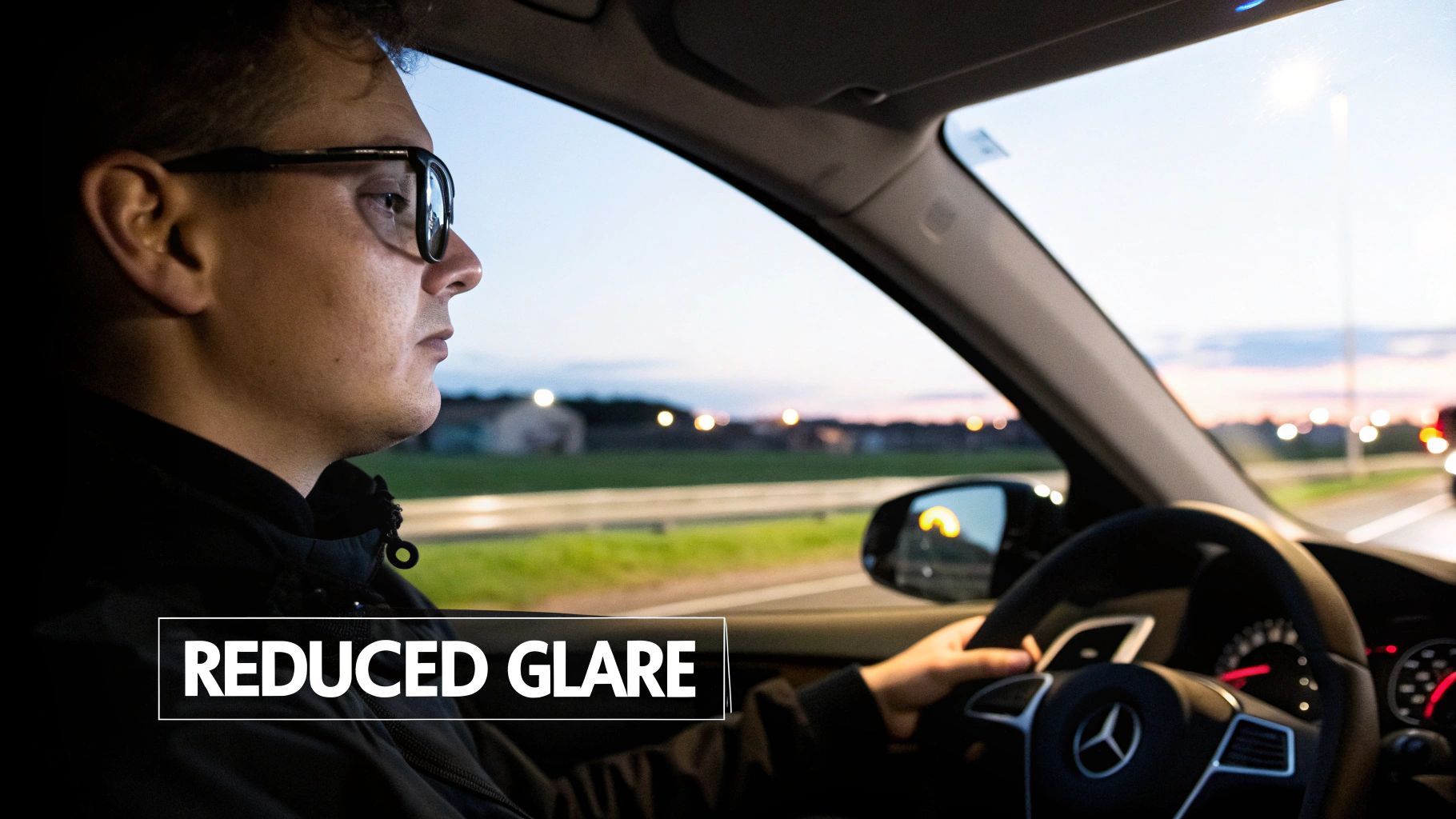
To understand how anti-glare glasses for driving work, picture a standard pair of specs. When light hits an uncoated lens, a good chunk of it doesn't make it through to your eye. It bounces off both the front and back surfaces, creating reflections and visual ‘noise’ that gets in the way of what you’re trying to see.
This becomes a much bigger problem at night. The sudden, intense beams from streetlamps and oncoming headlights strike your lenses, exploding into distracting starbursts and halos. This kind of optical chaos makes it tough to see the road ahead and react quickly to potential hazards.
The Science Behind Clearer Vision
An anti-reflective (AR) coating is an incredibly thin, transparent layer applied to both sides of your lenses. Its entire job is to cleverly manage the light that hits your glasses, effectively neutralising the reflections that would otherwise bounce off the lens surfaces.
Think of it like the coating on a high-end camera lens. A photographer relies on this to cut down on lens flare and capture a sharp, detailed image without any unwanted light streaks. An AR coating for your glasses works in much the same way, but it’s perfecting the view for your own eyes.
By allowing more light—up to 99.5%—to pass straight through to your eye, an AR coating drastically cuts down on the intensity of those reflections. The difference is night and day: a sharper, clearer, and much more comfortable view of your surroundings.
How This Quiets the Visual Noise
For drivers, the practical benefits are huge. With a quality AR coating, the visual clutter caused by bright lights is almost completely gone. This leads to a few critical improvements when you’re behind the wheel:
- Minimised Headlight Glare: Those blinding halos and starbursts from other cars’ headlights are significantly reduced, so you can focus on the road.
- Improved Contrast: By removing distracting reflections, the difference between light and dark becomes much clearer. This helps you spot pedestrians, animals, or debris on the road far more easily.
- Reduced Eye Strain: Your eyes no longer have to fight to see through the glare, making for a more relaxed and comfortable drive, especially on longer trips.
This technology gets to the heart of the problem. Instead of just dimming your view with a tint (which can reduce how much you see), it actively clarifies it. This is what makes anti-reflective coatings the best choice for anyone looking for a genuine solution to safer, more comfortable night driving.
The Surprising Truth About Yellow Night Driving Glasses
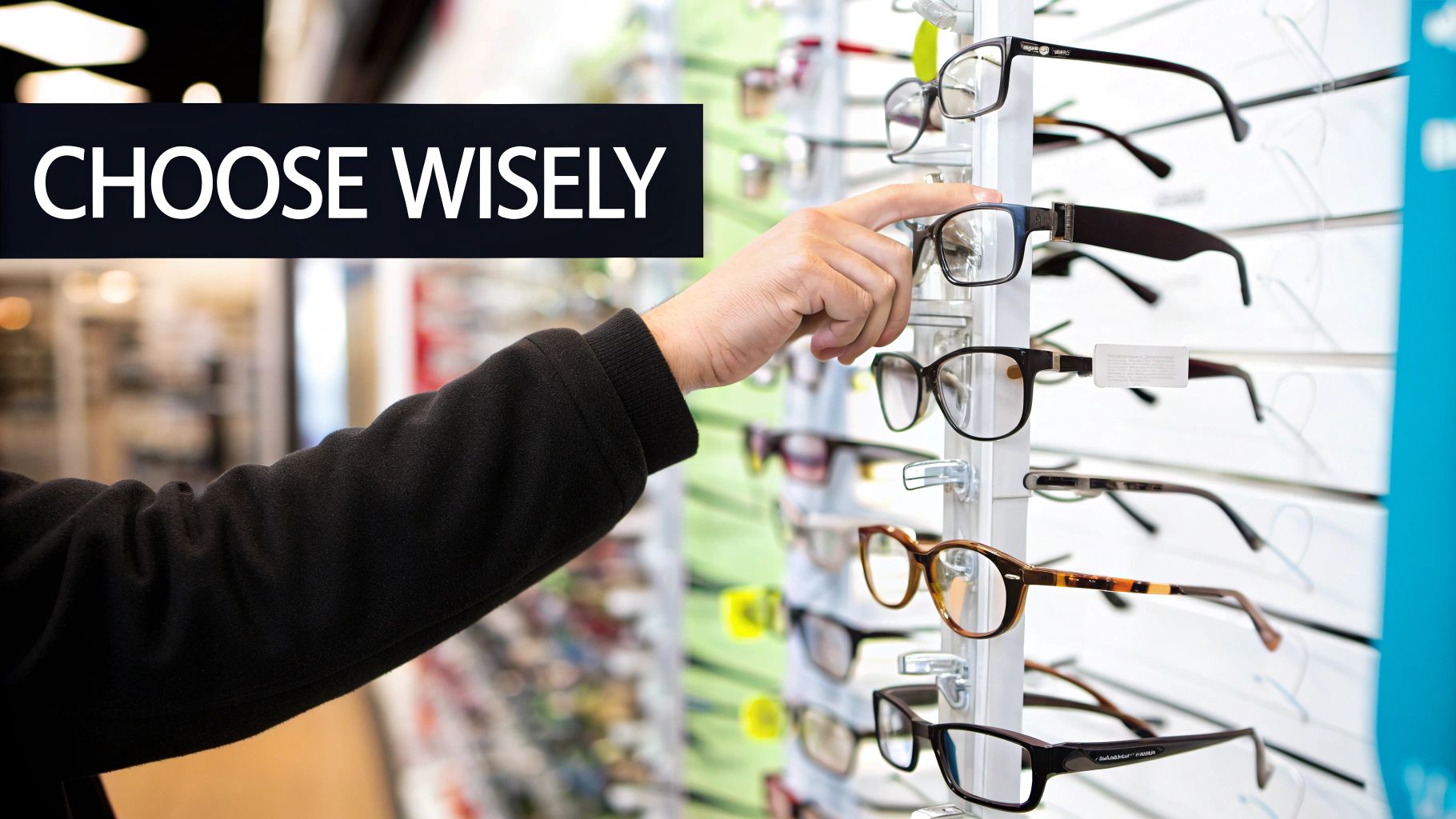
Many drivers struggling with nighttime glare will have seen, or even bought, a pair of yellow-tinted "night driving glasses." The logic seems sound, doesn't it? The yellow tint gives a subjective feeling of brightness and contrast, making everything look a little sharper. It's an idea that has become so common that many people simply assume they’re the go-to solution for seeing better after dark.
The reality is quite different. While those glasses might make things feel brighter, they don't help you see hazards on a dark road. All the credible evidence points the other way, suggesting they can sometimes be more of a hindrance than a help. For anyone serious about their safety behind the wheel, that's a critical distinction to understand.
Why the Yellow Tint Fails the Test
The fundamental flaw with any tinted lens for night driving is surprisingly simple: it reduces the total amount of light reaching your eyes. In low-light conditions, your vision is all about gathering as much light as possible from your surroundings. By putting a coloured filter in front of your eyes, you're dimming your view of the road ahead.
This isn’t just theory; it’s been put to the test. A 2019 study found that off-the-shelf yellow-lens glasses gave no improvement in a driver's ability to spot pedestrians at night. Worryingly, in some scenarios, they made visibility worse. This is especially concerning for older drivers, whose vision may already be less effective in the dark. You can read more about these night driving visibility findings to see the science for yourself.
The UK consumer organisation Which? also warns that tinted lenses of any kind can make dark areas of the road appear even darker at night, potentially increasing risk rather than reducing it.
The Illusion of Clarity
So, why do so many people swear by them? The feeling of improvement isn't just in their heads. The yellow tint is effective at filtering out some of the blue light that causes the harsh glare from modern LED headlights. This can definitely reduce that blinding effect and create a sense of visual comfort, which is easily mistaken for better overall vision.
But there's a trade-off. While you get relief from the glare, you lose visual information from the rest of the scene—the dimly lit verges, the dark-clothed pedestrians, the unlit obstacles. A proper solution should tackle the glare without sacrificing your ability to see everything else.
This is where proven optical technologies like anti-reflective coatings come in. They are designed to manage reflections without blocking the light you need to drive safely. For genuinely safer journeys, it's time to ditch the myth of yellow lenses and choose proper anti-glare glasses for driving that clarify your vision instead of dimming it.
Selecting the Right Anti-Glare Glasses for You
Choosing the right eyewear to tackle headlight glare is about much more than just picking a stylish frame. It's a careful process of matching lenses, coatings, and fit to your unique vision and driving habits. Get it right, and a good pair of anti-glare glasses for driving can be a game-changer. Get it wrong, and you might see little benefit or, worse, find them a hindrance.
The first question to ask is whether you need a prescription. If you already rely on glasses for seeing things at a distance, the simplest and most effective solution is to add a high-quality anti-reflective (AR) coating to your next pair of lenses. For drivers with perfect eyesight, non-prescription (or 'plano') lenses with the same AR coating will provide the same level of glare reduction without affecting your vision.
Key Factors for Your Decision
Making a smart choice boils down to a few critical factors. If you focus on getting these right, you’ll end up with glasses that genuinely improve what you see and keep you comfortable, even on the longest journeys.
- Lens Material: Modern materials like polycarbonate are a fantastic choice. They are not only incredibly lightweight but also highly impact-resistant, which adds a layer of safety and comfort while you're behind the wheel.
- AR Coating Quality: Be aware that not all anti-reflective coatings are created equal. A premium, multi-layered coating will always outperform a basic, single-layer option, offering far superior reduction in glare and reflections.
- Frame Fit and Comfort: A proper fit is non-negotiable. Your frames need to sit securely on your face without slipping, and must offer a wide, unobstructed field of view. Any discomfort can quickly become a major distraction on the road, so pay close attention to how they feel.
To help you compare the most common options for dealing with glare, here’s a quick breakdown.
Comparing Anti Glare Driving Solutions
| Solution Type | Best For | How It Works | Key Consideration |
|---|---|---|---|
| Prescription with AR Coating | Drivers needing vision correction. | Combines your specific prescription with a multi-layer coating that cancels out reflected light. | The most effective all-in-one solution for clarity and glare reduction. |
| Non-Prescription AR Glasses | Drivers with 20/20 vision. | Uses 'plano' (zero power) lenses with an AR coating to target glare. | Provides no unwanted visual distortion for those who don't need correction. |
| Polarised Lenses | Daytime driving, especially in bright sun. | Filters out horizontally polarised light, the main cause of glare from flat surfaces. | Not always recommended for night driving as they can dim the scene too much. |
| Yellow-Tinted "Night Driving" Glasses | Drivers seeking improved contrast. | The yellow tint filters some blue light, which can make things appear sharper to some. | The glare reduction is minimal, and they can reduce overall light reaching the eye. |
This table shows there are different tools for different jobs. While tinted and polarised lenses have their place, a proper AR coating is the gold standard for tackling headlight glare at night.
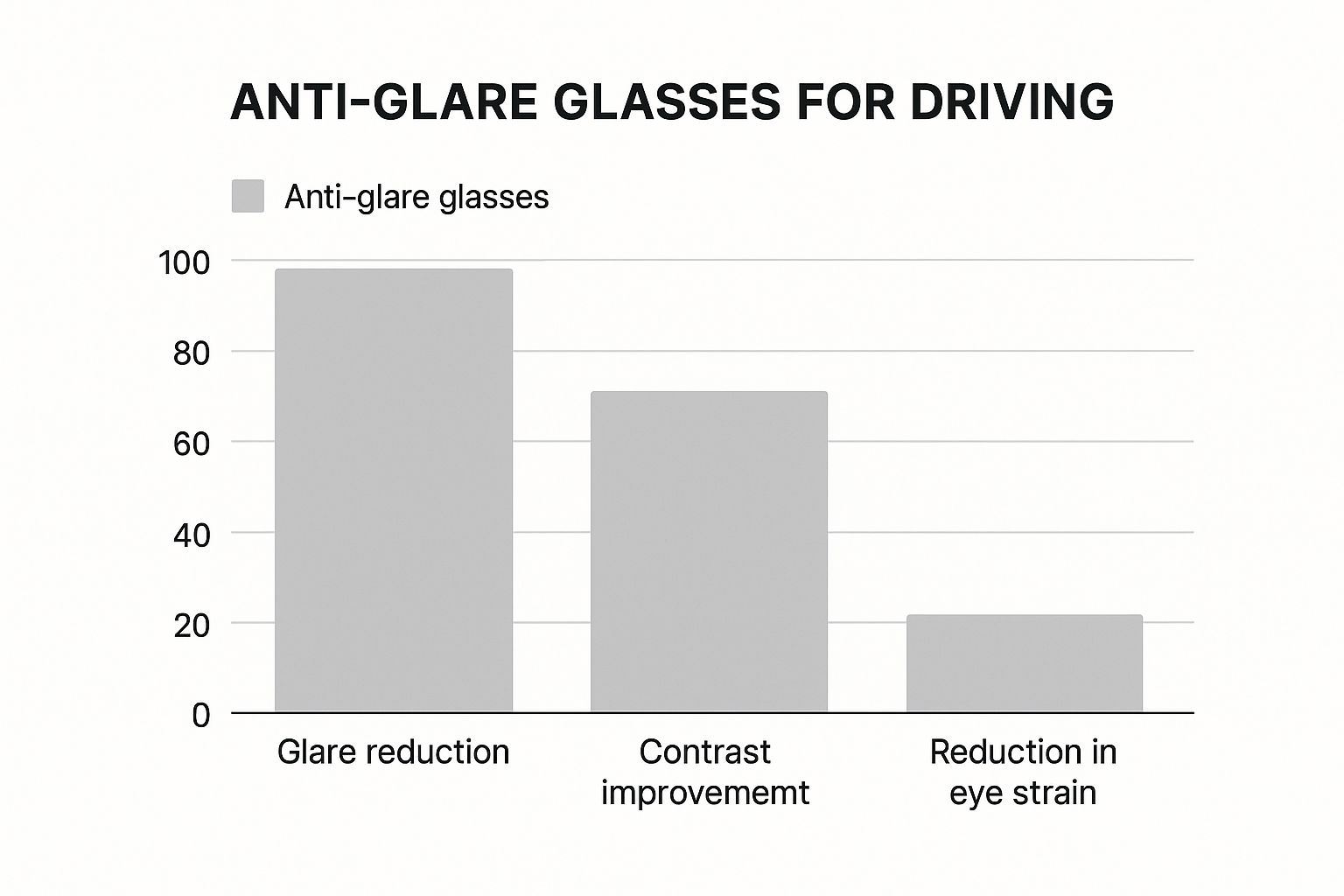
As the data shows, high-performance anti-glare technology delivers real, measurable improvements across the board, from cutting down glare to boosting contrast and easing eye strain.
The Importance of Professional Guidance
While you can find plenty of off-the-shelf options online or in shops, nothing beats professional advice. An optician can perform a thorough eye examination, recommend the ideal combination of lenses and coatings for your needs, and guarantee a perfect frame fit. This is especially true if you don't normally wear glasses, as an ill-fitting or poorly made pair can introduce unwanted distortion.
Getting this right is important. Research from The College of Optometrists reveals that while 60% of UK drivers have been told they need glasses for driving, a worrying 24% admit they don't always wear them.
Seeking professional advice isn't just about buying a product; it's about investing in a bespoke solution that guarantees safety and clarity. An expert can guide you through the options, helping you understand the real-world differences between a standard lens and one built for the specific demands of driving.
A consultation with a professional makes sure your new glasses will perform exactly as you need them to, right when you need them most. For more on this topic, take a look at our complete guide on how to choose driving glasses.
Why Custom Driving Lenses Are the Superior Option
While a standard anti-reflective coating is a big step up, specialised driving lenses are in another league. They’re designed from the ground up to handle the unique visual challenges we face behind the wheel.
Think of it like this: a standard anti-glare lens is like buying a suit off the rack—it does the job. A custom driving lens is like getting one made-to-measure. It's built for you and the task at hand. This integrated approach combines several bits of tech to tackle everything from darting glances to changing light.
Beyond Basic Glare Reduction
The most noticeable advantage of custom-designed lenses is their expanded field of view. These lenses are often digitally surfaced, which means you get incredible clarity from one edge to the other. That’s helpful for those split-second checks of your wing mirrors, dashboard, or blind spot.
This advanced design gets rid of the peripheral distortion you sometimes find in standard lenses. The result is a wider, more natural view of the road ahead and everything around you.
Another feature is the inclusion of very subtle, contrast-improving tints. These aren't the risky yellow lenses mentioned earlier. Instead, these are scientifically calibrated tints that filter out very specific wavelengths of light.
This precise filtering helps cut through haze and low light, making road markings and potential hazards pop without dangerously dimming your vision. It's a much more sophisticated way to sharpen what you see.
The Complete Driving Package
A bespoke pair of anti glare glasses for driving pulls all these elements together into one high-performance solution. They’re designed to manage reflections from every angle, not just head-on. This even includes reflections from inside the car, like dashboard lights bouncing off the back of your lenses—a subtle but constant distraction.
If you already wear glasses, you'll be glad to know these specialised features can be integrated with your prescription. To get a better idea of how it all works, you can explore our guide on the different types of prescription lenses and see what’s possible.
Custom driving lenses deliver a level of clarity, comfort, and safety that a simple coating just can't match, making them the clear choice for anyone who takes their driving seriously.
Keeping Your Lenses in Top Condition for the Long Haul
You’ve made a smart choice by investing in a quality pair of anti glare glasses for driving. To make sure they keep you safe and comfortable behind the wheel for years to come, they just need a bit of mindful care.
Those sophisticated coatings that work so hard to cut down on reflections are what make your lenses so effective, but they can also be more prone to smudges or fine scratches if they aren't looked after properly. Think of it as routine maintenance for a key piece of safety equipment.
A Simple Cleaning Routine
Getting into a good cleaning habit is the secret to preserving that perfect, unobstructed view. Just follow these simple steps to clean your lenses safely, without putting the delicate anti-reflective coating at risk.
- Rinse First, Always: Before you do anything else, hold your glasses under a gentle stream of lukewarm tap water. This simple step floats away any tiny bits of dust or grit that could act like sandpaper when you wipe the lens.
- Use a Proper Cleaner: Put a tiny drop of a lens cleaning solution—one that's approved for coated lenses—on each side. Never reach for household cleaners like glass spray or harsh detergents, as their chemicals can strip the coating right off.
- A Gentle Rub: Using just your fingertips, lightly work the cleaner across both sides of the lenses and the frame itself. Then, rinse everything off thoroughly until no solution remains.
- Dry with Microfibre: This part is key. Gently pat your glasses dry with a clean, soft microfibre cloth. Avoid the temptation to use a paper towel, a tissue, or the corner of your shirt. These materials feel soft but are surprisingly abrasive and can easily damage the lens surface.
Just as important as how you clean your glasses is how you store them. When you’re not wearing them, make a habit of putting them back in their hard-shell case. It’s the single most effective way to protect them from drops, knocks, and the daily buildup of dust.
Common Questions About Anti-Glare Driving Glasses
Even after getting to grips with the technology, it’s completely normal to have a few practical questions. After all, choosing the right glasses for driving is a big decision. Let's run through some of the most common queries we get from drivers, helping you feel confident about your choice.
Can I Wear Tinted Lenses for Night Driving in the UK?
This is a really big one, and the answer is rooted in safety. Here in the UK, it's illegal to drive at night with any tint that significantly darkens your view. While some very light, specialist tints might technically be allowed, most coloured lenses—including those popular yellow ones—block too much light to be safe or legal for night-time driving.
The best and safest choice is always a clear lens with a high-quality anti-reflective coating. This combination tackles glare head-on without compromising how much you can see.
Think of it this way: the goal of night driving glasses is to get as much light as possible to your eyes, not less. A clear lens with an AR coating lets through up to 99.5% of available light, whereas any tint will block some of it.
Are Anti-Glare Glasses Useful During the Day?
Absolutely! Glare isn't just a night-time problem. Bright sunlight, a low sun during your morning or evening commute, and reflections bouncing off wet roads can be just as hazardous.
An anti-reflective coating cuts down on these distracting reflections, giving you sharper, more comfortable vision no matter the time of day. For the top daytime driving setup, combining an AR coating with polarised lenses is the gold standard for fighting glare.
Can I Get Anti-Glare Coatings on Varifocal or Bifocal Lenses?
Yes, you certainly can. An anti-reflective coating is a versatile treatment that can be applied to virtually any lens type, whether it’s single-vision, bifocal, or varifocal.
Adding an AR coating to your multifocal lenses is a fantastic way to get seamless vision correction and glare reduction all in one. It means you can effortlessly shift your focus from the road ahead to your dashboard, without annoying reflections getting in the way.
It's also worth remembering that having clear vision is a legal requirement for driving. Regular eye tests are a good practice to keep your prescription up to date and check your eyes are healthy. If you’re worried about your next check-up, our guide on how to pass an eyesight test has some helpful tips. The right lenses are a cornerstone of road safety.
Ready to feel the difference that custom driving lenses can make? At Northern Optical Company, we provide expert advice and bespoke solutions for clearer, safer, and more comfortable vision behind the wheel. Visit us at https://northernopticalcompany.com to book your consultation today.