
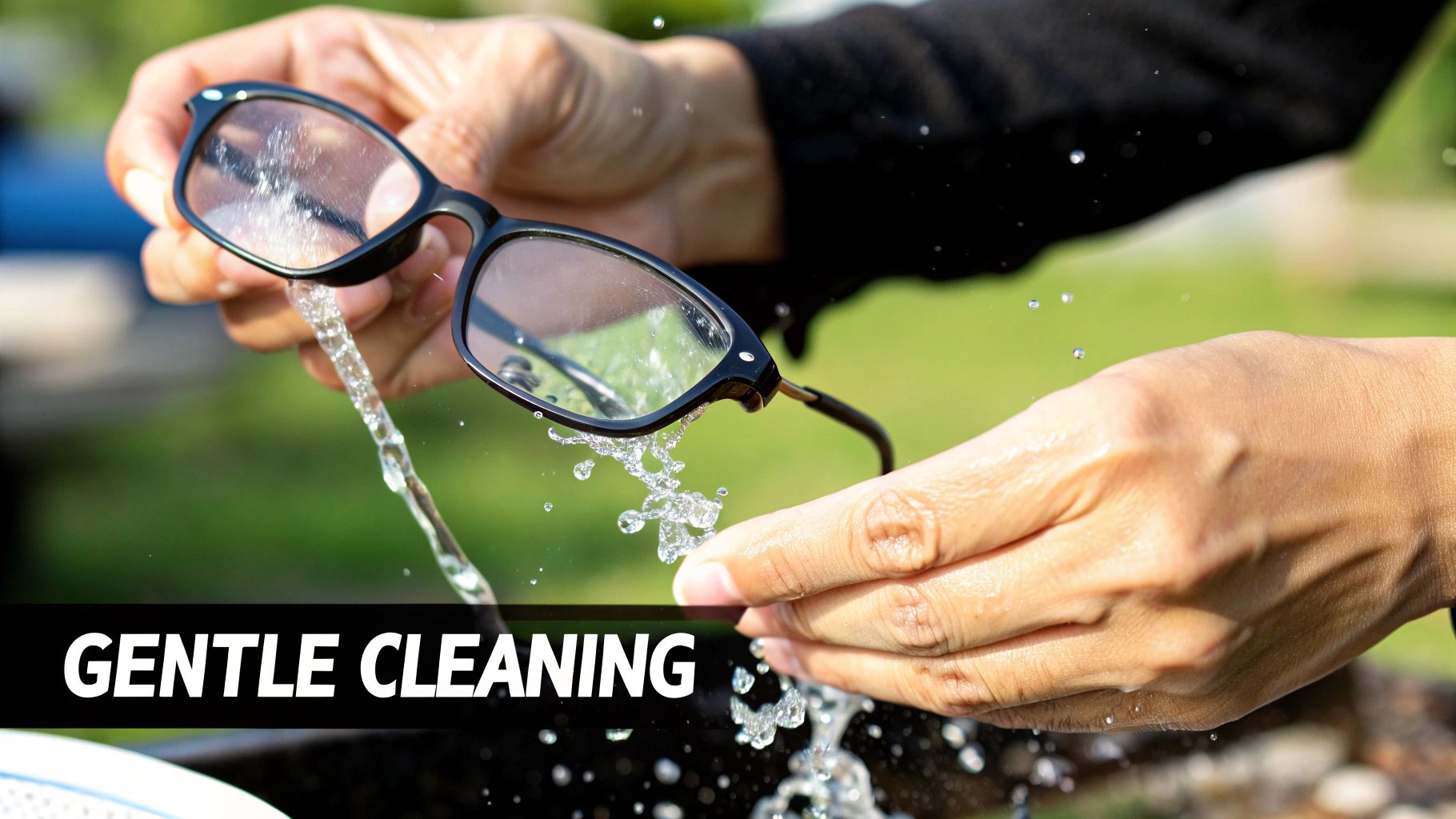
To get your glasses properly clean, the best method is surprisingly simple. You need lukewarm running water, a single drop of pH-neutral washing-up liquid, and a clean microfibre cloth. This gentle approach is all it takes to shift stubborn smudges and grime without putting your lenses or their specialist coatings at risk. It is a world away from using the hem of your shirt, which can permanently scratch your lenses.
The Right Way to Get Your Glasses Spotless
Getting that perfectly clear, just-from-the-optician’s view starts with a clean pair of specs. The problem is, many of our go-to cleaning habits do more harm than good. I've seen it countless times – wiping lenses on a t-shirt or grabbing a paper towel seems harmless, but it just grinds dust and fibres into the lens surface. Over time, this leads to a build-up of micro-scratches that cloud your vision.
The correct technique is straightforward and uses things you already have around the house. It really boils down to three simple actions: rinse, wash, and dry.
This visual guide breaks down the basic flow for how to clean your glasses the right way.
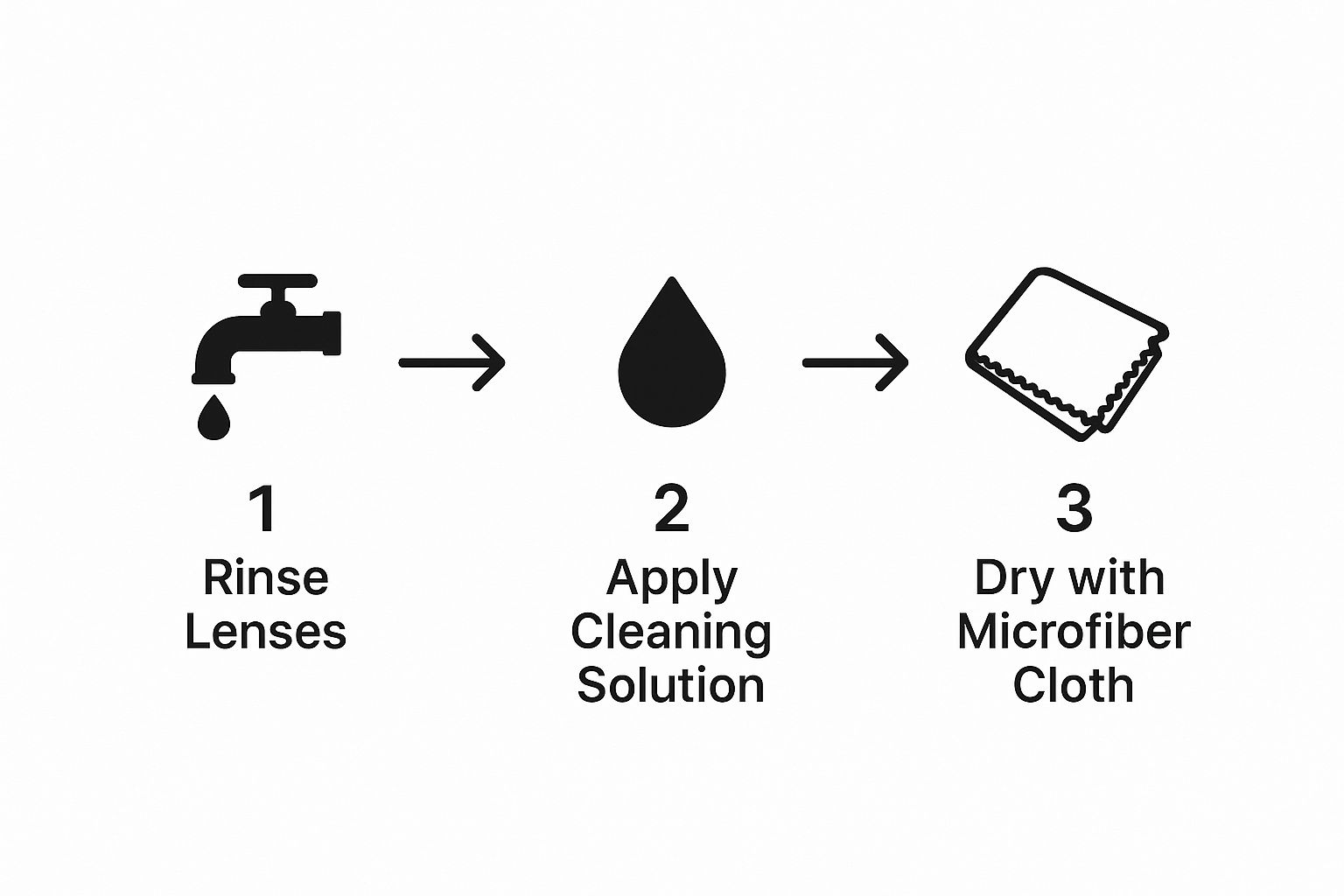
The secret is to get rid of any abrasive bits of dust with water before you start washing. This stops you from accidentally rubbing grit across the lens, which is the number one cause of scratches.
For more clarity, here’s a quick reference table.
Quick Guide for Perfectly Clean Glasses
This table summarises the core steps and tools for keeping your glasses in pristine condition.
| Step | Action | Why It Works |
|---|---|---|
| Rinse First | Run glasses under a gentle stream of lukewarm water. | Washes away abrasive dust and debris before you touch the lenses. |
| Gentle Wash | Apply a tiny drop of pH-neutral washing-up liquid to each lens and rub gently with your fingers. | The soap breaks down grease and oils without harsh chemicals that can damage coatings. |
| Dry Correctly | Shake off excess water and dry thoroughly with a clean, lint-free microfibre cloth. | Prevents water spots and supplies a streak-free finish without scratching the surface. |
Following these simple actions consistently will make a huge difference in how well you see and how long your glasses last.
The Best Cleaning Method Explained
First, hold your glasses under a gentle stream of lukewarm tap water. It is critical to avoid hot water, as high temperatures can damage sensitive lens coatings. This quick rinse is your first line of defence, washing away any dust or grit that could cause scratches.
Next, put a single, small drop of pH-neutral washing-up liquid on each lens. Experts like ZEISS UK recommend this type of soap because it is brilliant at cutting through body oils and greasy fingerprints without relying on harsh chemicals. Use your fingertips to gently rub both sides of the lenses and the entire frame—don't forget the nose pads and the arms.
Don’t forget the frame. Cleaning the nose pads and the ends of the arms removes built-up grease and skin oils. This not only makes them more hygienic but also helps stop your glasses from slipping down your face.
Rinse everything off thoroughly under the tap to get rid of all the soap suds. Give the glasses a gentle shake to remove most of the water, then dry them completely with a clean, dry microfibre cloth. This will give you that satisfying, streak-free finish.
For more handy tips on daily care, have a look at our guide on how to clean glasses with easy tips.
Picking and Caring for Your Cleaning Cloth
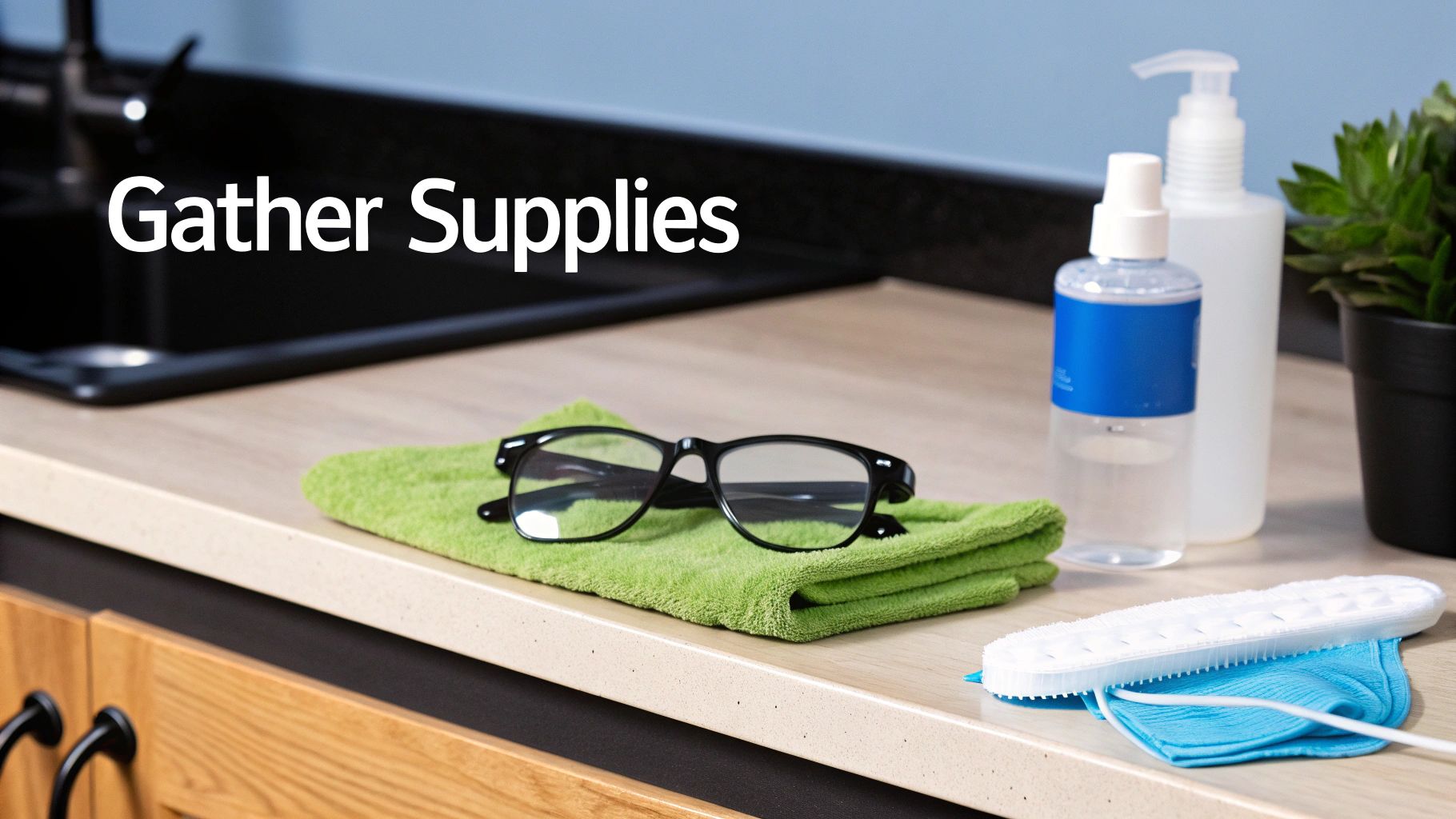
When it comes to daily upkeep, your microfibre cloth is your best friend. But let's be honest, not all cloths are the same. Understanding what separates a good cloth from a bad one is critical if you want to clean your glasses properly without accidentally damaging them. The secret is in the fabric.
A quality microfibre cloth is made up of thousands of incredibly fine fibres. These tiny threads are designed to gently grab onto and lift away grease, dust, and smudges from your lenses. It is a completely different action to using your t-shirt or a paper towel, which tend to just smear the grime around. The microfibre traps the particles, which means a clearer finish and, most of all, no fine scratches.
The cloth that comes with a new pair of specs is usually a solid choice. If you're buying a replacement, look for one that feels dense and soft with a tight weave—a good sign it won't leave annoying lint behind.
How to Keep Your Cloth in Tip-Top Shape
It's simple: a clean cloth is an effective cloth. After a while, your microfibre cloth will get clogged with all the oils and dust it has lifted from your lenses. Once it’s dirty, it stops working. Instead of cleaning, it just starts smearing that old grime right back where you don't want it.
To keep it performing at its best, a regular wash is needed.
- Hand Washing: This is the easiest way. Just use cool water and a drop of mild, bleach-free soap. Give the cloth a gentle rub, rinse it thoroughly until the water runs clear, and then leave it to air dry.
- Machine Washing: You can also pop it in the washing machine. Stick to a cold cycle with a tiny bit of gentle detergent. I would recommend putting it in a small laundry bag to stop it from getting snagged or covered in fluff from other items.
Crucial Tip: Whatever you do, never use fabric softener or dryer sheets on your microfibre cloths. These products coat the fibres in a waxy film, completely ruining their ability to pick up dirt.
A good microfibre cloth can be washed and reused hundreds of times. A simple wash in cold water with mild soap restores the cloth's natural positive charge, which is what makes it so good at attracting negatively charged dust particles. If you're curious about the science, these expert eye care insights are a great read. Taking a minute to do this makes a world of difference.
The Common Mistakes That Can Wreck Your Glasses
Knowing the right way to clean your glasses is half the battle. The other half is knowing what not to do. It is incredibly easy to fall into bad habits out of sheer convenience, but those quick fixes can cause permanent damage to your lenses and frames. A little awareness goes a long way in keeping your vision crystal clear and your spectacles looking their best.
Let’s start with the most common culprit: your shirt hem. We’ve all done it—a quick wipe to clear a smudge. The problem is that your clothing is full of tiny, abrasive fibres and trapped dust. Rubbing that across your lens is like using fine sandpaper, creating a web of micro-scratches that will make your vision blurry for good.
Paper products are just as bad.
Harmful Household Items to Avoid
Things like kitchen roll, napkins, or tissues might feel soft to the touch, but they’re made from wood pulp. These coarse fibres are notorious for scratching lenses and their special coatings. It might not seem like a big deal at first, but after months of this, you’ll be left with cloudy lenses that are impossible to get truly clean.
Another tempting shortcut is reaching for the window cleaner. While it works wonders on your windows, the ammonia and other harsh chemicals in most household cleaners are disastrous for your glasses.
These aggressive chemicals will eat away at the delicate anti-reflective and UV-protection coatings on your lenses. Once that coating is gone, it’s gone forever, and the only fix is an expensive lens replacement. The same goes for vinegar or other acidic home-brewed solutions—just don't do it.
To help you avoid these pitfalls, let’s look at what to steer clear of. For active individuals, learning how to choose sports glasses is a great idea, as they're often designed with more robust, scratch-resistant materials.
What Not to Use When Cleaning Your Glasses
We've put together a simple table to highlight the everyday items that can cause real damage, and what you should be using instead.
| Method to Avoid | Potential Damage | Safer Alternative |
|---|---|---|
| Shirt or Clothing Hem | Grinds dust into lenses, causing micro-scratches. | A clean, dry microfibre cloth. |
| Paper Towels/Napkins | Abrasive wood fibres scratch lens surfaces. | A dedicated, lint-free microfibre cloth. |
| Household Glass Cleaner | Harsh chemicals strip away protective lens coatings. | Lukewarm water and a drop of pH-neutral soap. |
| Hot Water | Can damage lens coatings and warp plastic frames. | Lukewarm or cool tap water. |
Avoiding these common materials is one of the easiest ways to extend the life of your eyewear and make certain you're always seeing the world as clearly as possible.
Dealing With Smudges When You're On The Move
It is all well and good knowing the best way to clean your glasses at home, but life happens. What do you do when a greasy fingerprint appears right in your line of sight when you're out?
For those moments, pre-moistened lens wipes can be a lifesaver. You need to be selective. Many wipes contain high levels of alcohol, which can be disastrous for modern lenses, slowly eating away at the anti-reflective and UV-protective coatings. Always reach for wipes that are marked as alcohol-free and safe for coated lenses. They’re a brilliant quick fix for getting rid of a sudden smudge when you don't have access to a sink.
The Best Way to Tackle Smudges During Your Travels
For an even better clean on the go, I always recommend putting together a small travel kit. Tucking a travel-sized bottle of lens cleaning spray and a dedicated microfibre cloth into your bag, car, or desk drawer means you’re always prepared. This duo is far more effective at cutting through oily smudges from fingerprints or makeup without just spreading them around.
What if you're dealing with something more stubborn, like a spot of hairspray? The trick is to use patience, not pressure.
I cannot stress this enough: never try to scrub a stubborn mark off your lenses. You'll risk scratching the lens or even bending your frames out of alignment. Instead, apply a bit of lens spray, give it a moment to work and break down the residue, then wipe gently.
A solid on-the-go cleaning kit is simple. It just needs:
- A small spray bottle of a quality lens cleaner.
- At least one clean, dry microfibre cloth.
- A small pouch or case to keep your cloth from picking up dirt and grit.
With this simple setup, you can handle just about any smudge that comes your way, making certain your vision stays crystal clear no matter where your day takes you.
Why Clean Glasses Are Part of Good Eye Health
Knowing the right way to clean your glasses is about so much more than just seeing clearly; it's a fundamental part of your personal hygiene. Just think about it—your specs sit on your face all day long. The nose pads and arms are in constant contact with your skin, which means they’re a magnet for natural oils, sweat, and everyday bacteria.
If left unchecked, this build-up can easily lead to skin irritation, unwelcome spots, or even minor infections where the frame touches your nose and ears. Honestly, treating your glasses with the same care you give to washing your hands is a smart move for keeping both your skin and eyes in top condition.
Linking Eyewear Care and Regular Check-Ups
Properly looking after your spectacles is a perfect companion to your regular eye examinations. While keeping your eyewear in great shape helps you get the full benefit of your prescription, it is those routine check-ups that catch potential health issues before they become serious.
A 2022 UK survey brought to light that 8% of adults, including 10% of men, have never had a professional eye exam. There's often a link here with poor eyewear habits. After all, keeping your glasses clean is one of the simplest ways to prevent irritation, especially with how much time we all spend in front of screens. You can dig deeper into the UK eye health survey findings to get the full story.
This simple daily task of cleaning your eyewear is a small but meaningful step in your overall wellness journey. It supports clear vision and protects the health of your eyes and the skin around them.
Making good hygiene for your glasses a consistent habit complements other aspects of a healthy lifestyle. For example, what you eat has a massive impact on your vision in the long run. To find out more, have a look at our guide on eye health and nutrition tips. Making eyewear maintenance a daily habit is one of the easiest wins for your well-being.
Your Questions About Cleaning Glasses, Answered
Even after you've got the basics down, you're bound to have some questions about keeping your glasses spotless. I've heard them all over the years, so let's clear up some of the most common queries I get from customers.
How Often Should I Really Be Cleaning My Glasses?
For the clearest possible vision, you should give your specs a proper wash at least once a day. I find that making it part of my morning routine works best. A quick wash with lukewarm water and a dab of pH-neutral soap gets rid of any dust or oils that have built up overnight.
Of course, life happens. If you’ve been to the gym, been out in the garden, or just notice a smudge, a quick wipe with a clean microfibre cloth is perfect for touch-ups. Remember, clear lenses aren't just about seeing well—they also reduce visual fatigue. You can learn more in our guide on how to prevent eye strain.
Is It Okay to Use a Bit of Spit to Clean My Lenses?
Please don't do this! It might seem like a quick fix, but using saliva is a bad habit. Your mouth is full of bacteria that you do not want anywhere near your eyes.
On top of being unhygienic, it just doesn't work. Saliva won't break down the greasy fingerprints; it just smears them around, leaving you with a cloudy, streaky mess.
Expert Tip: Using saliva is not only ineffective, but it is also unsanitary. Always stick to proper cleaning methods like soap and water or a dedicated lens spray. Your eyes will thank you.
Are Ultrasonic Cleaners a Good Idea for Glasses?
Ultrasonic cleaners can be brilliant for getting a deep clean, especially for those fiddly bits like the hinges and around the nose pads. It is what many opticians use in-practice to give frames a new lease of life.
If you're thinking of getting one for home use, just be certain it's made for spectacles and follow the instructions to the letter. They are fantastic for a thorough clean every few weeks, but they aren't a replacement for your daily wash.
At Northern Optical Company, we know that looking after your eyewear is a critical part of your overall eye health. If you need any expert advice, a frame adjustment, or a comprehensive eye test, pop into our Newcastle practice. You can explore our full range of services at https://northernopticalcompany.com.